

Is there enough talent in Singapore to power the sustainability sector?
Mismatch between demand and supply as firms look abroad for top sustainability jobs even as initiatives boost local talent


GREEN jobs have been touted as the next big thing, but the fortunes of Singaporeans seeking sustainability-related roles have been mixed.
While former journalist John Yip, 49, successfully secured a role as a researcher at an environmental consultancy, former hard disk developer Shawn (not his real name), 55, has yet to hear back from any potential employers after applying for more than 100 sustainability-related jobs. (He declined to provide his real name out of concern that it will affect his job prospects.)
Their contrasting fortunes reflect the mixed experiences of Singaporean jobseekers looking to break into the sustainability field, which has been hyped as the next big sector to watch.
The government estimates that 55,000 jobs will be created by 2030 as Singapore pursues sustainable development under the Singapore Green Plan 2030. Government initiatives, such as improvements in waste management standards and the strengthening of food security, will see the creation of new jobs and the upgrading of existing ones.
Industry observers say that unlike careers in fields that are highly specialised, green jobs can cut across various industries, making such roles appealing to jobseekers.
For example, workers who already have technical skills such as civil or electrical engineering can apply them to renewable energy projects with some additional training. Similarly, a role in environmental, social and governance (ESG) reporting would tap workers who are skilled in finance and accounting.
According to government agency SkillsFuture Singapore’s Skills Demand for the Future Economy 2023 report, skills in environmental and social governance, carbon footprint management, and energy management and audit were in moderate to high demand from 2019 to 2022.
There is also a high demand for niche skills such as business development in urban farming and decarbonisation strategies, says the report.
Social media platform LinkedIn also lists the top green skills requested by employers in Singapore as sustainability, environment, health and safety, renewable energy, sustainable design, and corporate social responsibility.
Green jobs that require at least one of these skills make up almost 2 per cent, or 1,700, of all job listings in Singapore on LinkedIn. These roles are largely in the operations, engineering, information technology and finance functions.
Despite the apparent demand, employers and recruiters tell The Business Times (BT) that they find it difficult to hire the right local talent for positions.
While there is stiff competition for talent in junior-level positions, there is also a lack of local talent available to fill leadership positions such as chief sustainability officers. This means that companies have to look abroad for such positions even as local universities ramp up ESG-related courses, raising questions about the future of the sector in Singapore if talent demand and supply continue to be mismatched.
The lure of green jobs
Sustainability has grown in importance globally over the past decade, with Europe taking the lead in sustainable business practices through the establishment of regulatory frameworks.
The European Union, in 2019, was the first region to commit to being carbon-neutral by 2050. The European Union also adopted regulations requiring certain companies to provide non-financial disclosures, such as environmental and social disclosures, in their annual reports back in 2014.
However, Asia continues to trail behind Europe and the rest of the Western world in terms of sustainability regulations and consistent reporting standards, despite growing awareness of climate change. Even in Singapore, for instance, mandatory climate-related reporting will only be implemented from 2025 onwards.
With Asia, including Singapore, still in the nascent stages of implementing sustainability practices at a corporate level, the local talent pool to fill emerging positions in the ESG field continues to lag.
The promise of jobs, the easy transferability of their skills, and a passion to make an impact are among several motivations cited by Singaporeans trying to move into the sustainability field.
However, the move is not without its challenges, with Singaporeans facing different outcomes from their attempts.
For Shawn, his retrenchment last June after 28 years in the hard disk drive industry left him “no choice” but to switch careers. He chose to move into sustainability as it was a sector the government supported for mid-career switches.
He had also observed “plenty of job openings” in the sector on job portals. These were roles for ESG consultants, or in carbon footprint reduction, to which he could apply his engineering background.
Hopeful, Shawn began applying for green jobs in mid-2023. He also enrolled in a six-month career transition course on sustainability and green technology offered by a local university last December.
However, he has yet to hear back from any potential employers. This is despite applying for roles across different seniority levels and salaries up to half of his last drawn pay.
Former journalist Yip, on the other hand, has been luckier.
Inspired after covering climate change-related news, he decided to leave his 15-year journalism career in 2022 to find a job directly related to sustainability.
He enrolled in a one-year masters programme in environmental management at the National University of Singapore, and secured an internship with his current employer, The Biodiversity Consultancy, through a referral in mid-2023.
In December 2023, he was offered a full-time position as a researcher for nature strategies, in which he provides research support on projects that help clients integrate nature and biodiversity into their operations.
He counts himself “extremely fortunate” to have been offered the position, which pays half his last-drawn salary.
“I was actually prepared to maybe have to sit around for a good six months at least before I could land something,” says Yip, acknowledging that his age and lack of experience could have hindered his chances.
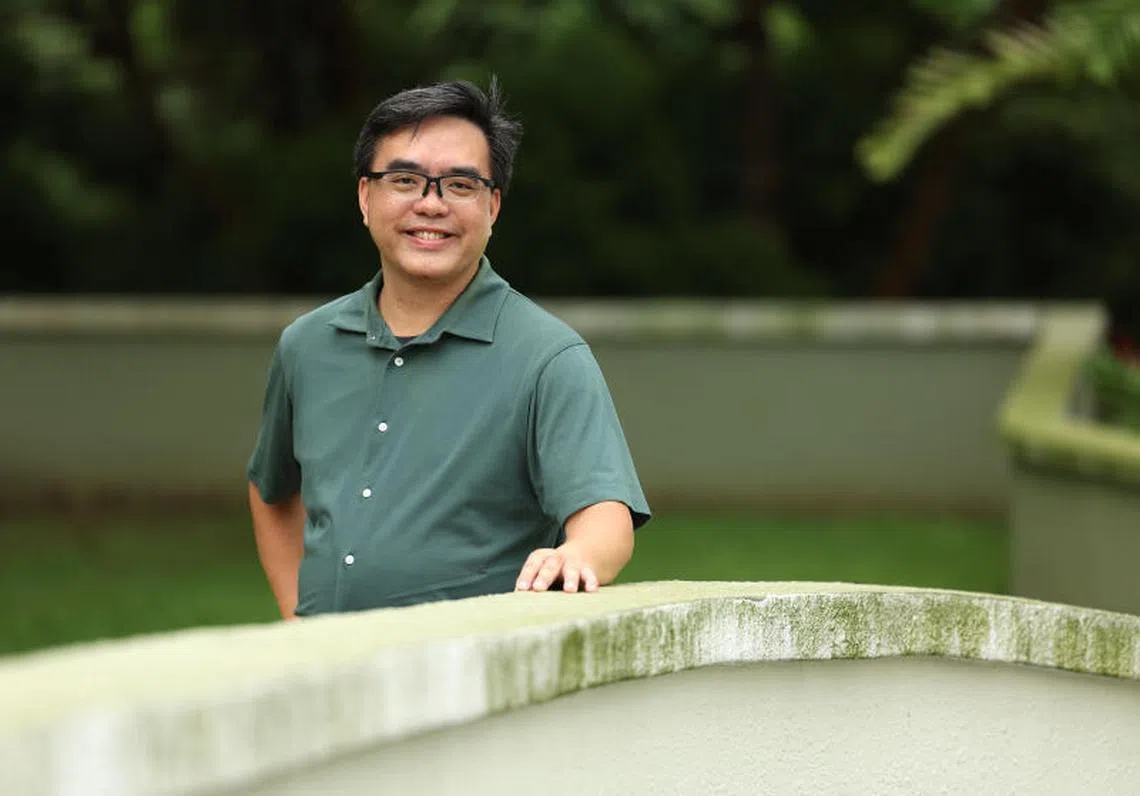
Yip, who said he has few financial obligations, was also prepared to accept a lower pay as he wanted to learn more about the field and gain experience. He acknowledges that he may not have received such a huge pay cut had he moved into a sustainability role in communications or marketing, which are more relevant to his previous work experience.
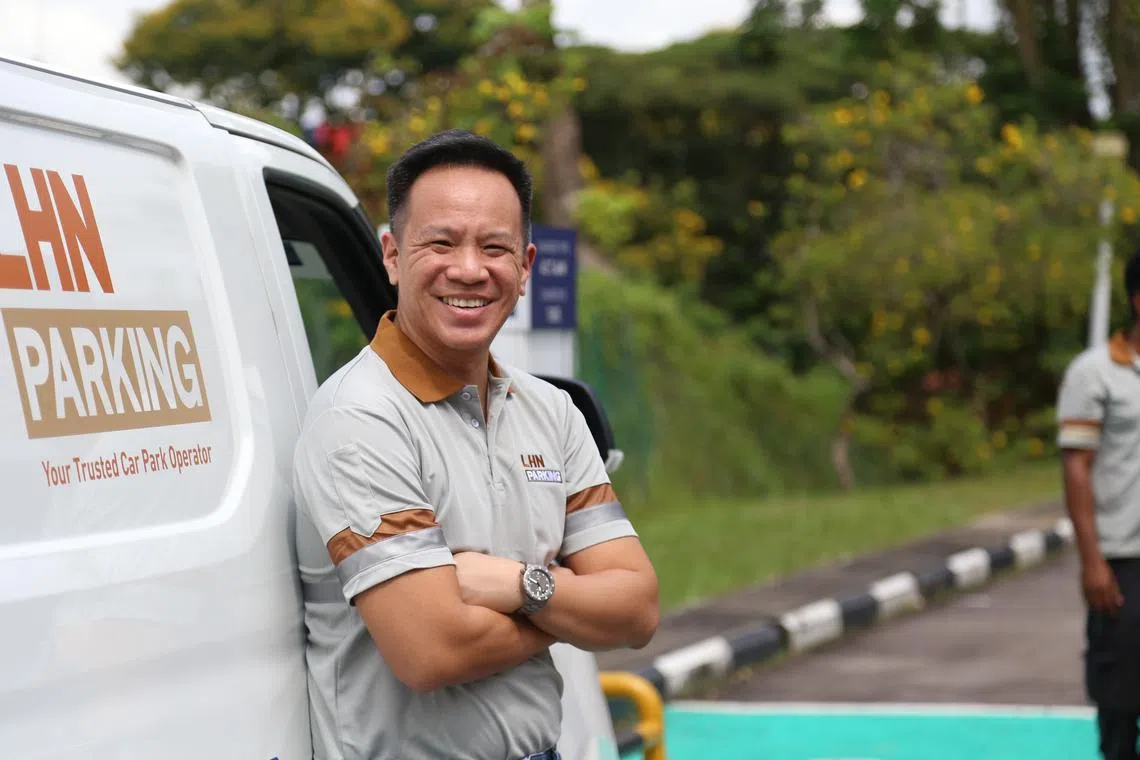
For Jeremy Ong, his appointment in 2021 as senior manager at LHN Energy, where he develops the company’s solar and electric vehicle charging business, was a “natural progression” of his role as a general manager at car park operator LHN Parking, where he ensures the energy efficiency of operations. He currently holds both positions.
The 45-year-old says the “overlaps” between his engineering background and sustainability solutions allow him to learn how to build solar energy systems.
He adds that the growing awareness of renewable energy has validated his decision to move his career into the sustainability space. He also finds “great meaning” in finding ways to mitigate climate change, he says.
Talent crunch
Recruiters and employers told BT that it is easier to find the right talent in the junior to mid-career levels rather than at more senior positions.
Sustainability consultancy ERM’s country managing partner for Singapore, Chin Yen Yen, says that there are “strong candidates” among young professionals with up to five years of work experience who are looking to join the sustainability field.
These include those who specialise in the environmental, health and safety services, or environmental science, both of which are established fields in Singapore, she says.
Similarly, Amita Chaudhury, the group head of sustainability at insurance company AIA, says that there is relevant talent in Singapore for junior roles.
The company also develops its existing employees to take on key ESG roles through on-the-job training, she says.
However, the pool dries up for positions requiring niche skills, say industry players.
ERM’s Chin says that the company has to look beyond Singapore for talent with experience in biodiversity and nature-based solutions, where natural ecosystems are used to mitigate risks to climate change. This is due to the infrastructural limitations of Singapore, which has few natural habitat options for local graduates to hone their research and fieldwork capabilities.
Local talent is also scarce for senior leadership roles.
Chaudhury of AIA says that demand for talent “far exceeds supply” for these roles, given that a candidate must have both the technical expertise and soft skills to change corporate culture and implement sustainable action across an entire business.
Employers also expect candidates at senior leadership levels to “hit the ground running”, adds Gabriel Nam, partner at recruitment agency Page Executive.
“Appetite for risk-taking is limited, and so (employers) tend to look for someone who has been on the ground doing the exact same things for years,” he says.
However, the talent pool for such candidates is small, he adds.
To this end, employers say that they had to look outside of Singapore to fill their vacancies, particularly more senior ones.
Nevertheless, Sha-Ron Low, the Asia-Pacific regional human resources director of ERM, says that the consultancy is actively developing its own talent, and hires three locals to every one foreigner. This ratio is “a good balance” that will allow foreigners to add value to ERM with their different perspectives, she says.
At the same time, ERM consistently brings in fresh graduates or those with up to three years’ experience to grow them to become consulting experts in sustainability.
Additionally, the company ensures that foreigners who are subject matter experts work with local consultants on projects, and provide guidance and direction on tasks. This aids in knowledge transfer between foreign and local workers, she says.
She estimates that it may take up to two decades before the demand and supply for jobs evens out, and the industry can reduce its reliance on foreigners.
Labour economist Walter Theseira from the Singapore University of Social Sciences says that looking outwards for deeper skill sets is a “good use of foreign talent”, if the local pool is small.
“Having that small number of qualified foreigners in those jobs (may open) up many more job opportunities... for Singaporeans who have related, but not deep, skills in the area to develop their careers,” he says.
Building a local pipeline
Even as employers turn outwards to fill vacancies, the government and learning institutions are also building up the local talent pipeline.
One consequence of this has been a mushrooming of various sustainability-related courses promising to skill workers for green jobs.
Checks by BT show that all six autonomous universities in Singapore offered various forms of sustainability courses.
Government agency SkillsFuture Singapore also offers eight sustainability-related courses under its career transition programme and has had 280 enrolments in these courses so far. It does not have data on how many people were eventually employed in a sustainability role.
Those who spoke to BT say they choose to go through these courses for various reasons.
These include the promise of job opportunities in light of the Singapore Green Plan 2030, the ability to understand sustainability in a more holistic manner, and subsidies offered by the government for these programmes.
However, they warn that taking up these courses does not guarantee a job in the field.
Michael Aw, a 56-year-old business management consultant and independent director, for instance, completed a career transition course on sustainability and green technology earlier this year.
Aw, who provides consulting on business restructuring, says that he wanted to expand his services to include sustainability reporting or serve as a company’s chief sustainability officer following completion of the course.
However, he has had no enquiries for his sustainability-related services so far, despite completing the programme.
He suggests that this could be due to several reasons, including a lack of interest from companies as their approach to sustainability is still in nascent stages. They may also not recognise the certification provided by the course provider, he adds.
Other interviewees also cite their lack of work experience in the relevant field and their ages as reasons they may have failed to secure their desired green jobs despite completing sustainability courses.
On the employer front, Lai Kee Yin, the director of technology and digital consulting at Forvis Mazars in Singapore, an audit, tax, and advisory firm, notes that educational programmes often play “catch-up” with the fast-evolving sustainability sector, contributing to a shortage of qualified talent.
Associate Professor Ethan Chong, who develops the Singapore Institute of Technology’s (SIT) overall strategy for educational programmes in sustainability, acknowledges that this is an issue for educational courses.
However, SIT’s approach is to provide students with fundamental knowledge and train them to learn independently so that they may keep up with policy changes, he says.
For example, when teaching students about sustainability reporting, an area in which requirements constantly change, Prof Chong says that he focuses on reporting methodology, such as how to gather data and engage various stakeholders.
Regardless, employers and industry observers say there is still value for workers to join the various programmes.
Besides helping workers to build competencies in a specific domain, they also aid workers in understanding the sustainability field holistically. Doing so also indicates the seriousness with which candidates view the industry, say employers.
Jobseekers also tell BT that educational institutes could arrange for job placements or organise career fairs to help students gain experience in the field.
Are sustainable jobs sustainable?
Industry observers agree that although still nascent, sustainability-related jobs in Singapore remain “promising”.
The growing emphasis on climate change, sustainability reporting, and assurance across various industries suggests that demand for these roles will continue to rise, says Patrick Atlee, a partner at professional services firm KPMG in Singapore.
Industry observers also expect demand for green jobs to stay in the long run, even in a slowing labour market.
Nam of Page Executive says that sustainability-related jobs “are not as hot as before” as most companies have already assembled their sustainability teams after a hiring wave for such roles a few years ago.
He adds that in an uncertain market, companies may re-prioritise resources and be less aggressive in hiring sustainability-related talent.
However, he still expects an “upward trend” in demand for green jobs in the medium term, given the increasing sustainability regulation and requirements by different jurisdictions.
Similarly, David Blasco, country director at recruitment agency Randstad Singapore, says that while sustainability jobs may not be as “recession-proof” as healthcare, the increasing focus on environmental responsibility by companies represents a long-term and growing trend of the field.
He adds that those who seek out sustainability roles tend to be driven by passion and will prioritise aligning their skills with a cause they believe in, even as they consider traditional factors such as salary and work-life balance.
Ultimately, Singaporeans still appear hopeful for the opportunities coming their way.
Despite the lack of enquiries for his sustainability-related services, Aw, the business management consultant, remains optimistic about the future of green jobs in Singapore. He recently completed another course on verifying the carbon emissions of organisations.
Says Aw: “In the next few years, (job prospects) definitely will be coming. The question is timing.”
TRENDING NOW

Olivia Lum, ex-CFO not giving evidence in their Hyflux trial

Bank on AI-resilient Singapore property via deep-value listed property groups

Positive pivot or premature? Analysts split on Keppel Reit’s S$610.9 million buy

Once staunchly pro-China, Malaysian Chinese businesses are now distancing themselves from Beijing

