

Think hard about embracing the new CPF life-cycle investment scheme
In an increasingly volatile world, hold some risk-free investments

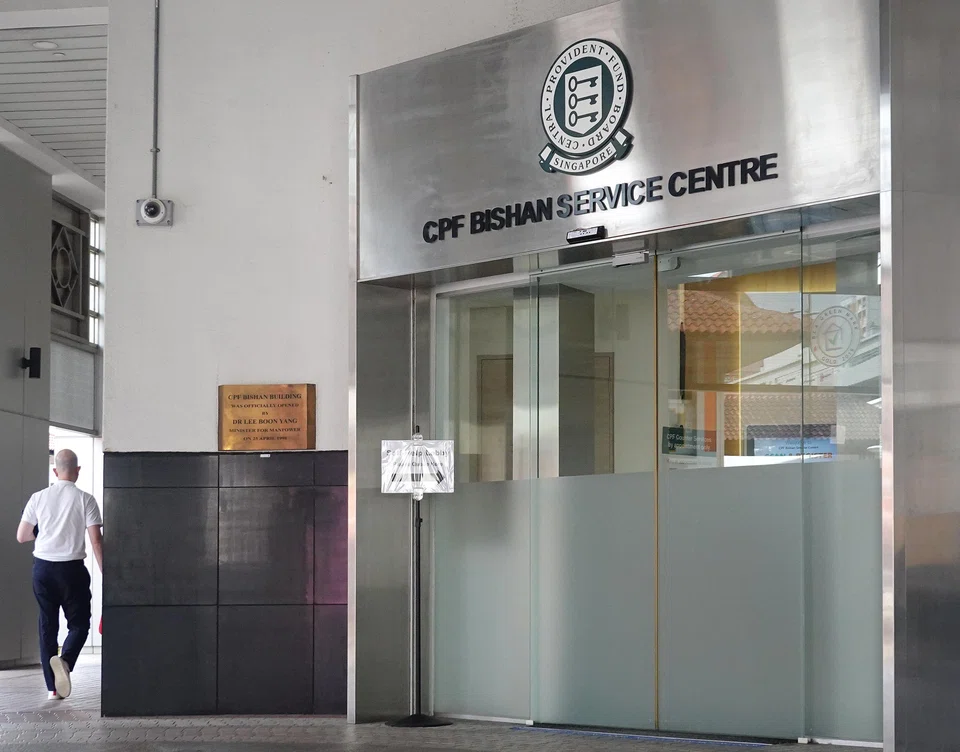
FOLLOWING the Monetary Authority of Singapore’s Equity Market Development Programme, where fund managers are allocated funds to invest in the local bourse, Singapore stocks could see huge liquidity inflow from the launch of the new Central Provident Fund (CPF) life-cycle investment scheme in 2028.
Recently, Citi highlighted that this new scheme might channel up to S$9 billion a year into Singapore equities.
Through diversified life-cycle portfolios, CPF members can earn potentially higher returns than those provided by the risk-free interest rates of the existing system by investing their CPF savings into a range of instruments that include equities.
Products offered under the scheme automatically rebalance investors’ portfolios towards lower-risk assets like bonds as they age, moving from higher risk assets such as equities. All-in fees will be capped to minimise costs and allow investors to benefit from more investment returns.
Expanding low-cost investment options with products which automatically rebalance portfolios towards lower-risk assets as people age is great, as people need to work their money harder to ensure financial adequacy for retirement given rising life expectancy.
In 2024, the life expectancy of 65-year-old Singapore residents was 19.5 years for males and 22.7 years for females.
Risk-free CPF returns
While I think the new scheme could draw some young adults, there may be sound reasons to keep funds in CPF accounts to earn the risk-free interest rates.
Over the years, I have used CPF savings to help with home purchases and since repaid these housing-related withdrawals. I have also largely left these savings to earn the risk-free interest rates.
Through the power of compounding, they have grown into a meaningful sum now that I am past 55. I am happy that my CPF Retirement Account is funded beyond the Full Retirement Sum so I can have a larger annuity for life after turning 65. And I see the value of receiving an annuity as it will be far less volatile than say rental income from an investment property or dividend income from equities.
In perspective, the Enhanced Retirement Sum in 2026 is S$440,800. A member who turns 55 this year and tops up the Retirement Account to the said sum can expect to receive a monthly payout for life of S$3,200-S$3,400 from age 65 under the CPF Life Standard Plan.
Certainly, there are merits to using CPF and non-CPF savings to buy a home for owner occupation as a home provides shelter and is a store of value.
Also, on the investment front, buying equities, either local or overseas names, can allow one to partake in the growth of dynamic businesses that are powering the economy. For example, productivity gains driven by adoption of artificial intelligence could spur profit booms for companies which harness AI effectively.
Investing in high-grade bonds or equity yield plays such as real estate investment trusts can earn a steady recurrent income.
Meanwhile, buying gold for its intrinsic value can also make sense given global geopolitical tensions.
Cash can be king
Nonetheless, while buying equities, bonds, property and precious metals have merits, locals may be wise to have a significant allocation to cash instruments such as Singapore dollar fixed deposits or Singapore government Treasury bills (T-bills), and to keep CPF savings to largely earn risk-free interest rates.
Currently, the minimum annual interest rate on CPF Ordinary Account (OA) is 2.5 per cent, a rate that has been maintained for years.
Holding risk-free Singapore dollar denominated investments is appealing over the long term.
The Singapore dollar is a strong currency, supported by political stability and fiscal prudence. According to a DBS report, the local currency could reach parity with the US dollar by 2040.
Sure, earning at least 2.5 per cent annually on CPF OA savings and less than that on six-month T-bills and local currency fixed deposits may be unexciting. The cut-off yield on the latest six-month T-bill auction was 1.4 per cent per annum.
Moreover, holding cash and cash-like instruments will not yield capital appreciation to hedge against inflation. And inflation could rise due to geopolitical conflicts, supply chain fragmentation as well as ageing populations.
Nonetheless, in an unpredictable world, there is value to parking some funds in instruments that preserve capital.
After all, extreme unexpected events can occur. Major shocks could send capital values of equities, bonds, property and precious metals plunging.
Having cash buffers is extremely handy when individuals face job market disruptions and heightened volatility in investment markets.
For instance, having cash on hand will help one avoid going down the slippery slope of unpaid bills should one lose a job.
Also, an individual with a cash buffer is under less pressure to liquidate investments at inopportune times to meet unexpected funding needs.
Indeed, when crises invariably arise, Singapore’s strong fiscal savings generally help put it in better stead to weather storms.
Decision-making for CPF members who want to take up the new CPF life-cycle investment scheme will be kept simple. There will likely be two to three reputable product providers offering a few options. Also, expect much effort to be made to educate members on the said scheme.
Still, while care is being taken to set up the new investment scheme, members might do well to earn a risk-free interest rate of 2.5 per cent per annum or more from CPF savings, while utilising some funds outside their CPF accounts to assume higher risk for possibly higher returns.
Balance seeking greater returns from investing in higher-risk assets like equities with getting peace of mind from leaving CPF savings largely untouched so that savings grow risk-free over time.
Furthermore, hold some cash to help meet contingencies.
As risks mount in many investment asset classes, diversify by putting a significant portion of funds in risk-free instruments. Boring instruments can be priceless in an increasingly unpredictable world.
TRENDING NOW

DBS, OCBC, UOB rout lops billions off STI as inflation, rate concerns spook investors

Grab CEO’s wife Chloe Tong on life with Anthony Tan and finding her purpose

OCBC sheds S$8 billion in value as shares close nearly 6% down; analysts cautious on banks

Deal between tycoon friends sparks scrutiny of Philippine power sector

