Threats to the Fed go beyond firing Powell
‘Populist authoritarian’ blogger Curtis Yarvin’s ideas are going ever more mainstream in Trump’s Washington – and investors should be worried
A COUPLE of weeks ago, I swopped ideas about the Federal Reserve with Curtis Yarvin – the self-styled “populist authoritarian” blogger who recently gave political advice to Elon Musk.
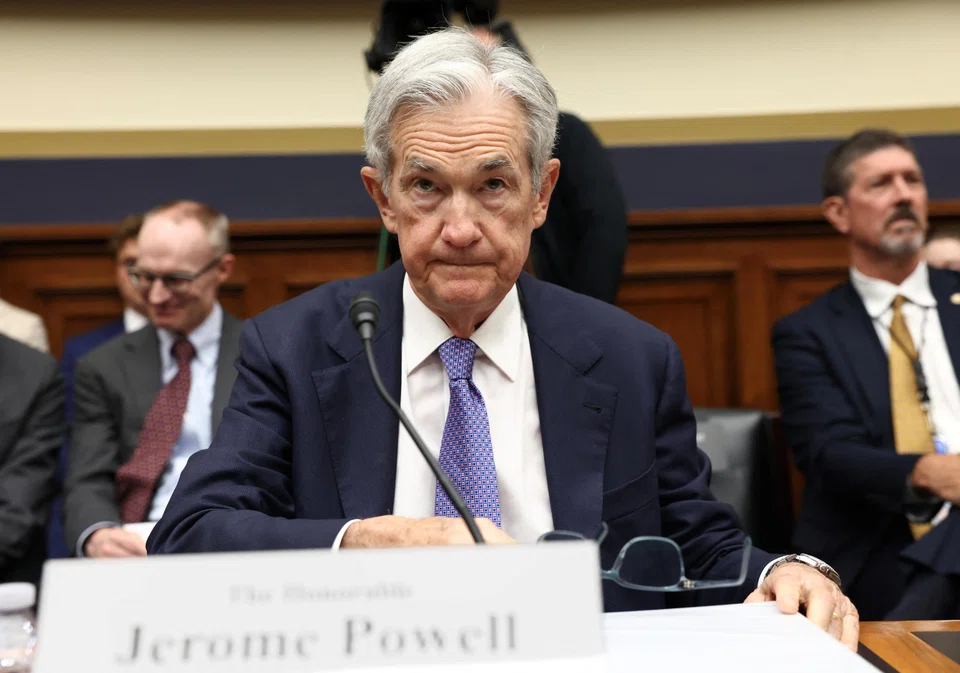
His thoughts might make Fed watchers blanch. The issue is not just with President Donald Trump’s ever-escalating threats to fire Fed chair Jerome Powell; Yarvin also wants Trump to smash the Fed’s independence by putting it under the sway of the Treasury, so it can restructure America’s US$37 trillion debt and “unplug” its finance from the rest of the world.
“My audacious plan is to merge the Fed and Treasury, and revalue assets,” he explained. “It is very incorrect to regard Treasury obligations as debt – they are restricted stock.”
Is this mad? Most economists will howl “yes”. So might the markets: When Trump indicated this week that he may fire Powell, the price of the US dollar and Treasuries gyrated.
Not even Yarvin expects his ideas to fly soon. However, he also insists that if debt keeps surging, “this will (eventually) look less ridiculous”. And while many will vehemently disagree, it would be a profound mistake to ignore him.
After all, Musk is not Yarvin’s only fan; figures such as Vice-President JD Vance have cited his ideas approvingly, and many mid-level Trump officials follow his blogs.
As a result, his “crazy” concepts are seeping into the chatter around the administration. Just look, say, at the current speculation that if Trump does fire Powell, he might ask Scott Bessent, US Treasury secretary, to run both institutions.
There is no sign that Powell will actually leave, or that Congress would accept a Bessent double act. But the so-called “Overton window” (that is, the range of policies viewed as acceptable) is widening.
Or as the political scientist Julian Waller wrote: “American theorists of authoritarianism for now remain niche figures... Yet, the particularly open and entrepreneurial nature of these intellectual projects has found a growing audience among the discontented.”
The left is also shifting the Overton window. Just look at the rise of Zohran Mamdani, a self-styled democratic socialist in New York – or a new poll from the right-wing Cato group showing that 62 and 34 per cent of 18 to 29-year-old voters like socialism and communism, respectively.
Indeed, the political scientist Dennis Snower argues that while a “left-right divide remains influential” in politics, it has “morphed into a vicious battle between populists versus the ‘elite’ in many countries” – often played out on social media and Substack.
So, how should investors respond? First (and most obviously), it is crucial to expose yourself to the widest possible range of ideas, even if you hate them; hiding in a cosy echo chamber is dangerous.
Although populist bloggers might seem fringe, they may still subtly shape future mainstream debates, be that around a wealth tax, rent controls and US debt restructuring – or a merger of the Fed and Treasury.
If you want to understand where Musk’s vision of Doge (the Department of Government Efficiency) came from, it is worth looking at Yarvin’s 2012 posts and lectures about “Rage” (Retire All Government Employees).
Second, investors need to look at how populists have previously impacted asset prices. It is often presumed that left-wing populists create the most market damage, because of their focus on redistribution and fiscal expansion.
A 2021 study of financial history by Sebastian Stockl and Martin Rode argued that “the success of populist parties has a direct impact on volatility in major domestic market indexes”, and was worse under the left-wing variant.
However, a more recent study by Manuel Funk, Moritz Schularick and Christoph Trebesch said the threat is not solely from the left.
After studying 51 populist regimes since 1900, they concluded that “after 15 years, GDP (gross domestic product) per capita is 10 per cent lower” under populists than otherwise. And while left-wing populists initially hurt asset prices more, after a few years their right-wing counterparts do as much (if not more) damage.
The reason? Right-wing populists typically undermine the rule of law and meddle in markets (say, with tariffs). As the Nobel prize-winning economics trio of Daron Acemoglu, Simon Johnson, James Robinson have shown, authoritarian assaults on institutions are associated with lower growth.
A separate study in the Harvard Business Review by Roberto Stefan Foa and Rachel Kleinfeld said that “far from growing private-sector wealth, we find that equity returns under right-wing populists often prove dismal”.
More specifically, they “underperform benchmarks by around a quarter during a first term in office, and by half after a decade” – that is, right-wing leaders do more damage to the economy the longer they stay in power.
Will this happen in the US? Maybe not. Yarvin thinks that Trump’s populist “revolution” is faltering now, as he backs away from some threats. “Any administration is at its max power and energy as soon as it comes in. Now, it is losing momentum.”
But the mere fact that wild ideas are circulating shows how institutions are being undermined. Or, to put it bluntly, the attacks on Powell are just one sign of a bigger assault on financial market norms. Do not expect this to stop at the Fed. FINANCIAL TIMES