

From Thucydides to Trump: three traps the world should avoid
The Trump Trap is more subtle yet more troubling: erosion of US-led order through American ambivalence
THE most dangerous threat to the international order may not be a rising power seeking to overturn it, nor an absent one leaving a vacuum in its wake.
It may be that the power that built the order remains dominant, but is increasingly ambivalent about the system it created. Call this the Trump Trap.
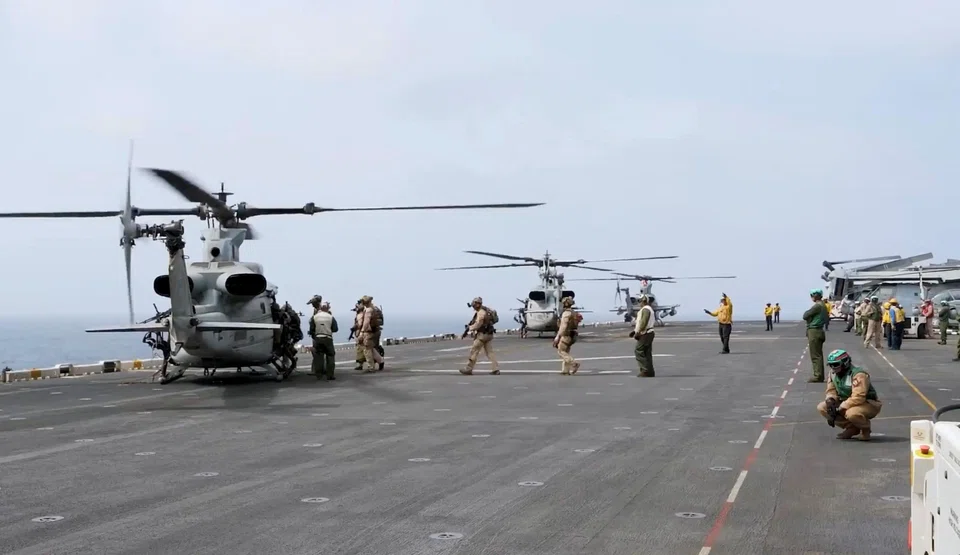
We can see signs of this dynamic in the current stand-off between the US and Iran in the Strait of Hormuz. The world still looks to the US to safeguard freedom of passage through one of the most critical maritime chokepoints. No other country is able – or willing – to assume that role.
Yet, Washington increasingly questions why it should shoulder the burden when others benefit as much.
At their Beijing summit in May, Chinese President Xi Jinping raised the danger of the US and China falling into the Thucydides Trap. The Greek historian had warned that a rising Athens would spark alarm in Sparta, the incumbent power, and such tensions often culminate in war. Harvard Professor Graham Allison studied 16 comparable rivalries and found conflicts in 12 of them. War was not inevitable, he concluded. But the risk is real.
US political scientist Joseph Nye countered that today’s challenge might instead resemble the Kindleberger Trap. The American economist, Charles Kindleberger, argued that Britain’s decline and inability to uphold global order in the 1930s, coupled with Washington’s reluctance to step up and provide global public goods – from freedom of the seas to financial stability – gave rise to a depression and a devastating world war.
Yet today’s dilemma is different. It reflects neither the Thucydides nor Kindleberger traps. The US remains the unrivalled military, financial and technological power. Nor does China seem keen to step up to fill a void. It is selective in its embrace of a US-led order, the rules of which it feels it had no hand in writing.
Instead, the US still seems to want to lead. “I am the boss,” US President Donald Trump declared to the Group of Seven leaders when they met in June – but is deeply conflicted about what leadership should entail: how to pay for it, how to share the burden and whether it can do so without also sharing power.
The result is a growing uncertainty among allies about the reliability of a leader who appears increasingly ambivalent about the very order it created. They are left wondering if they are partners, clients, or cards to be played. Leadership becomes conditional, transactional and unpredictable.
The trap that Trump sprung
This Trump Trap is not simply about Trump. He personifies it, but is more symptom than cause. He did not create the trap; he crystallised it. The economic and political forces that gave rise to the global leadership dilemma predate him and will outlast his time in office.
Fiscal and debt pressures have been building up for decades. Trump’s predecessors – Barack Obama and Joe Biden – had also sought to rein in military commitments abroad in the face of pressing domestic needs. The trap was set long before Trump arrived to spring it.
The Trump team reflects these tensions. It includes primacists, who believe the US must remain the world’s supreme power and not cede its position to autocratic challengers. There are pivoters, whose focus is on countering a rising and rapidly rearming China. And prioritisers, who argue that the Western Hemisphere, or even challenges at home, should be prioritised over far-off, forever wars.
Trump seems to share these views, and flits effortlessly across the three positions.
The strains are becoming more apparent. In his essay in Foreign Policy in June, titled US Power is Wrung Out, Professor Hal Brands noted the “growing mismatch between Washington’s global commitments and its military resources”.
American missile stockpiles have been strained by recent conflicts, while allies in Asia have been rattled by military resources being redeployed from the region, only recently declared a priority. They worry about an overstretched hegemon, lacking the wherewithal, or the will, to provide leadership.
Asian leaders in particular have watched with quiet unease as Washington’s rhetoric towards its European allies has sharpened in recent months. While they might understand the fiscal pressures driving American insistence that allies do more for their defence, the capricious way in which those calls have been made has not gone unnoticed.
America’s failure to bring its allies along in its recent Middle East campaigns – largely because they had not been consulted – reinforces Henry Kissinger’s long-held view that sustaining world order requires both power and legitimacy. One without the other is not enough.
What’s at stake for Asia
For Asia, the stakes are especially high.
For decades, the US has been a crucial and largely benign offshore balancer. This has allowed countries in the region with deep historical grievances to set them aside and focus on growth rather than geopolitics.
Asia’s economic interdependencies are more tightly woven, its territorial disputes more numerous and nuclear-shadowed, and its security frameworks more nascent than in Europe.
Should Washington tire of its leadership role, or lose the capacity for it, the unravelling of the order that has underpinned Asia’s economic progress could be even more fraught than anything unfolding in Europe.
In the face of this American ambivalence, some have suggested that middle powers might fill the void.
Indeed, coalitions of the willing are emerging to tackle a range of issues, from trade liberalisation to the safeguarding of undersea communications infrastructure. These countries are seeking to shape the emerging order, rather than merely adapting to it.
Japan has been especially active, deepening defence partnerships with Australia and the Philippines, reaching out to Europe and working to keep the US engaged in Asia.
Yet, these are Plan B options: not quite the desired order, but the best that can be fashioned in the circumstances. They are likely to prove necessary, but not sufficient. They can mitigate the effects of the Trump Trap, but they cannot replace the great powers in any effort to tackle the key issues of the day.
Consider the two critical challenges of our age: the climate crisis and governance of artificial intelligence. Neither can be addressed without sustained, cooperative engagement of the two major players, China and the US.
Without clarity on how the US intends to wield – and share – power, with both allies and rivals, the Trump Trap could give rise to an order that lacks both legitimacy and effectiveness, one that is instead contested and unable to deliver the public goods the world increasingly needs.
Thucydides warned about the wars that rising powers trigger; Kindleberger about the chaos that absent powers leave behind. The Trump Trap is more subtle, and more troubling: the erosion of an order by the very power that built it – not through anxiety or inaction, but through ambivalence.
The writer is senior fellow at the S Rajaratnam School of International Studies in Singapore and head of its National Security Studies Programme. He is the former editor-in-chief of The Straits Times and The Business Times.
This essay is part of New Global Order, a series which explores how the changing world landscape is reshaping business, politics and beyond.
TRENDING NOW

OCBC mobile, online banking services restored after Friday afternoon disruption

SGX CEO Loh Boon Chye to step down; succession planning under way
Waymo founder predicts ‘landslide’ robotaxi adoption in Singapore, driven by high car costs

Vietnam’s northern provinces, not Hanoi or Ho Chi Minh City, are powering near 10% GDP growth

