TikTok ban won’t be the end of the world, but what if its replacement is worse?

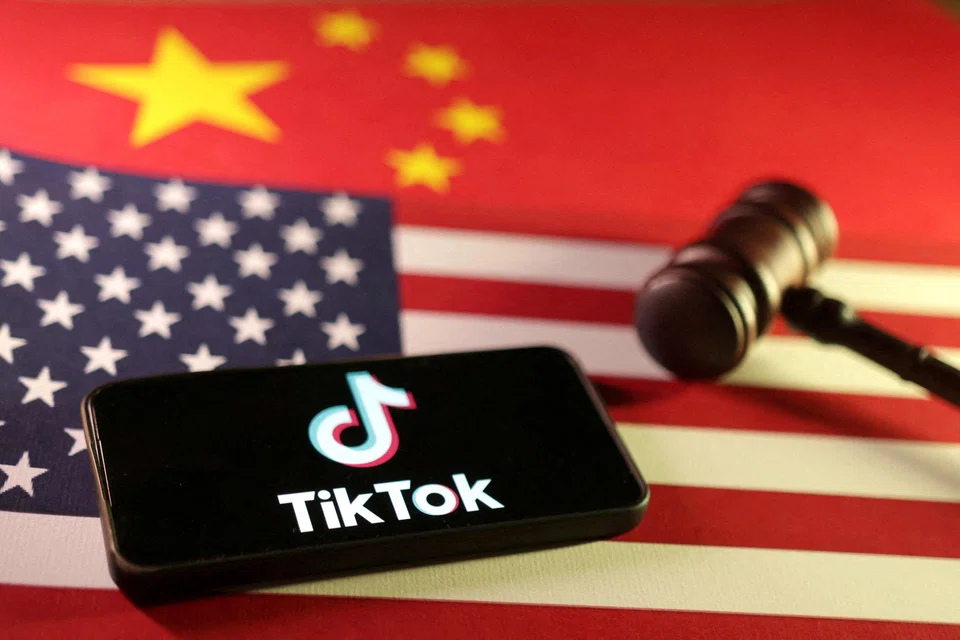
THE clock is ticking on TikTok’s impending ban in the United States, with the deadline set for Sunday (Jan 19).
If the Chinese social media app is not sold to an American buyer by then, it will effectively be banned in the US.
Some wonder if US president-elect Donald Trump will step in to stop the ban, which will take effect a day before his return to the White House. After all, he had in late December applied to the US Supreme Court to pause the ban.
Yet, it’s useful to note that he was also the one who, during his first term in office, tried to force the sale of TikTok in August 2020, citing national security concerns.
While there is no way to predict what Trump will do, it is safe to say that a sale is not on the cards, given TikTok’s parent company ByteDance’s reluctance to divest.
This is even as the US is the second-largest market for TikTok, with some 170 million users. It is also one of its fastest-growing markets, with a third of US adults saying they had used TikTok in 2023, up from 21 per cent two years prior, according to Pew Research Centre. It is estimated that the US accounts for 16.5 per cent of TikTok’s user base.
In a court filing last month, TikTok estimated that small American businesses that rely on the app could lose over US$1 billion in revenue, and TikTok itself would lose 29 per cent of its targeted global advertising revenue for 2025.
An effective ban against TikTok could also potentially ice already-frosty ties between the US and China, or even prompt other countries to follow suit.
Yet, when the plug is eventually pulled on TikTok, all that will probably matter little.
As a weary millennial who has witnessed the rise and fall of multiple social media platforms such as the likes of Friendster and Myspace, as well as instant messaging clients such as ICQ and MSN Messenger, I have no doubt that the ebb and flow of these platforms is mere truism.
There is a chance that TikTok may thrive outside the US – or eventually be consigned to the dustbin of history, just like many others that have come before it.
Meanwhile, self-proclaimed “TikTok refugees” have also begun looking at Plan B, and that for now seems to be RedNote, more popularly known as Xiaohongshu in China. In just two days, more than 700,000 users joined the platform, Reuters reported on Wednesday.
In that regard, one wonders if fears of “national security” issues are truly widespread or overblown, at the rate that Americans have embraced TikTok’s compatriot.
And if not RedNote, then TikTok’s departure could instead open up space for new entrants and innovation. Yet, the prospect of that is what’s scary.
After all, the crux of the matter with TikTok – privacy or security issues notwithstanding – is its extremely addictive algorithm and its by now well-documented adverse impact on the mental health and attention span of its mostly youngish users.
So much so that Australia has gone to the extent of banning children under 16 from using social media, and Singapore too is mulling over the effectiveness of doing so.
The question is, would we be worse off with a TikTok successor?