THINKING ALOUD

Time to clean up the ungoverned regions of South-east Asia

Scam call centres are not the only ‘industry’ in these areas, with illicit drugs such as heroin and methamphetamines still being produced there

Summarise
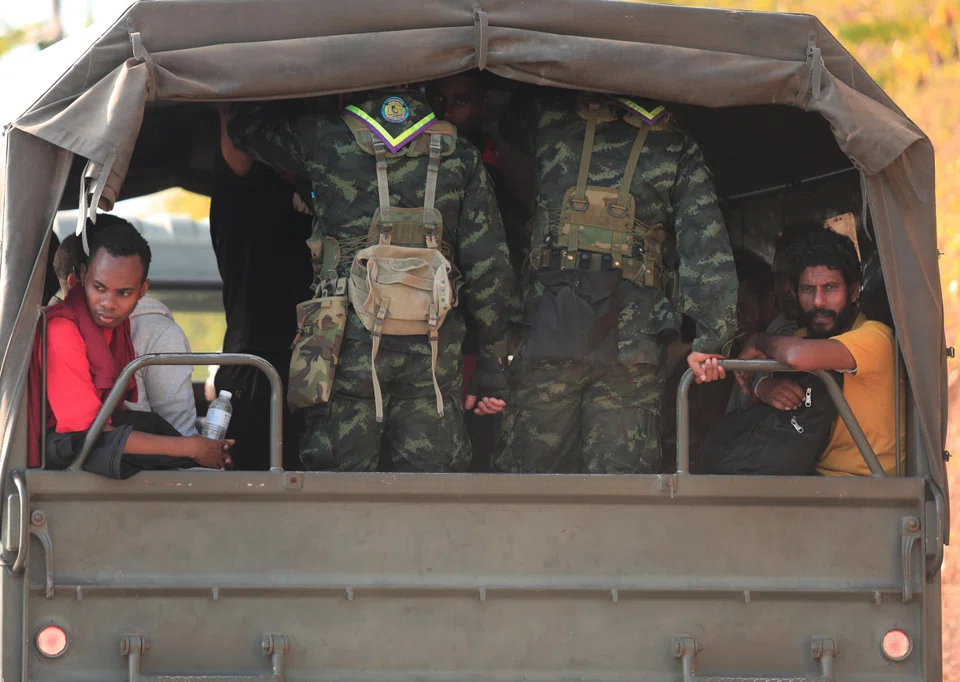
    • People who were rescued from scam centres in Myanmar travelling inside a military truck.
    • People who were rescued from scam centres in Myanmar travelling inside a military truck. PHOTO: EPA-EFE
    Mohan Kuppusamy
    Published Wed, Feb 19, 2025 · 05:00 AM

    THE ungoverned regions of mainland South-east Asia seem to be rapidly becoming havens for phone scam operators. The rescue of 260 people from a scam centre along the Myanmar-Thai border last week is just the latest iteration of the phenomenon. In this instance, these people were lured into this centre with promises of well-paying jobs before being held hostage and forced to work as scammers, swindling people around the world.

    AFP reports that scam compounds have now “mushroomed” along the border. That’s alarming but it makes sense. The military junta in Naypyidaw has been steadily losing control of more and more territory since its coup. Current estimates suggest the coup leader’s writ runs across no more than 60 per cent of the country. Rebels have established strongholds in border regions. However, vast areas are effectively beyond the reach of any authority.

    Scam call centres are not the only “industry” in the region. The point where the borders of Myanmar, Thailand and Laos meet is known as the Golden Triangle for good reason. Illicit drugs, including heroin and methamphetamines, are still being produced there. While no one is all too certain about the annual worth of the Golden Triangle drug trade, the global scam call business was estimated at US$1.03 trillion in 2024, as per the Global Anti Scam Alliance. How much South-east Asia contributes to that figure is not known but it must be substantial. Otherwise, why would scam operators flock to the region?


    For a variety of reasons, none of the three governments have mustered the resources or the will to take the fight to the kingpins of the drug trade. What hope then that they will act against scam operators? In 2007, Laos granted a 99-year land lease for 3,000 hectares to a Chinese gambling magnate, Zhao Wei, who named it the Golden Triangle Special Economic Zone. According to a Laotian government website, the zone was to be developed into a new urban centre for tourism and to enhance trading activities along Laos’ border with Thailand, Myanmar and China. Investment was invited for tourism, cross-border trade and entertainment businesses. US news reporters who have visited the place claim the zone has instead become a zone for gambling, prostitution and illicit trade activities. Other reports say scam call centres may also be operating from there.

    More importantly, this casino city model is not unique. Gambling operations have taken root in other remote pockets of this region, such as Mong La and Shwe Kokko in Myanmar’s rebel-controlled areas. What else is going on can only be guessed at. Communication tech has advanced so much in recent years that scam call centres would certainly find such remote places very appealing. Calls and text messages remain the most common way the scammers target their victims. And unlike the drug trade, which can be disrupted before illicit products reach their customers, the risks of scamming are minimal: The crooks are in one place, the victims thousands of kilometres away in another country.

    Given that Americans are some of the biggest victims of scams, it is only a matter of time before the issue raises the ire of the Trump team. Think fentanyl. The time has surely come for the other countries – perhaps Asean collectively – to take the lead in cleaning out these places.