

The time is ripe for ETFs on the mid and small-cap segments
Exchange-traded funds on both indices would benefit retail investors in many ways
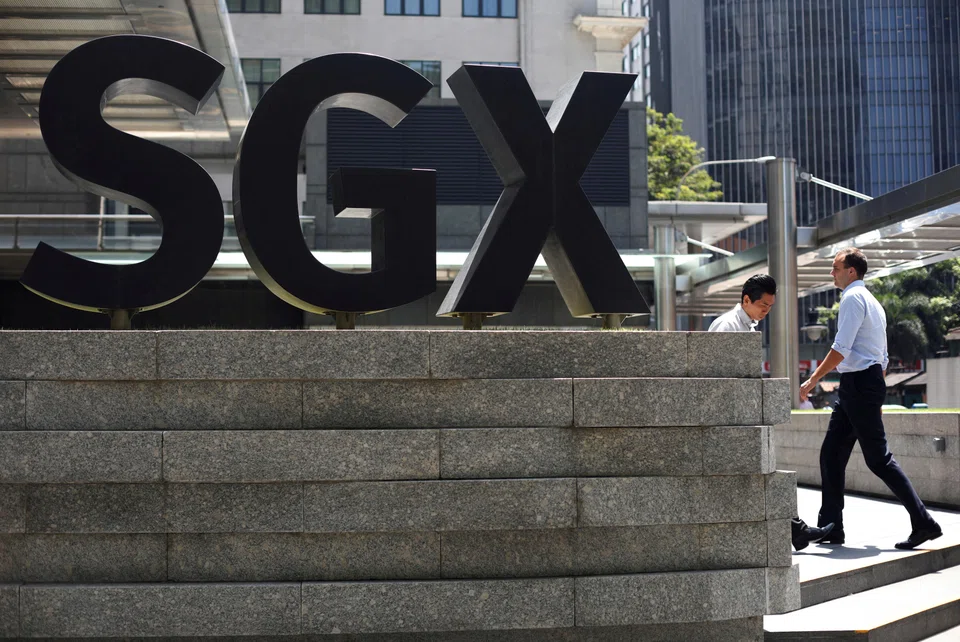
SINCE the Monetary Authority of Singapore’s Equity Market Development Programme (EQDP) is aimed at uplifting the mid and small-cap sectors, here’s a thought – how about some enterprising provider of exchange-traded funds (ETFs) consider introducing ETFs on two market indices that have been around for years and could be the benchmarks for any future unit trusts to beat, namely the FTSE ST Mid Cap and FTSE ST Small Cap indices?
It would be fair to say that other than the FTSE Straits Times Index (STI), most investors are unfamiliar with its mid-cap and small-cap stablemates.
According to the Singapore Exchange (SGX), the Mid Cap Index “is a market capitalisation weighted index that tracks the performance of the next top 50 companies after the 30 STI constituents’’.
The Small Cap Index, in the meantime, “is a market capitalisation weighted index that tracks the performance of companies listed on SGX that are within the top 98 per cent (by market capitalisation), save for those included in the STI and FTSE ST Mid Cap Index’’.
In a Jun 18 market update, SGX reported that “Food Empire, Yangzijiang Financial, Centurion Corporation, BRC Asia and Wee Hur Holdings led the 42 constituents of the FTSE ST Small Cap Index in H1 2025, which has generated a 4.9 per cent total return over the period, marginally outpacing the FTSE Asia Pacific Small Cap Index at 2.7 per cent’’.
The exchange also reported that the Small Cap Index had a combined market capitalisation of S$33 billion, with S$69 million of average daily turnover (ADT) in the 2025 year to Jun 17, so it has decent size and liquidity.
The Mid Cap Index appears to be a bit of a laggard – at least until June. In a Jun 26 market update, SGX said: “SIA Engineering, UOL, Sheng Siong, Raffles Medical and DFI Retail Group have led the 32 constituents of the FTSE ST Mid Cap Index in H1 2025, which has generated a marginal 1.5 per cent decline in total return over the period, lagging the FTSE Asia Pacific Mid Cap Index at 4.6 per cent.’’
SGX said the Mid Cap Index had a combined market capitalisation of S$125 billion, with S$340 million of ADT in the 2025 year to Jun 25, so it, too, has decent size and liquidity.
ETFs on both indices would benefit retail investors in many ways.
First, many smaller firms are largely unknown to the majority of small investors, given the absence of research. Trying to pick winners would therefore be difficult. ETFs would provide immediate diversification and exposure to both segments. They would also complement the EQDP’s efforts to raise the profile of these firms.
Another justification is that the timing is opportune. Smaller companies tend to be more highly geared, and therefore more sensitive to interest rates. Small shifts in rates can have a profound impact on their bottom lines, so rates falling as they are now will very likely translate to better profits for these firms.
Currently, exposure to these segments is only available through unit trusts, which may include overseas firms and tend to come with higher fees because of active management.
Passively managed ETFs, on the other hand, would charge lower fees while offering the added advantages of greater transparency and intraday liquidity.
However, not all mid and small-cap companies are truly investment-worthy. Hopefully, as research coverage improves, the better firms will be selected for inclusion in the indices, which would in turn help sustain interest in any related tracker funds that should be launched.
TRENDING NOW

Unhealthy air quality in Singapore enough to trigger haze pollution law; NEA is monitoring situation

Once staunchly pro-China, Malaysian Chinese businesses are now distancing themselves from Beijing

Could stablecoins be the future of money?

Johor’s investment boom is real, but actual contribution from JS-SEZ unclear

