Is time running out for Singapore’s heritage clubs?
As prime sites come under review, private sports and recreation clubs must show they can deliver value beyond exclusivity to secure their future


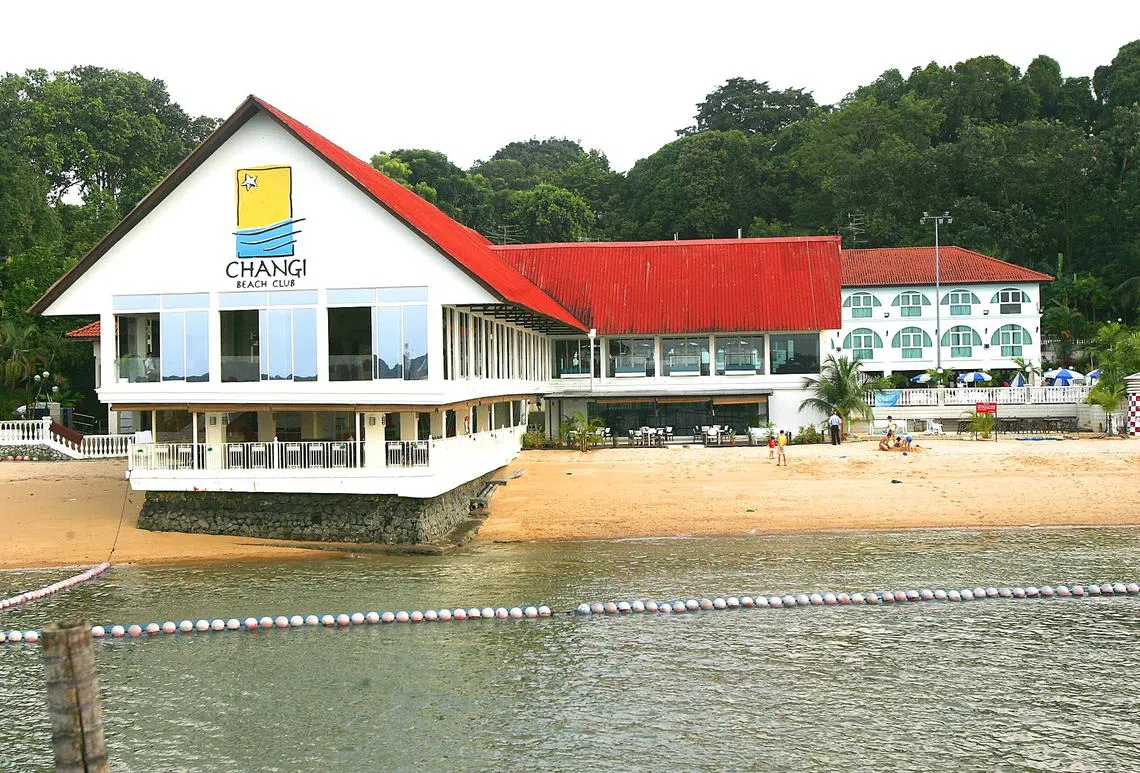
[SINGAPORE] Founded in 1950, Changi Beach Club (CBC) has long operated as a private seaside retreat.
But internal e-mails seen by The Business Times showed that by February this year, the club was on the brink of closure. Financial difficulties and a failure to meet quorum at two extraordinary general meetings had stalled a vote on whether to accept a short lease extension from the state – one that came with a monthly rent of S$49,200.
Without a decision or a viable solution, the club says it would be forced to suspend operations by end-March. In a final push, 359 members raised nearly S$420,000 to secure a three-year lease extension through June 2028.
In a message to members following the vote, newly appointed chairman Bernard Tay reveals that at the time of the handover in March, the club’s monthly operating expenses stood at S$171,000 against operating income of S$59,000, resulting in a net operating loss of S$112,000.
He says the new committee has since introduced cost-cutting measures and revenue initiatives to put the club back on steadier footing. Tay declines to comment when contacted, citing ongoing internal deliberations.
While CBC ultimately bought itself time, its brush with closure raises a broader question: in land-scarce Singapore, can private sports and recreational clubs continue to justify their hold on prime leasehold sites?
As leases near expiry and redevelopment pressures mount, these storied institutions are facing pressure to deliver public value or risk being written out of the city-state’s future.
What’s at stake?
From a real estate perspective, the answer depends on how such decisions are framed, says Dr Lee Nai Jia, head of real estate intelligence at PropertyGuru.
Efficiency points to “highest and best use”, where competitive bidding decides whether private clubs or developers can extract more value. Community needs, meanwhile, weigh the location and amenities valued by residents.
Such trade-offs are under sharper review.
In July, authorities confirmed that six golf courses will not have their leases renewed over the next decade – with the land earmarked for housing and other uses – as part of a broader move to repurpose sports and recreation sites.
Keppel Club’s Bukit Chermin Road course, for instance, had already been slated in 2014 to be phased out in end-2021 upon lease expiry – though its lease was subsequently extended to June 2022 – to make way for public housing.
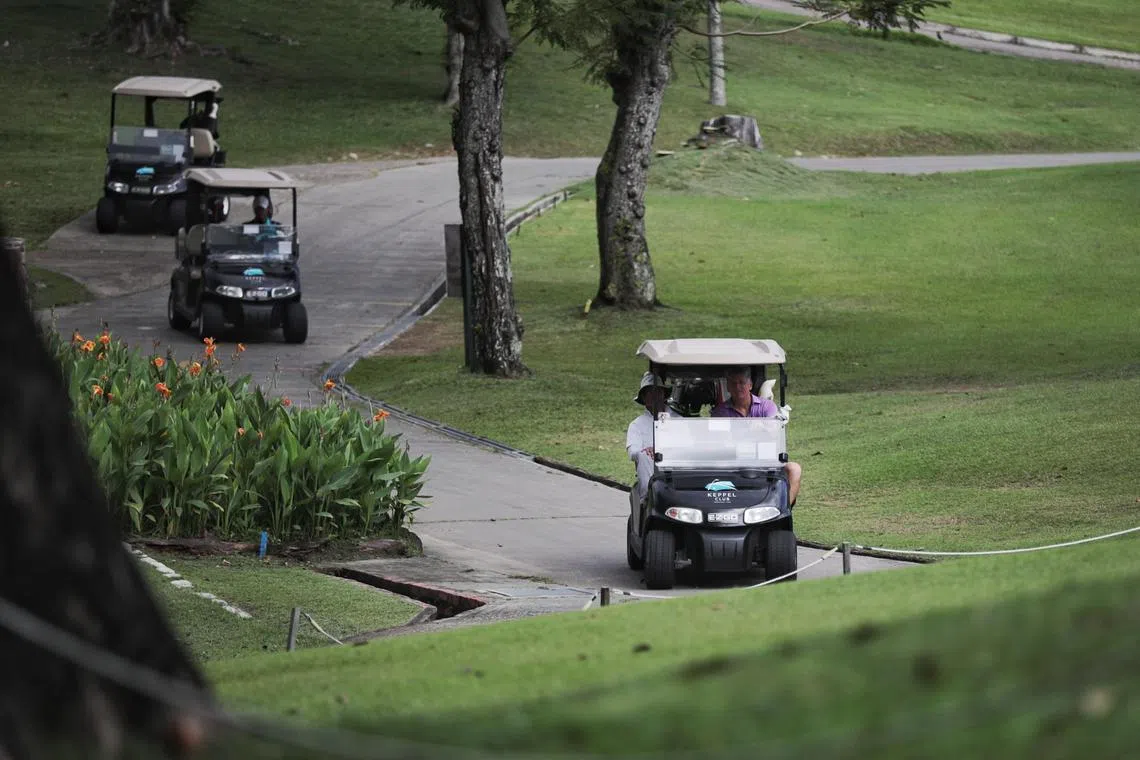
In 2020, the club accepted an offer to manage the Sime Course, one of four under the Singapore Island Country Club (SICC). Both Sime and SICC’s Bukit courses are among the six named in the July announcement.
While the Keppel-SICC arrangement was not a merger, SICC itself was formed in 1963 through the merger of the Royal Singapore Golf Club and the Royal Island Club, after both faced declining membership.
Separately, in September 2023, it was announced that Raffles Town Club (RTC) – on a prime Bukit Timah site – will be redeveloped for residential use once its lease ends in October 2026.
The 12,318 square metre site was purchased in 1996 by Europa Holdings for S$100 million. A past BT report cited property analysts estimating that about 200 residential units could be built there, assuming a plot ratio of 1.4 and a minimum unit size of 915 square feet.
The future development is likely to be a prime luxury condominium project. Assuming a 99-year lease, finished units could sell for above S$3,000 per square foot when completed – implying a total sales value several times the site’s original S$100 million purchase price.
Taken together, the Keppel-SICC arrangement, SICC’s origins in a 1963 merger, and the upcoming redevelopment of RTC highlight two possible futures for private sports and recreation clubs: in some cases, survival through adaptation; in others, the return of prime land to the state for redevelopment into uses that serve a wider public.
Status check
Excluding CBC, there are five sports and recreation clubs that are officially listed as members of the Club Managers’ Association (Singapore).
These are the Singapore Recreation Club (SRC) and Singapore Cricket Club (SCC) at the Padang, the Singapore Swimming Club (SSC) in Kallang, the Chinese Swimming Club (CSC) in Marine Parade, and the Singapore Polo Club (SPC) in Mount Pleasant – all occupying largely central and historically significant sites.
Most have secured lease renewals beyond 2050, except SSC (part of its site expires in 2033) and SPC (2038).
The Urban Redevelopment Authority’s (URA) Master Plan is keeping these sites zoned for sports and recreation, with no rezoning plans in the next 10 to 15 years.
URA tells BT that it “recognises the importance of easy access to recreational spaces as a key factor in enhancing quality of life”, but added that land use plans are reviewed regularly to “ensure they remain relevant in meeting evolving needs and national priorities”.
In Singapore, most leasehold land is state-owned and managed by the Singapore Land Authority. When leases expire, land reverts to the state unless renewed at the government’s discretion.
Membership pressures and changing demand
Even with their sites safeguarded for now, the question of viability extends beyond land tenure.
Clubs face slower membership growth, ageing profiles and rising operating costs – pressures that could shape their future as much as any lease renewal.
According to publicly available figures in club annual reports, membership-related fees remain a core income stream for the clubs. Monthly subscriptions for Singapore’s sports and recreational clubs typically range from S$76 to S$165, while membership fees can run from about S$6,000 for a regular individual membership at SPC to S$23,000 for an ordinary membership at SCC, depending on whether it is bought directly from the club or on the open market.
Resale prices are sometimes lower. Fion Phua, owner of membership brokerage Tee-Up, says SRC’s memberships recently traded at around S$11,000 to S$12,000, compared with S$15,000 for a new ordinary membership purchased directly from the club.
Transfer fees apply at all clubs, though amounts vary. Some, such as CSC, only sell their memberships on the open market.
But across clubs, core membership has plateaued or fallen.
SRC’s ordinary membership fell 5.6 per cent from 7,076 in 2021 to 6,679 in 2024. SSC ended the same period with 8,062 members, slipping to 7,979 as at Jan 31 this year. SPC held steady at about 1,339 between 2021 and 2024.
Generational shift
Membership skews older as well.
At SRC, most members are aged 56 to 70, while at SSC, most are in their late 50s. SPC puts its average at around 50. Sustaining or growing numbers is critical not just for relevance, but for financial viability.
Younger adults may be harder to win over.
A Forward Singapore report released in 2023 noted that today’s youths increasingly “chase meaning and purpose”, moving away from traditional status markers.
Phua agrees: once symbols of affluence and social capital, clubs now appeal for different reasons.
She has brokered memberships for working adults in their 30s and 40s at SRC, SCC and SSC, drawn by lifestyle perks – from networking and trendy activities such as artificial intelligence programmes and pickleball, to child-friendly spaces that let parents “park their young children” while they unwind.
“These are the young blood coming in, and they are not happy with just the facilities (a club) gives. They (take up memberships) because they want to join an activity,” she says.
But not all are convinced.
Logistics manager Shaun Ho, 39, says that paying for membership “just doesn’t make sense”.
His HomeTeamNS family pass costs S$21.80 for two years and already offers a pool, dining and a supermarket. “When my kids just want to swim, we (also) go to the ActiveSG pool near our house.”
Income streams under strain
For clubs, the question of value sits alongside other pressures on their income streams.
Food and beverage (F&B) operations have become a significant contributor for many clubs, in some cases overtaking membership fees as the top revenue line.
At SRC, F&B revenue surged from S$1.9 million in 2017 to S$9.6 million in 2024, while at SCC, F&B has consistently accounted for nearly half of total revenue since 2021 – making it the club’s top-performing income stream, ahead of membership-related revenue.
F&B may be a major revenue earner, but it is also expensive to run. At SSC, the department pulled in about S$11 million in revenue for FY2024/25, yet closed the year with an operational deficit of S$1.1 million.
The club’s president, S Radakrishnan, attributes the performance to rising costs.
“The labour cost – the cost of part-timers, full-timers – and also food costs, have all gone up… I think most clubs are also seeing this (trend),” he says. SRC president Chang Yeh Hong also tells BT his club faces similar pressures.
Another once-lucrative income stream, jackpot machines, has also been in sharp decline. SRC, for instance, earned about S$1.6 million from fruit machines in 2017, but wound down operations entirely by June 2024 due to falling revenue and regulatory tightening.
SPC made a similar call, shutting its jackpot room in October 2023 after posting a net surplus of just S$17 for the year.
Only a handful of clubs still operate jackpots today – among them SSC, where income from the segment fell 51 per cent year on year to S$197,000 for the financial year ending Jan 31, 2025.
Adapting for the future
Faced with rising costs, eroding income streams and shifting member expectations, some clubs are modernising, targeting new demographics, or engaging the wider community.
At SRC, its #SRCTransforms initiative includes multi-use courts, new dining concepts and a multi-sport hub with skyline views.
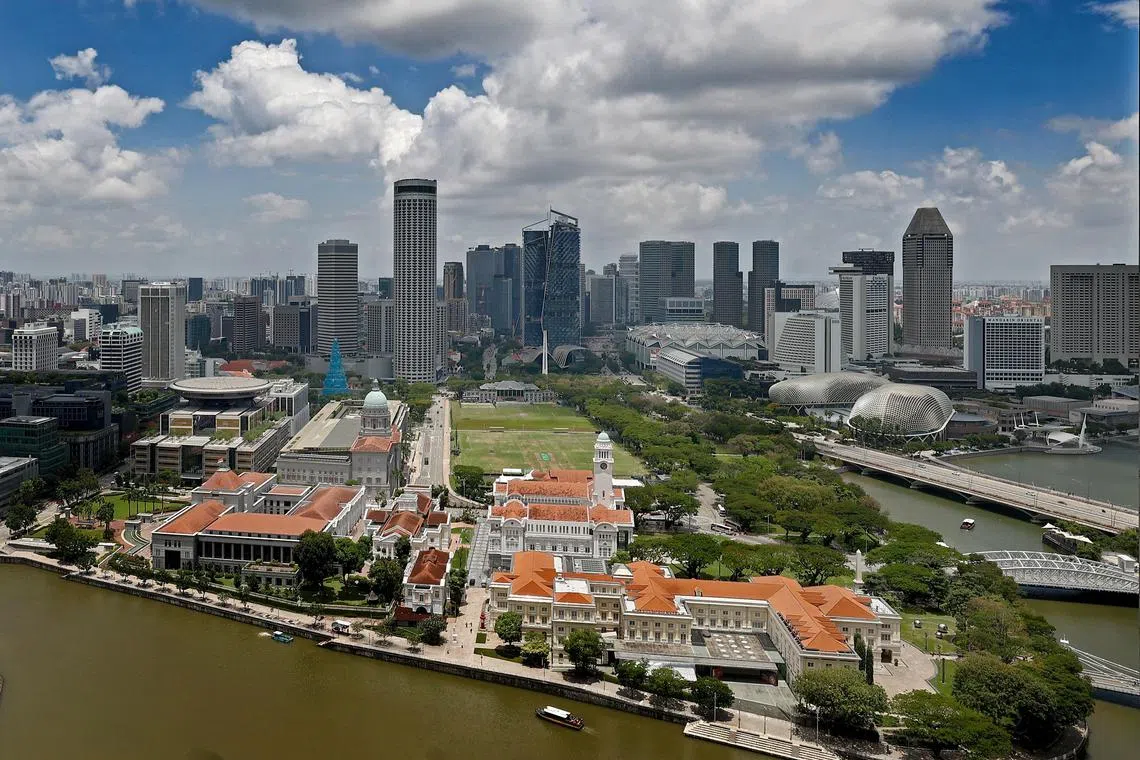
Its Padang frontage was in 2023 included as part of the “Padang Civic Ensemble” Unesco World Heritage bid, which if approved would secure its site for the long term.
But club president Chang stresses that sustaining operations still requires careful management.
Despite higher F&B and manpower costs, SRC reported a rebound in earnings before interest, taxes, depreciation and amortisation to S$1.42 million in 2024 (from S$560,000 in 2023), a narrower net loss of S$50,000, and cash reserves of up to S$17.8 million.
He attributes this to prudent financial stewardship that saw the club diversifying revenue through events and rentals, as well as streamlining operations via digital tools.
On membership, Chang links the fall to 6,679 ordinary members last year to non-renewals after a land levy adjustment, but says new categories launched in May drew a 20 to 30 per cent uptake.
“With growing interest from younger members and a pipeline of innovative offerings, we’re confident in SRC’s long-term viability as a modern yet timeless institution,” he says.
SPC, whose lease runs until 2038, is building reserves for its potential lease renewal.
General manager Sylvan Braberry says the club is also working to strengthen its case for continued land use by positioning itself as a “key sporting and community hub”.

Beyond polo training through its Atoms Academy, with more than 500 active riders, it has opened access through public tournaments, riding sessions and outreach to schools, seniors and persons with dementia.
Upcoming activities include the inaugural Cosmopolitan Polo event on Aug 30, open to the general public, and the SPC Outreach Polo Tournament & Carnival on Oct 11.
SPC is also aligning with 5,000 new Build-To-Order (BTO) flats at Mount Pleasant by partnering community centres to offer riding experiences, stable tours and equestrian activities.
In Kallang, SSC is refreshing facilities while tapping new residential catchments.
Its first renewal phase will upgrade the ballroom, reception and Cabana restaurant; the next will create a “youngster hub” to encourage members to stay and socialise.
Financial planning runs alongside: a S$10 monthly savings scheme for its lease renewal in 2033, with possible increases as the deadline nears.
General manager Kok Min Yee adds that SSC is driving membership and F&B sales, while extending junior membership age from 21 to 26 to retain younger members.
Radakrishnan sees nearby BTOs as an opportunity. “We are aggressively working out a package for the new residents here.”
On opening restaurants to the public, he demurs: “A club has got to be exclusive – if not, it’s no different from any other community centre.”
Weighing priorities
Whether these efforts will secure the long-term future of private clubs remains to be seen. As leases come up for review, the question is whether scarce land should serve a few or many.
Sing Tien Foo, provost’s chair professor of the Department of Real Estate at National University of Singapore Business School, tells BT the use value of private clubs depends partly on “how much members are willing to pay to keep club uses exclusive”. But planners must also weigh “social benefits, which cannot be directly measured in economic value terms” – such as conserving historic buildings or providing community recreation.
“When land is scarce, it is important to strike a balance,” he says. “The hard and harsh trade-off may mean that some lower-use cases give way to those benefiting a larger segment of the population, at the expense of a small group of wealthier individuals.”