Today’s geopolitical disruption demands a new crisis plan for Singapore SMEs

Forget the survival playbook from the Covid-19 era
Summarise
    • With credit conditions tightening, the period of surviving with assistance is over, as it is now the survival of the fittest, says the writer.
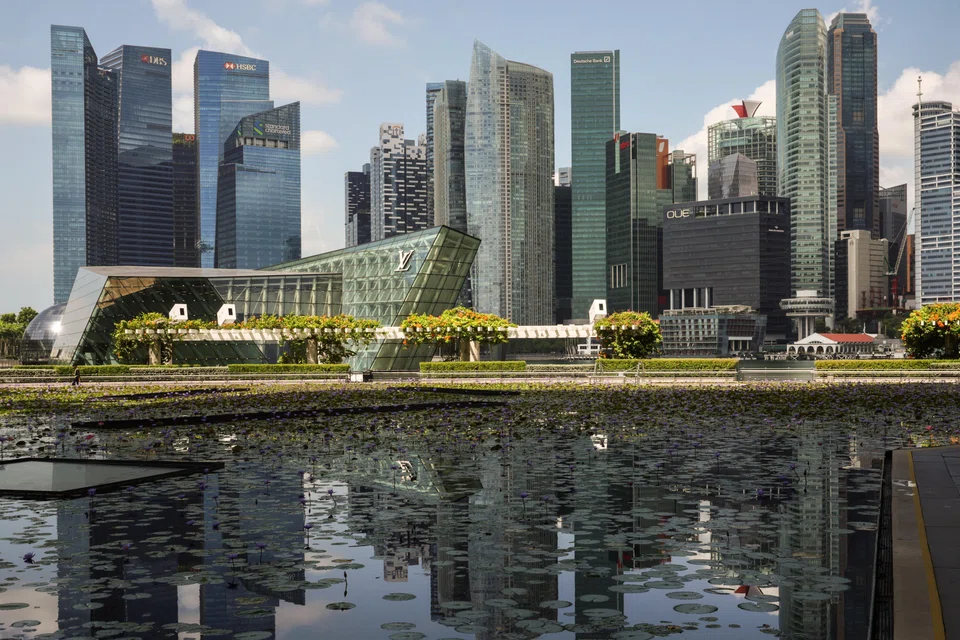
    • With credit conditions tightening, the period of surviving with assistance is over, as it is now the survival of the fittest, says the writer. PHOTO: BT FILE
    Published Tue, May 12, 2026 · 07:15 AM

    WITH global supply chains again fractured amid escalating geopolitical tensions, many Singapore small and medium-sized enterprise (SME) leaders turned to their familiar survival plan: the 2020 pandemic playbook.

    The strategy is deeply ingrained: wait and see, absorb the initial cost spikes, tap into government grants and wait for global trade to normalise. But treating today’s geopolitical disruption as a replay of Covid-19 could be a costly miscalculation.

    The pandemic was largely a one-off supply-side shock cushioned by unprecedented fiscal intervention, such as loans and wage subsidies.

    Today, we are operating in “hard mode”. Inflationary pressures are hitting pockets directly, causing a systemic contraction in consumer demand, while global trade undergoes a longer-term rewiring.

    While the S$1 billion national support package provides a vital macroeconomic buffer, it cannot reroute physical supply chains or rewrite vulnerable vendor contracts.

    With credit conditions tightening, the era of surviving with assistance is over, as it is now the survival of the fittest.

    In our discussions, SME leaders consistently reported a sense of limited external control but increasing internal urgency as utilities and freight costs rise.

    However, the most resilient companies were not waiting for clarity.

    Even before the current tensions, the Forvis Mazars Apac C-suite Barometer 2026 showed confidence among regional leaders rising to 41 per cent, as they treated disruption not as an exception, but as the baseline.

    Singapore’s about 300,000 SMEs employ 70 per cent of our workforce. To protect jobs and stay competitive, SMEs need to discard the outdated crisis plans and execute hard pivots in three areas.

    Optimise cash conversion cycle immediately

    For many privately owned businesses, financial management is treated as a compliance function focused on reporting rather than decision-making. Budgets are often static and rarely used to track real-time performance. That approach is no longer sufficient.

    With shipping routes extending around South Africa’s Cape of Good Hope, inventory is delayed at sea and cash is effectively locked in transit. Concurrently, suppliers are tightening terms while customers delay payments, creating a structural squeeze on liquidity.

    Businesses must thus move towards a “live” view of liquidity by tracking inflows and outflows dynamically rather than retrospectively. Weekly cash dashboards, rolling forecasts and scenario planning should become standard practice.

    A practical starting point is a rolling 13-week cash flow stress test. If a business cannot sustain payroll and fixed costs under assumptions of delayed shipments and slower collections, it is facing a liquidity issue, not just a profitability one.

    However, internal stress tests solve only half the equation. SMEs must balance discipline with collaboration by working closely with suppliers and customers to manage pressures across the value chain.

    This may involve negotiating tiered payment terms, offering early-payment incentives or aligning expectations transparently.

    Rather than just absorbing costs, forward-looking mid-sized logistics SMEs are using artificial intelligence-enabled dashboards to pull data from accounting software and forecast cash positions under different freight scenarios.

    This allows them to reassign finance executives from manual spreadsheet consolidation to active vendor negotiation.

    Transition to dynamic contract structures

    Rigid, fixed-price contracts are increasingly misaligned with today’s cost environment. Input costs, such as energy and freight, are no longer stable enough to support long-term pricing assumptions.

    While there is always the option to renegotiate, the reality is that many of these contracts are long, locked in and cannot be unilaterally torn up.

    SMEs need a two-speed approach. First, businesses must embed flexibility into all new agreements through mechanisms such as periodic pricing reviews or index-linked adjustments.

    For example, explicitly tying a 5 per cent surcharge to a public, verifiable freight index transforms a difficult pricing conversation into a shared reality. When pricing is tied to transparent benchmarks, adjustments become easier to communicate and more acceptable to clients.

    Second, where repricing is not immediately possible for existing contracts, the focus shifts to mitigation. SMEs should engage clients early, anchoring discussions in data and framing them around service continuity.

    Providing options, such as partial adjustments or revised service scopes, helps preserve trust while managing financial pressure.

    Activate regional suppliers before choke points close

    Supply-chain diversification is often discussed, but less frequently executed. Overseas factories prioritise active, paying clients. If you are waiting for the geopolitical dust to settle, you are already behind.

    Even before the Strait of Hormuz disruption, the Barometer found that 58 per cent of Asia-Pacific corporate leaders were deliberately pivoting away from volatile global routes to lock in localised, regional networks.

    SMEs must pay the proximity premium today. Identify the single points of failure in your supply chain and instantly activate a regional Asean supplier.

    Purchasing a small, continuous volume right now may cost slightly more, but it guarantees that operations in Singapore do not halt.

    Waiting until the next crisis to test a factory in Malaysia or Vietnam will only reveal that their production lines have already been secured by the leaders who planned ahead.

    The challenge lies in balancing practicality with adaptability. Diversifying suppliers is not always immediately viable due to contractual commitments, operational urgency or higher logistics costs.

    For instance, a Tuas-based manufacturer might look to Johor for cheaper rent and labour, but that requires maintaining dual overheads. Furthermore, if a local client demands a two-hour turnaround for a replacement part, a cross-border supplier cannot fulfil that need.

    Because it is often cheaper and faster to stay with existing suppliers until a disruption happens, concentration risk becomes a blind spot. Companies should avoid a wholesale shift, instead adopting a phased approach to build secondary supply lines in parallel.

    Think of this process as dating before marriage. Start organically, map single-supplier dependence and shortlist Asean alternatives.

    Engage them through trial orders, integrate their payment systems and aim to gradually shift roughly 10 per cent of volume for critical items to establish a first threshold of security.

    Importantly, Singapore SMEs are not starting from zero. Initiatives such as the Enterprise Development Grant for core capability upgrades and the Market Readiness Assistance Grant for regional partner searches can help offset upfront costs and mitigate risks.

    The burden of resilience

    The government has provided a financial buffer, but policy support can only buy time; it cannot replace operational decisions. The burden of resilience now sits with SME leaders.

    During the pandemic, being just “fit” enough to survive was acceptable because the safety nets were vast. Now, relying on temporary relief is no longer a sustainable strategy.

    The SMEs that will emerge stronger are those making decisive, pragmatic operational changes now, before this brief window closes. It is time to make the hard operational calls today.

    The writer is director, management consulting, at Forvis Mazars in Singapore