
Too early to let guard down on banking risks
 Add BT as a preferred source
ASIAN banks have come a long way since their flailing fortunes in the late ‘90s during the Asian financial crisis when currencies collapsed, hot money took flight and asset bubbles burst, causing bad loans to spiral.
Shaped by crises including the 2007/08 global financial crisis (GFC), banks tightened safeguards, chiefly capital buffers. Those moves, as well as policy measures, have helped the region’s banking sector better withstand stresses.
This appears no different with the recent banking turmoil that has unfolded in the US and Europe of late, which thus far has not led to a visible spillover into the region. Nevertheless, there are warnings that Asia’s credit markets and borrowers may not be altogether insulated from potential “second-order effects”, which include tighter access to financing and higher risk premia demands.
It is important to draw the distinction between the banking stress led by the collapse of the US’ Silicon Valley Bank and Signature Bank and that of 2007. The most glaring difference is that the latest one involves mid-sized banks and was triggered by a run on deposits amid a tech sector downturn and crypto market crash.
During the GFC some 15 years ago, the economic meltdown did not spare banks – big and small – and was led by the risky subprime mortgage crisis when the housing bubble burst in the US. Foreclosures dramatically rose, and bank lending fell sharply as the crisis spread around the world.
So far, the recent banking turmoil, which also saw the unravelling of Europe’s Credit Suisse, has been contained owing to swift policy action. The earlier panic has since subsided, led by the notion that the banking woes were isolated to a few institutions. Worries over contagion or systemic risks to other parts of the world also appear to be overdone.
Navigate Asia in
a new global order
Get the insights delivered to your inbox.
But this is not the time to be less watchful as banking risks linger, particularly given a slowing global economy driven by rate hikes as central banks combat rising price pressures.
Granted, Asian banks generally have more “conventional models” compared to their woe-struck global peers, and are also viewed as being well-regulated with strict capital requirements in place, and hence may be better placed to absorb some strain on assets.
So far too, widespread deposit flight and credit crunches have not appeared.

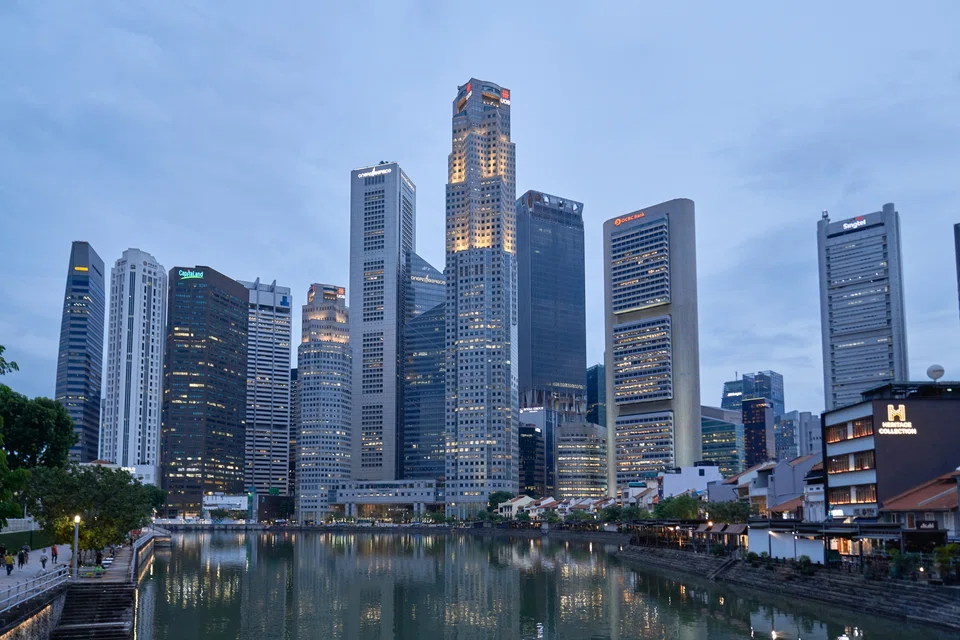

While these may provide a shield, Asian banks may not be insulated from secondary effects including risk aversion in markets, and if lending conditions tighten significantly. These signs are tricky to ascertain for now, as the banking turmoil erupted merely two months ago, and its impact on credit conditions, borrowers’ creditworthiness, and the real economy could take some time to show up. As one analyst puts it, this could involve a “slow-burning process”.
Furthermore, inflation across Asia appears to be decelerating. Commodity prices have also become less elevated which has eased pricing pressures. This means central banks may need to cut rates to avoid taking real rates into restrictive territory, say analysts.
Growth prospects across the region are further supported by the full reopening of China, providing a boost to global production and consumption.
Even so, the macro environment for the region’s export-oriented economies remains delicate. For this reason, it is imperative to stay vigilant and not be complacent over what now appears to be simply a “mini” banking crisis.
Decoding Asia newsletter: your guide to navigating Asia in a new global order. Sign up here to get Decoding Asia newsletter. Delivered to your inbox. Free.
Copyright SPH Media. All rights reserved.

