

Tory turmoil grows over sleaze and recession
AFTER the UK’s political rollercoaster in 2022, the conventional wisdom had been that Rishi Sunak’s prime ministership might augur a period of more stable government. However, Tory turmoil has intensified in January, threatening his hold on power sooner than expected.
Since the end of the Second World War, most UK governments have generally been brought down by economic challenges, including in 1970, 1974, 1979, and 2010, or sleaze/ethics crises, as in 1964 and 1997. However, the scale of the Sunak team’s problems is underlined by the fact that it is currently failing on both counts.
It has been clear for many months that the government would face a tough economic landscape in 2023, with the significant prospect of a recession. However, what wasn’t widely appreciated, at the outset of Sunak’s prime ministership, is the degree to which sleaze would consume his top team too.
While a general election may not be called until 2024, this is already having a clear political impact. For after around 100 days into office, the prime minister’s approval ratings have fallen to his lowest ever level of -15 (disapproval of 40 per cent and approval of 25 per cent) this week, according to one poll. This needs to be put in the context of Sunak’s much higher approval for large periods when he was the UK’s finance minister from 2020 to 2022.
Although Sunak’s administration is barely three months old, it has therefore already been rocked by an unusually large number of ethics-related challenges for senior ministers. This includes Sunak himself who in recent days has been fined for not wearing a seat belt while being driven in a car, his second fixed penalty in a year after police also found him guilty of breaking pandemic rules alongside his predecessor in 10 Downing Street, Boris Johnson.
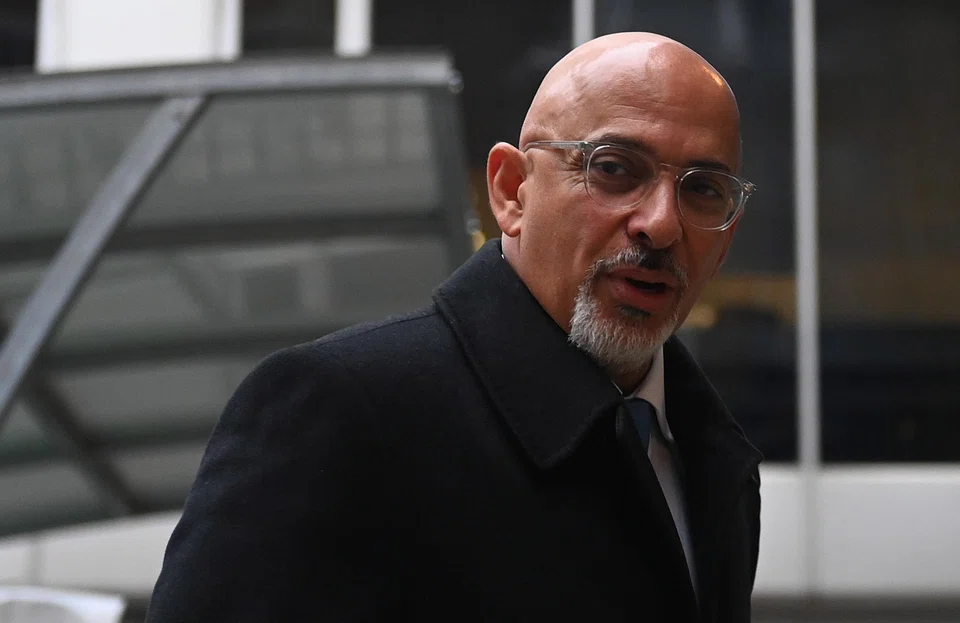
While some regard these offences as relatively minor, the challenge for Sunak is that they come in a wider context. Cabinet Office Minister Gavin Williamson resigned in November after serious bullying allegations mounted; Deputy Prime Minister Dominic Raab is also under investigation for similar allegations; Conservative chair Nadim Zahawi faces growing questions over his finances; and Home Secretary Suella Braverman was reappointed after multiple breaches of the ministerial code.
Such is the scale of these so-called sleaze challenges, parallels have been drawn between Sunak’s predicament in 2023 and those of then-prime minister John Major who lost power in 1997 in an election landslide to Tony Blair’s Labour team. While there are some similarities, to be sure, what is troubling for Sunak is that – unlike Major in 1997 – he has a second major challenge of a flatlining economy too.
This core fact was confirmed on Tuesday (Jan 24) when data showed that UK private sector business activity suffered its sharpest drop in two years. Preliminary data from the purchasing managers’ index (PMI), compiled by S&P Global and the Chartered Institute of Procurement & Supply (CIPS), underlines that the UK economic downturn in January has been worse than expected.
The monthly survey showed a reading of 47.8 in January, a drop from the 49 recorded in December, and below the market consensus of 48.8. Any score below 50 illustrates economic contraction, and the latest data represents not just the fastest rate of decline since the January 2021 coronavirus lockdown, but also the sixth month in a row that the economy has slipped.
The data appears to reflect not just short-term buffers to growth such as industrial strike action and the rise in energy costs due to the Ukraine war. It also flags the continuing damage to the economy from longer-term structural issues, including the almost 1 million people who have left the labour market since the pandemic began, including as a result of growing early retirement.
To be sure, the survey is not all bad news as cost pressures have continued to ease and businesses reported feeling more optimistic than they have been for almost three quarters of a year. Moreover, both the manufacturing and services sectors appear hopeful that the global economy will improve and UK inflation will drop.
Nevertheless, the net impact of these economic woes, plus the sleaze allegations, is a darkening political outlook for Sunak. To be sure, the United Kingdom is unlikely to see a repeat of 2022 which was the first year in more than a century and a half that three prime ministers resided in 10 Downing Street.
However, there may continue to be high levels of governmental instability. So while Sunak wants to try to last in power into 2024, it remains possible his government may collapse in 2023.
A key danger point for him this year is the May 2023 local elections. If the results are very poor for the Conservatives, there will be growing internal tension for a change of leader, especially if the party is still languishing more than 20 percentage points behind Labour in the polls.
Yet, at the same time, the Conservatives also know that – should there be a further change of leader – there would be growing clamour too for an immediate general election too. This is the case as there have already been two changes of prime minister since the last election in December 2019.
The last time the United Kingdom was in this leadership territory was in the pre-war era (1930s/40s) when Stanley Baldwin won the 1935 election and handed power to Neville Chamberlain, who in turn passed the baton in 1940 to Winston Churchill. What was perceived as legitimate in wartime, however, has less democratic respectability over 80 years later in peacetime.
It is partly for this reason that, if the Conservatives do change leaders again this year or next, it may well be Johnson who they turn to. The former prime minister would seek to argue that he still has a democratic mandate from the 2019 election, and can deliver for the party again. Moreover, he remains very popular amongst Conservative members, more so than Sunak and Liz Truss before him too.
What makes Johnson’s appeal so potentially potent to Conservatives is that he was turfed out from Downing Street in 2022 not by losing a national ballot. Instead, he was deposed in an internal party vote which may be regretted by increasing numbers of party members if Sunak underwhelms in office in 2023, especially if May’s local election results turn out to be dismal. .
Andrew Hammond is an associate at LSE IDEAS at the London School of Economics
TRENDING NOW

Two Singapore-listed palm oil firms named in Greenpeace report on Indonesian plantation fires
Singapore Airlines flight returns to San Francisco after ‘unruly’ passenger incident

Singapore looking into which companies responsible for haze-causing fires: PM Wong
Deluge IPO 3.86 times subscribed ahead of SGX debut

