Transatlantic ties transformed on Ukraine war anniversary
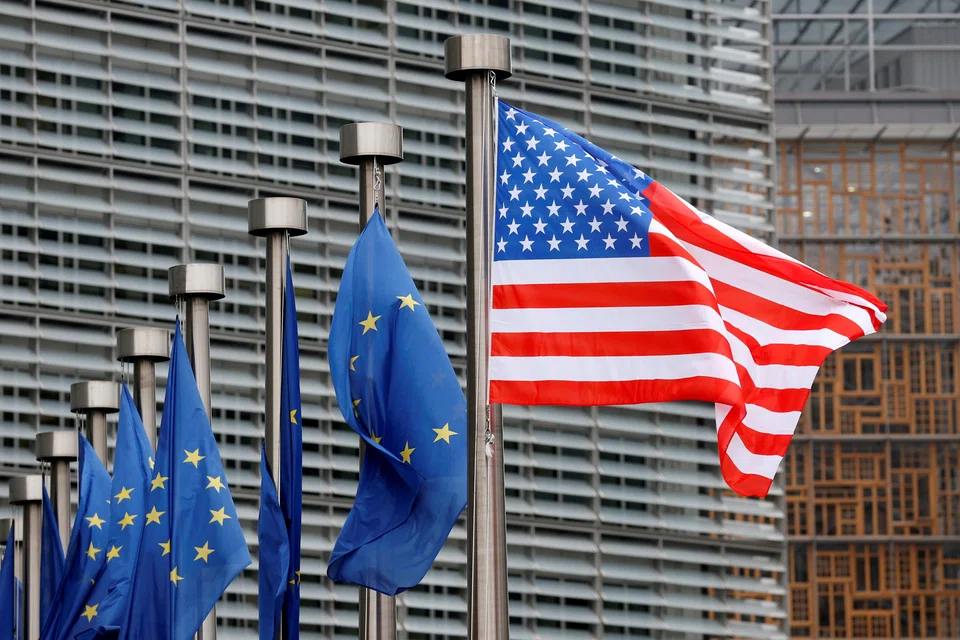
SOME 12 months after Russia’s invasion of Ukraine, key upside surprises include not just the remarkable resilience of Ukraine’s fighting forces and wider populace, but also the unity of the Western alliance in the post-Trump era, as will be showcased with US President Joe Biden’s visit to Poland this week.
Well documented is the fact that the EU-27 has shown unexpected solidarity in the last year since the Ukraine conflict began, albeit with the frequent, significant exception of Hungary’s intransigence. Building from this, however, is the restoration of the wider transatlantic alliance in the post-Trump era, in no small way thanks to the statecraft of the Biden administration.
To be sure, there are very significant sores that continue to exist between the United States and Europe. These include the new US Inflation Reduction Act (IRA) legislation which has caused much concern across the EU-27, and indeed other allies including the United Kingdom.
Problematic as those tensions are, however, the transatlantic alliance has largely recovered from the nadir of the Trump era. And Russia’s invasion of Ukraine has helped with this revitalisation, in the face of a resurgent Moscow, and the West has so far seen sent more than US$110 billion of support for Ukraine since February 2022, including US$38 billion in the form of weapons.
This steadfastness has been so important as there remain many key unknowns about the war’s future, but several key “fundamentals” will help shape the landscape into 2023. One of these is growing economic decoupling between Russia and the West, not just with the growing sanctions regime, but also the massive exodus of big international firms from Russia which will continue in coming months.
Historically, wars have tended to end in two ways: when one side imposes its will on the other on the battlefield, then at the negotiating table; or when both sides embrace a compromise they deem preferable to fighting. Unless something big changes, neither is very likely in coming weeks in Ukraine so the “war of attrition” will probably continue this Spring, especially as both sides continue to be willing to expend massive resources on the conflict.
However, this does not mean that the conflict is a “stable” situation: instead, the level and range of risks from the war remain very high and worst-case or escalation scenarios cannot be ruled out. This is partly because Russian President Vladimir Putin’s “exit strategy” from the war remains unclear, and he may yet miscalculate in a way that escalates the conflict beyond Ukraine to involve Nato countries.
This means, in turn, that there could be significant further market volatility into 2023. The EU-wide consumer confidence indicator, plus also European CEO confidence measures are already at very low levels historically, with expectations bleak about the economic situation across the continent in 2023.
In this context, the Biden team’s emphasis on rebuilding Western partnerships sets it apart from the Trump administration who declared during his presidency that “I think the EU is a foe, what they do to us (the United States) in trade”. The contrast between Trump, with his calls for a weaker Europe and more “Brexits” across the continent, and US policy at the start of the EU integration process in the early post-war era could not be starker.
The current stance was embodied in John Kennedy’s 1962 Atlantic Partnership speech. The core US view for decades, through different Democratic and Republican presidencies, was that a united Europe would make future wars in the continent less likely; create a stronger partner for the United States in meeting the challenges posed by the-then Soviet Union; and offer a more vibrant market for building transatlantic prosperity.
So this was, by and large, the tone of post-war US administrations till the turn of the millennium. And its direction chimes much more with Biden’s approach today, than Trump’s from 2017 to 2020.
Yet, political stripes aside, there is little question that overall US attitudes have – at least in some areas – gradually become more ambivalent as European integration deepened, particularly (but not exclusively) in recent Republican administrations. That is why the future health of the transatlantic alliance cannot be taken for granted.
In the economic arena, for instance, the drive toward the European Single Market led to US concerns about whether this would evolve into a “fortress Europe”. Similarly, the creation of European Monetary Union prompted worries about the dilution of US primacy in the financial sector and macroeconomic policy. Moreover, in competition policy, the increasing assertiveness of the European Commission has periodically raised US concerns about EU over-reach.
Prior to the Trump era, the George W Bush administration came closest to questioning the value of European integration. For instance, the controversy over the Iraq conflict saw Washington querying the benefits of EU collaboration in the security and defence arena.
On the eve of the Iraq War almost two decades ago now, then-defence secretary Donald Rumsfeld even drew a distinction between “old” and “new Europe” with the latter (mainly Eastern Europe) perceived as more favourable to US interests. This was a theme that became salient during the Trump era too with the then-president, on average, enjoying stronger popularity in states in the East than longer-standing allies in the West.
Trump’s strong relationship with populist politicians in the East, including Hungarian Prime Minister Victor Orban, exemplified the way that US policy toward Europe was then re-calibrating towards stronger ties with states with pro-Trump leaders, but weaker relationships with some traditional allies, especially ex-German Chancellor Angela Merkel who had a difficult, frosty relationship with him. Remarkably, Trump said Orban was “a powerful and wonderful leader”, who he endorsed for a fourth term of office, while Biden by contrast declined to invite the Hungarian leader last year to a democracy summit he hosted (the only EU head of government not invited).
At the same time, Trump regularly chastised Germany, including for its “delinquency” on multiple issues, including international trade. The then-US president claimed this cost to the United States was hundreds of billions of dollars over the years, referring to the German trade surplus.
This highlights the redrawing of US policy toward Europe that has been underway since 2021, with Biden’s coming to office, which has been consolidated by Russia’s invasion. To be sure, his support for EU nations is not unqualified and tensions like IRA remain, but his arch-Atlanticism is nonetheless appreciated across the continent with much of Europe favouring his re-election next year.
Andrew Hammond is an associate at LSE IDEAS at the London School of Economics
TRENDING NOW
Grab CEO’s wife Chloe Tong on life with Anthony Tan and finding her purpose
US trade chief to consider trade deal tariff caps in excess capacity probe
Bee Cheng Hiang customers’ e-mail addresses exposed in Singapore’s first case of AI-related data breach
DFI Retail to take over Starbucks business in Asia from Maxim’s Caterers