

In transition: Singapore’s green-hub goals
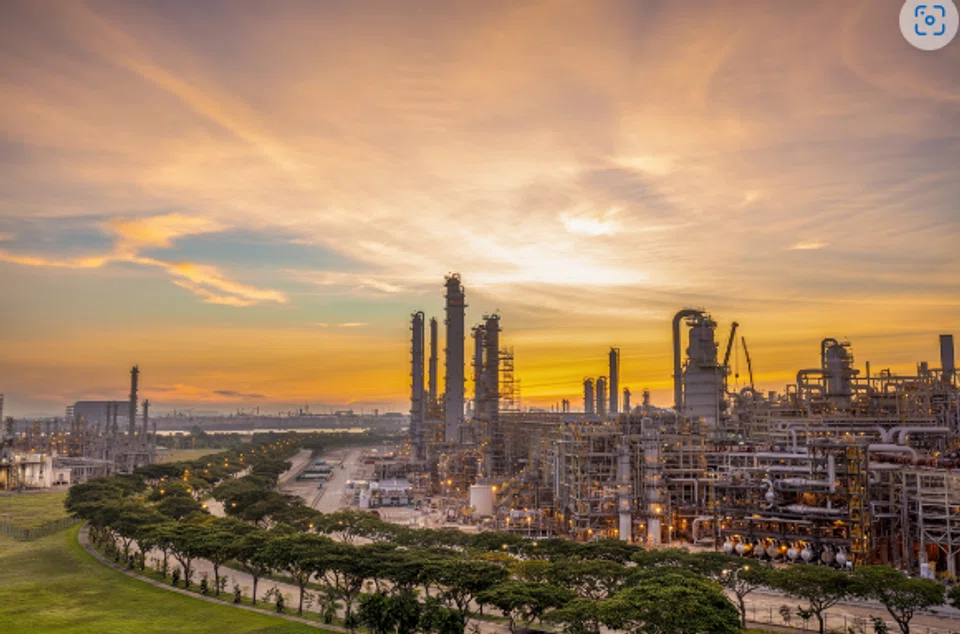
SINGAPORE’s flourishing energy and chemicals sector – one of the pillars of the open economy – is set to be challenged as fossil-fuel companies pivot to clean energy. But it’s not a zero-sum game.
Singapore is among the world’s top five refinery export hubs and largest eight exporters of chemicals, and has long been a magnet for giant global corporations. This also makes the city-state primed to recast itself as a clean-energy hub, as it seeks to elevate its role in the new energy ecosystem within Asia and beyond.
It needs, however, to juggle that economic imperative with a climatic one – to meet its own net-zero by 2050 goals. One of its key priorities is decarbonising its power sector, which contributes 40 per cent to total carbon emissions.
What Singapore lacks in natural resources – chiefly land to build a scalable renewable energy infrastructure, unlike its more resource-blessed Asia-Pacific peers – it makes up for in other ways. Deftness in innovation, research and development as well as policy-thinking enable the city-state to carve out a rosy patch in the region’s energy-transition journey.
As a strategic port, and one of the world’s energy trading, refining and distribution hubs, Singapore can also connect energy producers to consumers in the green transition. Building blocks have also been established to reframe the city-state as a global innovation hub for scalable decarbonisation technologies and sustainable solutions, including game-changing carbon capture and storage.
Singapore has its heart set on low-carbon hydrogen as a key fuel for its energy sector. It is hoping hydrogen will fuel up to half of its energy needs by 2050. And so it’s befitting that the city-state wants agency in the development of green-hydrogen technologies. Towards this end, it is pursuing international collaborations to advance hydrogen technologies as well as build a robust hydrogen supply chain.
Headway has also been made in the development of biofuels. Singapore is home to the world’s largest production facility for sustainable aviation fuel. Trading carbon credits could be another opportunity for Singapore, especially given its strong trading and financial services ecosystem.
All of these could draw global companies as well as traders to Singapore as a gateway to the region’s high-quality carbon projects. Most experts reckon fossil fuels will continue to play a key role in the world’s energy space for at least another two decades – not too far off in the bigger scheme of things.
Hence, it is pivotal for Singapore to have an early mover advantage in green and sustainable energy technologies if it wants to guard its long-held sweet spot in the energy and chemicals sector. In 2020, the sector, which also has strong links to areas such as trading and logistics, contributed 3 per cent to Singapore’s gross domestic product and 20 per cent of its total output.
Note that much of the work in the burgeoning new energy space, albeit promising, remains at an early stage. Keeping the eye on the ball is key for Singapore to reframe itself as the region’s clean-energy hub. But it also needs to run quickly. As the saying goes – how you get there is where you’ll arrive.






