Trump 2.0 would be a shock to Europe’s ailing system
Berlin and Paris are bracing for a trans-Atlantic shock, but not doing enough about it
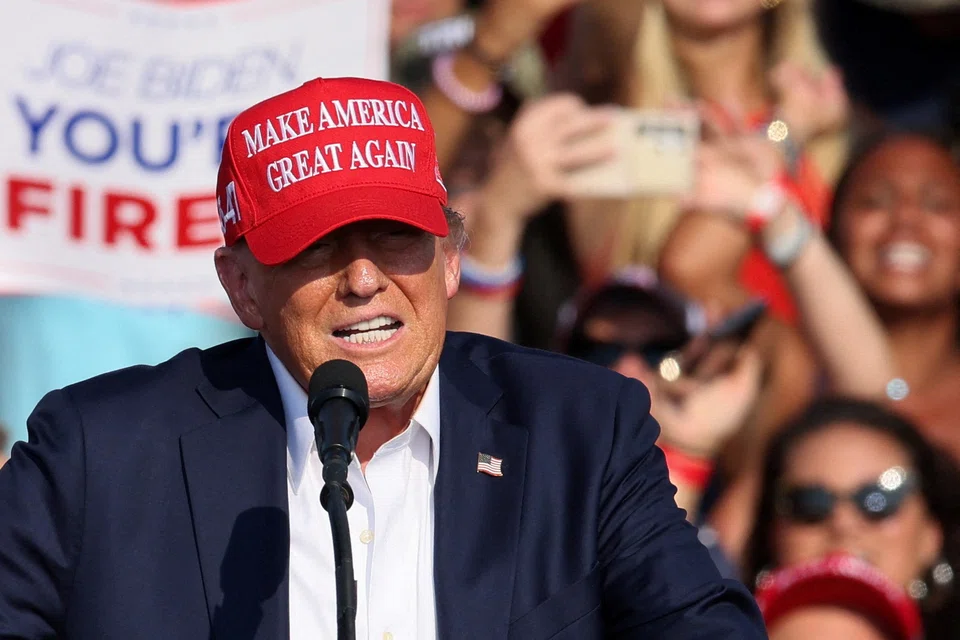
FOR a sign of things to come for Europe, the place to watch this week isn’t Blenheim Palace or the European Parliament but the Republican National Convention in Milwaukee. There, a bandaged Donald Trump and running mate JD Vance are laying out their cards: Freeze or end the war in Ukraine, step up competition with China, embrace protectionism and crack down on immigration.
It’s time Europeans prepared for the combined effect of a trans-Atlantic shock to the system – a Trump 2.0 with extra hostility. Carving up Ukraine as part of a deal with Vladimir Putin would usher in a new world for the European Union, which is nowhere near ready to integrate Kyiv or deliver on security commitments without US support.
Pressure to align with the US on China, while already tough under the Biden administration, would ripple through top EU companies such as Dutch chip titan ASML Holding and Germany’s Volkswagen.
The Trumponomics playbook of prioritising domestic demand at allies’ expense could be as dramatic as the 1971 Nixon shock that ditched the gold standard and hiked tariffs, reckons economist Bruno Colmant. (Nixon was unbothered by complaints abroad: “I don’t give a s*** about the lira.”)
In an ideal world, given Trump’s rise in the polls and Vance’s views, Europe would have a response ready to go – beyond hoping that the economic impact of trade tariffs proves manageable. After all, this is a bloc that has gone through a succession of crises in the past decade and hankers to be taken seriously as a superpower rather than a US “vassal”, as Emmanuel Macron once put it.
Yet it’s still possible to hear something between denial and dismissal in the corridors of Brussels, from faith in Western solidarity to optimism that a mix of appeasement and counter-measures will be enough to tame Trump. Or: We handled Trump once, we can handle him again.
This isn’t good enough. Europe, having bound itself closer since Trump first appeared on the world stage, is ramping up spending on hard power.
But it’s weaker in other ways. Politically, it’s scattered: France has no prime minister after messy elections; Germany’s fractious coalition is failing to lead, and Hungary’s Viktor Orban is on a solo diplomacy tour that includes meeting Putin (and Trump).
Feeble growth
Economically, the euro area’s growth is feeble and its trade dependencies greater. And while the bloc has become a pioneer in red tape and regulation to protect its own consumers, it has nothing to rival the biggest US tech companies. “Europe is less naïve than in 2016, but more vulnerable,” says Eric Maurice of the European Policy Centre.
Deep divides between Berlin and Paris aren’t helping. Germany’s creaking export-led model has already suffered huge hits in the wake of Covid-19 and the Ukraine war; Trump tariffs would cost its economy more than 1 per cent of gross domestic product by 2028, according to a March paper by the IW institute.
Yet, instead of embracing French-led ideas like more integration and investment to strengthen the bloc, Germany seems more interested in defending its trade turf and throwing rocks at France’s spiralling budget deficit. Economist Lars Feld, adviser to Germany’s finance minister, is preaching fiscal discipline instead of fiscal revolution.
With Macron’s push for a more autonomous EU likely to fade as his presidency enters its terminal phase, the likelihood of a “muddle-through” strategy is rising. Such an approach might combine ever-higher targets for defence spending in Nato with tit-for-tat trade measures. But given the risk of a serious Trumpian security pivot away from Europe, a structural shift in mindset would be far better.
Europe needs to augment its domestic defence industry to keep up with Sino-American rivalry, more joint spending to boost pan-European investment and an overhaul of its single market to encourage innovation. Good luck getting any of this done by 2025.
Weak euro
The last rampart left is the euro. With still-untested Keir Starmer taking over in Westminster and Brussels in flux as a new commission prepares to assemble, it might be time to look to Frankfurt and the European Central Bank’s toolkit. Trump has summarised his economic plan with devastating clarity: low interest rates, low taxes, higher tariffs.
The ECB should be prepared to countenance further reductions in borrowing costs to support its economy and exports, even at the risk of pricier imports like energy. If Europe can’t be strong, at least let the euro be weak. It’s a painkiller rather than a remedy – but every little bit helps ahead of Trump 2.0. BLOOMBERG