

Trump elected at opportune moment for himself, but will his policies force Fed to change course?
While the outlook seems rosy for DBS, OCBC and UOB, they should hold on to their excess capital and hunt for opportunities as the world changes

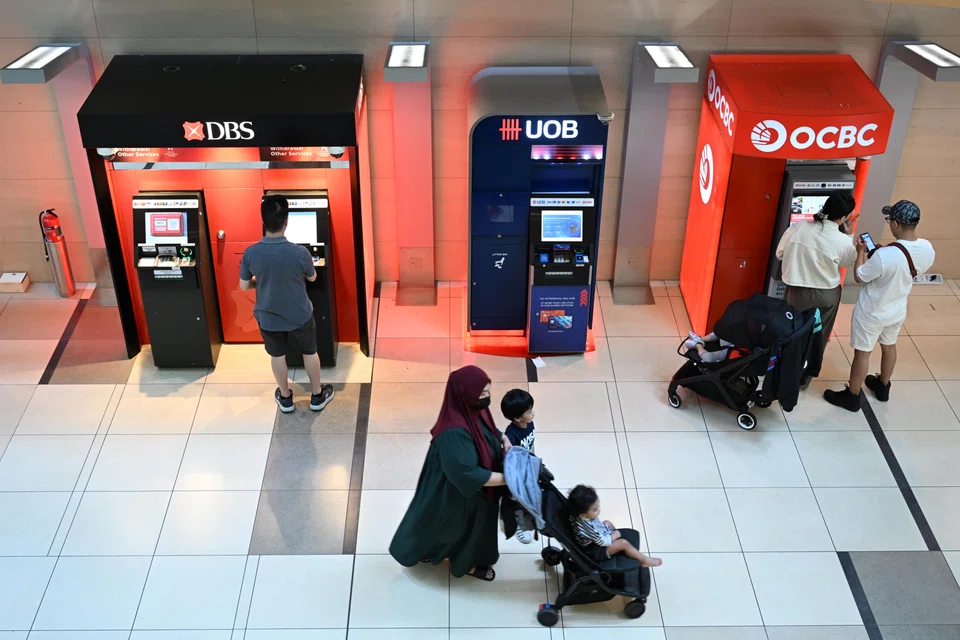
ONE thing most people seem to agree on, following the divisive elections in the United States, is that Donald Trump is going to change the world during his second term as president.
For investors, that change seems positive – for now.
As anticipation of a decisive Trump victory grew on Election Day (Nov 5), the already elevated S&P 500 began climbing while the 10-year Treasury bond yield spiked and the US dollar strengthened.
These moves were consistent with the broad expectation that Trump’s policies – a cocktail of tax cuts, deregulation and import tariffs – will stoke US economic growth, corporate profits and inflation, and slow the pace of rate cuts by the US Federal Reserve.
The S&P 500 closed last Friday at 5,995.54, up nearly 4.7 per cent for the week.
The euphoria washed over the Singapore market too. The Straits Times Index (STI) closed on Friday at 3,724.37, up nearly 4.8 per cent for the week.
Much of this gain was fuelled by the three local banks, which delivered solid earnings reports last week, and are widely expected to benefit from a slower pace of Fed rate cuts.
Leading the pack was UOB, which climbed nearly 11.2 per cent last week. DBS was up more than 9.4 per cent while OCBC rose 5.8 per cent.
Nearly half of the STI component stocks ended the week in negative territory, though.
In particular, the seven real estate investment trusts (Reits) that are part of the STI were among the index’s nine worst performers for the week, falling between 2.3 per cent and 6.5 per cent.
This seemed to reflect the adverse impact that a slower pace of Fed rate cuts would have on their distributions per unit.
Will Trump’s policies drive an extended bull run for US equities? Should investors buy high in the hope of selling higher?
What does another Trump presidency mean for markets in this region?
Trump impact
The way I see it, Trump has been elected at an opportune moment for himself.
With the unwinding of pandemic-related distortions to demand and supply, US inflation has cooled significantly over the past couple of years, leaving only a minor adverse effect on the US labour market.
Last week, the Fed said it will reduce the target range for the federal funds rate by 25 basis points (bps), to between 4.5 per cent and 4.75 per cent. This came after the Fed announced a 50 bp rate cut at its September meeting.
This monetary policy loosening could support the US labour market and keep the economy humming, and pave the way for a period of solid wage growth that alleviates the pain of sharply higher prices that US consumers have suffered since 2022.
In the months ahead, Trump could be in a position to claim that his re-election has brought about an economy that works for ordinary people.
The big question is how the policies he is expected to pursue will reshape this broadly positive economic outlook, and whether the Fed will be forced to change course.
Fed chairman Jerome Powell said last week that it is simply too early to tell. “We don’t know what the timing and substance of any policy changes will be,” he said, in response to a question during the post-Fed meeting press conference on Nov 7.
“We therefore don’t know what the effects on the economy would be, specifically, whether and to what extent those policies would matter for the achievement of our (goals of) maximum employment and price stability.”
Powell also said the Fed is monitoring the run-up in US Treasury bond yields, but demurred at the suggestion that it might reflect growing concerns about inflation or fiscal deficits.
Perhaps an even bigger concern for investors is that Trump may weaken the Fed’s independence.
During the press conference on Nov 7, Powell was asked if he would resign if asked to do so, and whether the president could fire or demote the Fed governors.
He tersely said he would not resign, and that removing Fed governors is “not permitted under the law”.
Preserve capital
Investors were clearly not in any mood last week to worry about the longer-term risks of a Trump presidency, though.
Even in this region, market sentiment seemed upbeat despite the possibility of economic growth being adversely affected by the incoming US administration’s introduction of import tariffs.
Will the optimism last? This column said last month that loosening monetary policy in the US is likely to keep driving global capital to markets in this region.
The main potential downside is the possibility of a surge in global risk aversion that draws capital back to US Treasury bonds, triggered perhaps by a hard landing for the US economy or some geopolitical event that disrupts trade or security.
Long-term investors should also keep an eye on surging stock valuations, and be wary if they run too far ahead of fundamentals.
This brings me back to DBS, OCBC and UOB, which drove the STI higher this past week.
All three banking groups reported solid earnings for the nine months to Sep 30, despite softer net interest margins.
With their profitability likely to remain robust into 2025, especially in light of Trump’s inflationary policies, the three banks addressed the topic of deploying the excess capital that they are generating.
In particular, DBS unveiled plans to buy back and cancel S$3 billion worth of shares. DBS also announced a Q3 2024 dividend of S$0.54 per share, which brought its dividend for the first three quarters of 2024 to S$1.62 per share.
Separately, DBS was reported to be exploring acquisitions in Malaysia, including the purchase of a 29.1 per cent stake in Alliance Bank.
On the other hand, OCBC said it is inclined to hold on to its excess capital to support its business and take advantage of inorganic growth opportunities. It also indicated a preference to return excess capital as dividend payouts rather than through share buybacks.
Given the currently bullish market, and the uncertainties the Trump administration might bring, OCBC’s approach seems more appealing to me.
While the banks are enjoying high levels of profitability at the moment, they should preserve their capital and hunt for opportunities as the world changes over the next four years.
The writer owns OCBC shares






