

Trump-induced uncertainty may be a blessing in disguise for investors in Singapore’s biggest Reits
Income-focused investors may prefer not being tapped for cash – and coping with the risk of their Reit subsequently trading underwater

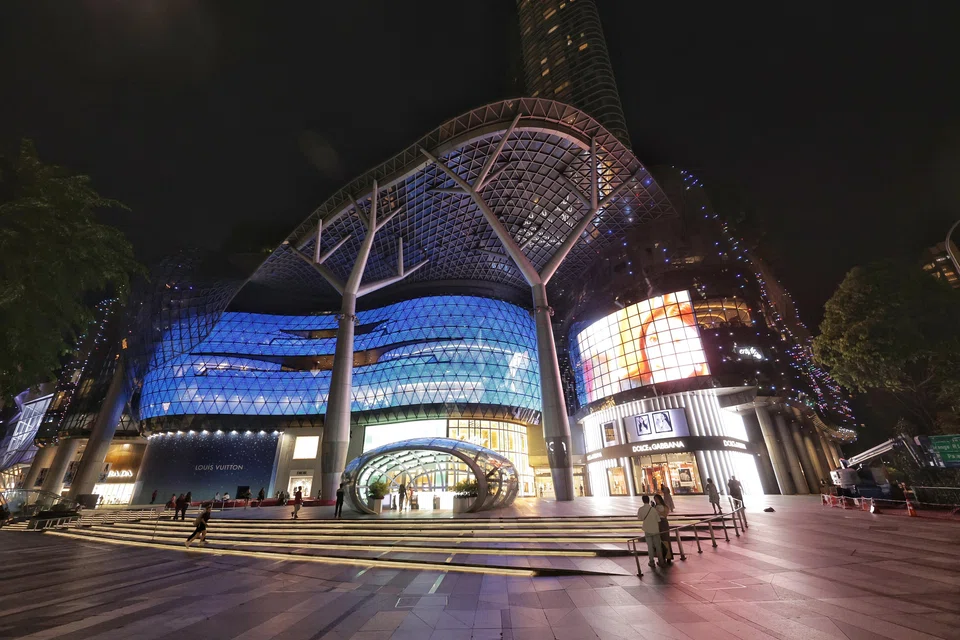
THE manager of CapitaLand Integrated Commercial Trust (CICT) kicked off its 2024 financial results briefing last week by recounting its “value creation journey” during the past year.
Notably, it provided a status update of the asset enhancement initiatives (AEIs) at its portfolio properties – including IMM Building and CQ @ Clarke Quay in Singapore; Gallileo in Frankfurt, Germany; and 101-103 Miller Street in Sydney, Australia.
It also reminded analysts and reporters at the briefing that it had announced the acquisition of a 50 per cent stake in Ion Orchard in September at an agreed valuation of S$1.85 billion; and that it had sold an office building at 21 Collyer Quay for S$688 million in November.
The purpose of this recap was to help everyone better understand what is driving CICT’s financial numbers, said Tony Tan, chief executive of CICT’s manager. “A lot of activity happened over the year, and it makes the numbers a bit difficult to rationalise.”
AEIs usually result in properties generating stronger income after a brief hiatus. Divestments result in reduced income for a Reit, but the proceeds can be put towards reducing debt or acquiring properties with more promising fundamentals.
On the other hand, acquisitions enlarge a Reit’s property portfolio and the income it generates. Whether an acquisition is accretive to the Reit’s distributions per unit (DPU), however, depends on the manner in which the deal is financed.
Given the more uncertain outlook for inflation and interest rates since US President Donald Trump was elected, some Reits might find it challenging to tap investors for funds to support big acquisitions.
This could leave them more reliant on AEIs – or redevelopment projects – to deliver revenue and DPU growth.
For investors, this may well be a good thing. Reits are often viewed as income-oriented investment instruments. In reality, they are real estate securitisation vehicles for their sponsor groups.
When market conditions are buoyant, investors face the risk of being repeatedly tapped for funds.
Indeed, to say that CICT and its sponsor group CapitaLand Investment were nimble in their execution of the Ion Orchard transaction would be an understatement.
When CICT’s manager announced in September last year that it would raise S$1.1 billion by issuing new units to finance the acquisition, the whole Reit market was on a tear. The US Federal Reserve was on the brink starting its rate cutting cycle, and the 10-year US Treasury bond yield had fallen below 4 per cent.
CICT sold 171.7 million new units priced at S$2.04 each through a private placement, and a further 377.3 million units at S$2.007 each through a preferential offering.
By the time the preferential offering was completed in late September, the whole Reit sector had peaked, and the 10-year US Treasury bond yield was beginning to shoot back up.
Valid acceptances had been received for only 309.5 million units, or 82 per cent of the total preferential offering. However, excess applications for more than 183 million units had been received, which more than covered the portion of the preferential offering that had not been validly accepted.
Slightly more than a month later, the market price of CICT’s units sank below the preferential offering price. They closed as low as S$1.91 last month.
CICT closed last Friday (Feb 7) at S$1.98, up S$0.01 or 0.5 per cent.
Trump’s tariff headwinds
One reason 10-year US Treasury bond yields have surged is that US growth has continued to be stronger than expected. Indeed, the Fed indicated towards the end of last year that it might cut rates at a slower pace in 2025.
Yet, Trump’s presumed agenda of tax cuts, tariffs and deregulation – which are expected to stoke inflation and lead to bigger budget deficits – may have contributed to the higher bond yields too.
Last week, concerns about Trump’s inflationary policies seemed to come off the boil. In particular, he backed away from his threat to impose tariffs of 25 per cent on Canada and Mexico.
Meanwhile, US Treasury Secretary Scott Bessent addressed fears that Trump might interfere with the Fed’s independence, following a speech the US president gave to the World Economic Forum in Davos in which he said he would demand that interest rates be lowered.
“He and I are focused on the 10-year Treasury,” Bessent was quoted to have said in an interview last week. “He is not calling for the Fed to lower rates.”
Bessent went on to suggest that the Trump administration’s focus on lowering energy prices and reducing the size of the government may also be contributing to the recent pull-back in the 10-year Treasury bond yield.
The 10-year Treasury bond yield ended last week at 4.5 per cent.
It seems unlikely to me, however, that the market’s concerns about interest rates staying higher for longer will totally evaporate unless US growth slows significantly.
This might restrict the ability of some Reits to tap investors for money on terms that are sufficiently attractive to make big acquisitions.
There could be some exceptions, of course. With strong market interest in artificial intelligence plays, Keppel DC Reit (KDC) has held up well despite the rise in 10-year US Treasury bond yields since September last year.
In November, KDC’s manager unveiled a deal in which the Reit will acquire two data centres for S$1.38 billion. To finance the acquisition, KDC raised nearly S$1.1 billion through a private placement of 334.9 million units at S$2.09, a sponsor subscription of 40.7 million units at the same price, and a preferential offering of 148.4 million units at S$2.03 million.
KDC closed last Friday at S$2.19, up S$0.01 or 0.5 per cent.
Yet, many income-focused investors might prefer not being tapped for cash – and having to cope with the risk of their Reit subsequently trading underwater. Moreover, heavyweight Reits such as CICT, which has a property portfolio worth more than S$26 billion, are capable of delivering solid returns without big acquisitions.
CICT’s underlying momentum
For 2024, CICT reported a 5.1 per cent increase in distributable income to S$752.2 million. Its gross revenue increased 1.7 per cent to S$1.6 billion, while its net property income improved 3.4 per cent to S$1.2 billion. CICT’s manager attributed this to the stronger performance of its portfolio, despite the sale of 21 Collyer Quay and AEIs at properties such as Gallileo.
“Our proactive leasing efforts and active tenant engagement resulted in a high overall portfolio occupancy of 96.7 per cent, high tenant retention rate of above 80 per cent and positive rent reversions for the Singapore portfolio,” Tan said, in a statement accompanying the results.
CICT’s 2024 DPU increased only 1.2 per cent to S$0.1088, because of an enlarged unit base following the equity fundraising to support the acquisition of Ion Orchard. But higher income from its properties following AEIs should gradually flow through to unitholders.
“The completed AEI at 101 Miller Street in Australia has garnered positive tenant feedback, while the ongoing AEIs at IMM Building in Singapore and Gallileo in Germany are on track for completion in H2 2025 with high committed occupancies,” Tan said, in the results statement.
OCBC Investment Research said in a Feb 6 update that it expects further positive leasing momentum at CICT’s retail properties, but a significantly moderated pace of rental reversions at its offices.
The research house is forecasting DPU of S$0.1091 for 2025, and S$0.1147 for 2026.
CICT’s closing price on Friday of S$1.98 reflects a 2025 yield of 5.5 per cent, based on OCBC’s forecasts.
TRENDING NOW

Government to bring forward raising of retirement age, give employers more financial support to create flexi-load jobs
Former minister Maliki Osman, Revolut chairman join Asia Gulf Holdings advisory board

Is Manila Asia’s new dining hot spot?

Simba at risk of losing operating licence over spectrum misuse

