

A Trump-inspired ‘Big Beautiful’ baby bonus could help birth the next boom for Singapore equities
It wouldn’t cost much relatively, and it could pave the way for stock investments to be part of our lives – while helping to make SGX great again

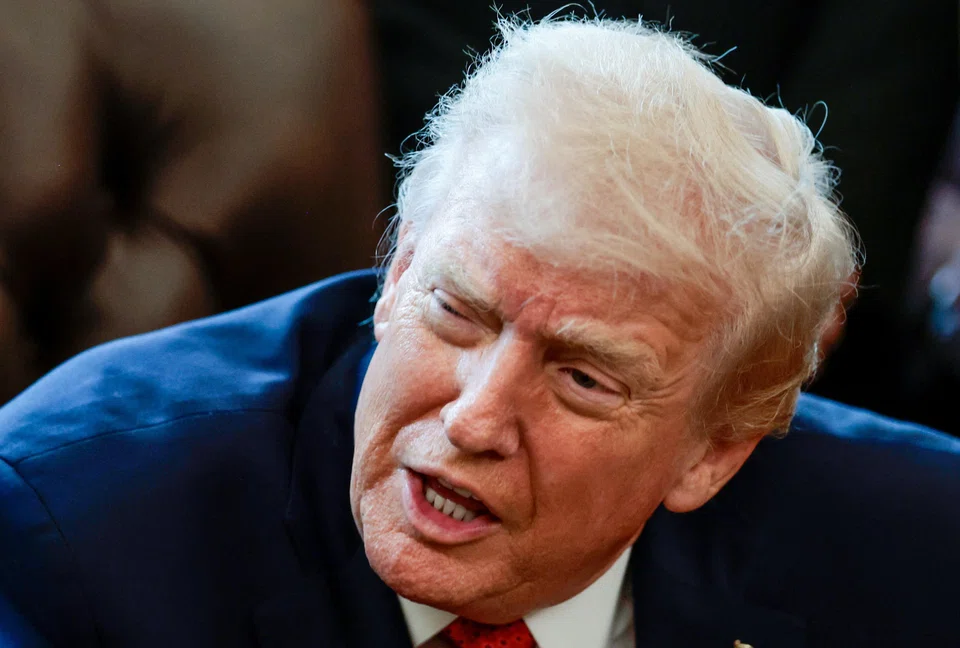
[SINGAPORE] US President Donald Trump is one of the most divisive figures in recent history. And it is not often that his policies – and outlandish remarks – fail to draw reactions ranging from eye-rolling to panic in the financial markets.
For example, under Trump’s One Big Beautiful Bill Act (OBBBA), a sweeping legislative package containing hundreds of provisions, the administration has significantly rolled back the US government’s climate change and clean energy initiatives. Trump has called wind and solar power “the scam of the century”, and also used executive orders and agency actions to further dismantle environmental regulations.
His “Liberation Day” tariffs unleashed on Apr 2 – aimed broadly at reviving a declining manufacturing base in the US – also sparked a frenetic year for global trade in 2025.
But looking beyond the whirlwind of changes, there is an interesting new feature – the so-called “Trump account” – that has the potential to revitalise the stock market should it be replicated in Singapore.
Introduced under the OBBBA, the Trump account, also known as a 530A account, promises US$1,000 in seed contributions from the federal government in a tax-deferred investment vehicle for eligible children in the US.
Funds in these accounts must be used in authorised investments, such as mutual funds or exchange-traded funds that track the S&P 500 or other indices with mostly US equities.
Other parties, such as parents, friends or corporations, can also contribute tax-free dollars to an account.
Billionaire hedge fund manager Ray Dalio and his wife last week committed to fund US$250 per child for about 300,000 children, which works out to some US$75 million.
This comes after tech mogul Michael Dell and his wife pledged to donate US$6.25 billion to fund the Trump accounts of 25 million American children.
A growing number of companies, including BNY and BlackRock, have also announced they will match contributions to Trump accounts for their employees.
Unlocking value
To be sure, the Trump account comes with its fair share of critics and flaws.
Some economists argue that it will disproportionately benefit well-off Americans. Other market watchers also point out that it could lead to tax issues.
Certain aspects of how Trump accounts will function have yet to be made clear. But Singapore could benefit if policymakers here adopt a similar approach.
Already, Singapore has rolled out a raft of reforms this year to keep the equities market afloat.
Among the measures are an easing of listing rules on the Singapore Exchange (SGX), the removal of the financial watch list, and a “dual listing bridge” that will enable companies to simultaneously list on Nasdaq and SGX.
SGX and the Monetary Authority of Singapore (MAS) have also announced a Value Unlock programme, where S$30 million of grants will be doled out to help companies build competencies in corporate strategy, capital optimisation and investor relations.
But perhaps the game-changer so far has been the S$5 billion Equity Market Development Programme (EQDP), which aims to strengthen the local asset management and research ecosystem and increase investor interest in Singapore’s equities market.
So far, a total of S$3.95 billion has been allocated to nine fund managers. But before the funds have been fully deployed, the market has already been moving.
Singapore’s benchmark Straits Times Index has climbed 21.7 per cent in the year to Dec 22 – surpassing even the 16.9 per cent advance of the S&P 500.
Big Beautiful baby bonus?
A “Big Beautiful” baby bonus announced at the upcoming Singapore Budget 2026 expected early next year could do more to support the long-term growth of Singapore’s stock market.
In Singapore’s context, it wouldn’t cost much – relatively.
The average number of citizen births has stood at around 30,400 per year over the past five years from 2020 to 2024, according to official data.
This means that even if Singapore were to roll out an initiative where the government funds S$1,000 into each investment account for all Singaporeans under the age of five, the total amount it needs to fork out would be about S$152 million.
Assume we stretch this special investment account to include all Singapore citizens under the age of 20. Official data to June 2025 shows that there are around 715,100 Singaporeans aged zero to 19; this works out to about S$715 million to fund the project.
Considered against the generous baby bonuses and CDC Vouchers that Singaporeans have been receiving – which total billions of dollars – this is not an unreasonable amount. And the benefits could far outweigh the costs.
This could open the door for Singapore companies and philanthropists to do their part and contribute to the accounts – just as Dell and Dalio have done in the US.
Banks and brokerages would be seizing the opportunity to manage these accounts; small and mid-cap companies would need to lean on investor relations and corporate communications to sell their stories to a whole new market – the entire stock market ecosystem would get a further fillip.
This would also be reminiscent of Singapore’s stock market heyday in the 1990s. One of the things that happened during that period was a special scheme where the government offered eligible Singapore citizens discounted Singtel shares to encourage widespread share ownership.
Many older Singaporeans who participated in the scheme may still be holding on to their discounted Singtel shares – even if they are not active traders.
A Big Beautiful baby bonus could pave the way for stock investments to be part of our lives – while helping to make SGX great again.






