

Trump’s big, not-so-beautiful economic mess
Trump’s tariff wars have imposed steep costs on key allies, triggered price spikes, and hurt American producers and farmers
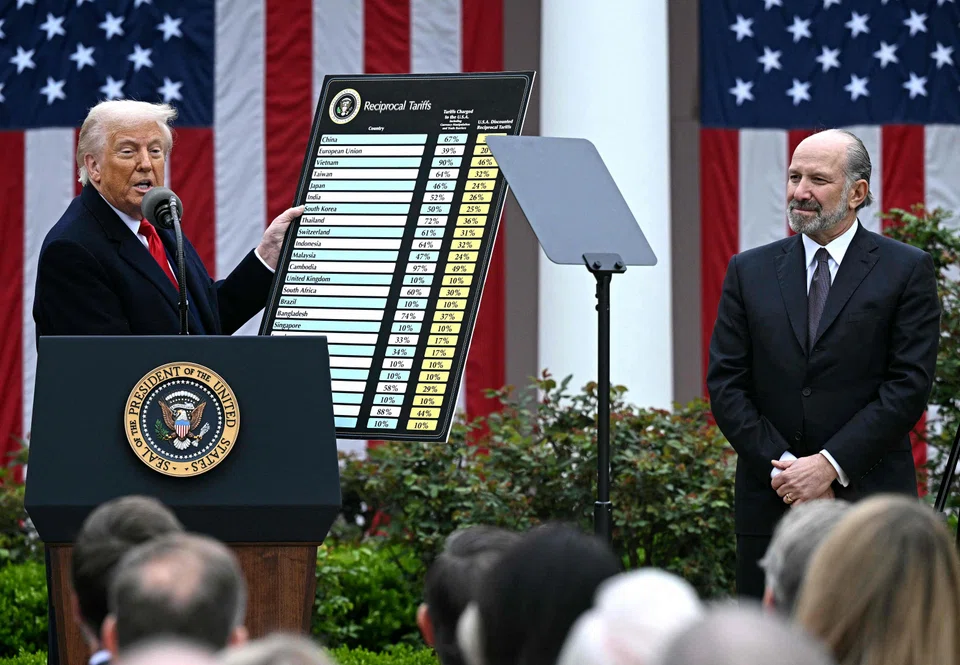
[WASHINGTON, DC] Almost a year after his return to the White House, the consequences of US President Donald Trump’s economic policies are becoming increasingly evident. From his first term, most economists warned that many of Trump’s policies were not only fundamentally inconsistent with his stated objectives but would also actively undermine them. As the costs continue to mount, many Americans are asking how much more damage he will inflict before he decides to reverse course.
Trump’s tariff policies are a case in point. Despite powerful evidence of their harmful effects and several partial reversals, Trump continues to tout protectionism. He has even claimed that tariff revenues would eliminate the need for the federal income tax.
In reality, his trade policies have imposed steep costs on long-time US allies and eroded American soft power. That loss alone would justify a return to an open, multilateral trading system, even if the economic consequences of Trump’s tariffs were less severe than they are.
For an economy to perform well, it must operate within a stable and enforceable commercial framework, supported by secure property rights and respect for the rule of law. And policy announcements must be consistent and predictable, lest uncertainty about future economic conditions suppress investment, production and trade.
Trump’s tariff wars have generated precisely this kind of uncertainty. He has repeatedly said that his goals are to lower inflation, reduce the trade and current-account deficits, and create manufacturing jobs. Yet his trade policies have failed to achieve any of these objectives as tariff rates have been raised, lowered, removed and reinstated unpredictably, often without any clear justification.
In many cases, Trump’s tariff announcements have had little to do with trade deficits, inflation or job creation. For example, rather than reflecting any economic consideration, his decision in July to impose a 50 per cent tariff on Brazilian goods was motivated by his opposition to the criminal prosecution of former president Jair Bolsonaro, a political ally. The resulting uncertainty over Trump’s edicts and their legality may be even more economically damaging than the tariffs themselves.
Trump’s policies have hurt America’s trading partners but the greatest damage has been borne by the US itself. Consider, for example, agriculture. After the trade deal Trump negotiated with China in 2017 failed to deliver the promised outcomes, he again announced an agreement under which China would purchase 12 million tonnes of US soybeans in 2025. China, however, imported only 20 per cent of that amount.
Instead, Chinese soybean imports from Argentina and other countries increased. Trump recently announced a US$12 billion bailout of American farmers to “soften the tariff blow”. But even if the full amount is disbursed, US farmers will still be worse off, with taxpayers ultimately paying the price.
Notably, the US trade deficit increased after Trump raised tariffs on many food imports in April. The price of coffee, which is not produced in the US, soared by more than 40 per cent, prompting the administration to rescind the tariff hike. The price of beef, which is produced domestically, nevertheless climbed by more than 10 per cent. That tariff, too, was lifted in November – another tacit admission that Trump’s trade policies have fuelled inflation.
While Chinese exports to the US fell by about 69 per cent from the start of Trump’s second term through September, China simply redirected its goods to other trading partners. As a result, China’s exports are projected to increase by about 8 per cent in 2025, and its trade surplus has exceeded US$1 trillion for the first time.
Trump’s effort to revive US manufacturing jobs has produced similarly disappointing results. Tariff hikes on imported inputs have raised costs for US producers, particularly in steel-heavy industries. Although steel production added roughly 2,300 new jobs, steel and aluminium-consuming industries lost 75,000.
Basic macroeconomic principles help explain these outcomes. Virtually all economists agree that a country’s current-account balance reflects the difference between aggregate demand and aggregate supply. Over time, tariffs cannot reduce a trade deficit unless overall spending falls relative to production.
Trump has taken no meaningful steps to reduce aggregate demand relative to output. On the contrary, his One Big Beautiful Bill will almost certainly widen the current-account and trade deficits. In the first nine months of 2025, the US trade deficit was already 17 per cent larger than during the same period in 2024.
Trump has also used tariff threats to pressure other countries into committing to large increases in foreign direct investment (FDI) in the US. Most notably, Japan pledged US$550 billion in FDI in exchange for a 15 per cent baseline tariff rate. Such inflows will increase the current-account deficit and raise the supply of foreign currency, leading the dollar to appreciate. A stronger dollar would discourage US exports and encourage imports, further widening the trade deficit.
Trump’s tariffs, along with the retaliatory measures they provoked, will likely slow global growth, further harming US exporters. At the same time, the combined effects of tariffs and fiscal expansion will stoke inflation, while capital inflows, dollar appreciation and weaker global growth will reduce demand for US exports.
Finally, despite Trump’s claims to the contrary, there is no evidence of a net increase in “good” jobs. As dismal outcomes pile up and become increasingly difficult to ignore, one might reasonably hope that the administration will reconsider its approach. But that remains doubtful. PROJECT SYNDICATE
The writer is a former World Bank chief economist and former first deputy managing director of the International Monetary Fund. She is senior research professor of international economics at the Johns Hopkins University School of Advanced International Studies and senior fellow at the Center for International Development at Stanford University.
Decoding Asia newsletter: your guide to navigating Asia in a new global order. Sign up here to get Decoding Asia newsletter. Delivered to your inbox. Free.
Share with us your feedback on BT's products and services
TRENDING NOW

Once staunchly pro-China, Malaysian Chinese businesses are now distancing themselves from Beijing

Britain’s mansion tax shows the difficulty of targeting wealth

Three hats, one goal: How Ng Kian Swan runs sustainability at NUHS
COE review: The gap between luxury and mass-market cars isn’t the only one worth bridging

