Trump’s economic message sounds a lot like Biden’s
It didn’t work then and it won’t work now
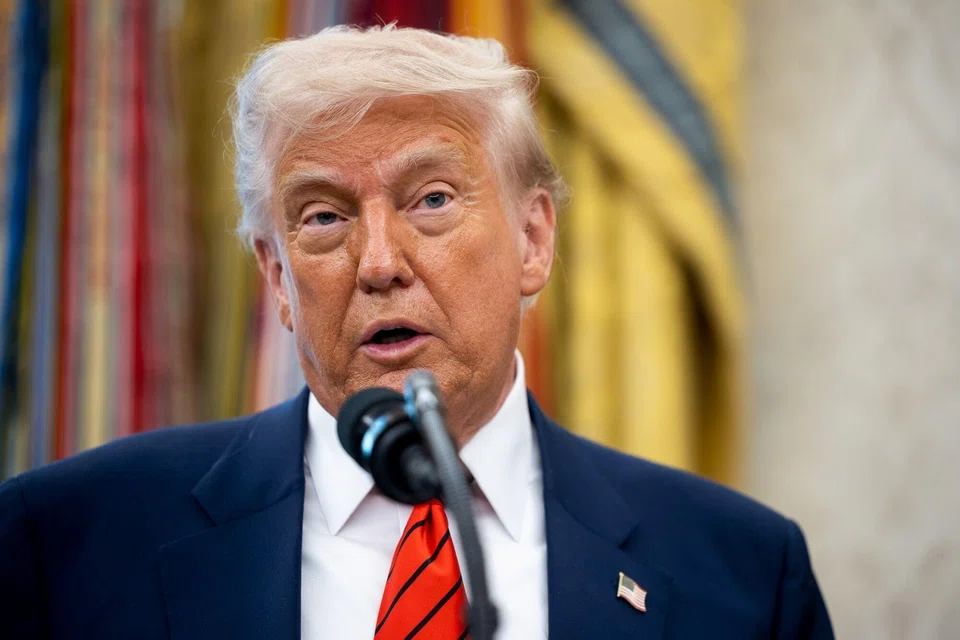
US PRESIDENT Donald Trump has twisted himself into peddling the same argument about the economy as his predecessor. And like Joe Biden, Trump is learning a hard political truth: When Americans are concerned about their cost of living, the promise of more jobs is not an antidote to the reality of higher prices.
Polls consistently show that far more Americans cite inflation than jobs as their principal economic concern. But when talking about the economy, Trump prioritises the private investment in domestic manufacturing that he says his tariff agenda has unleashed. The White House last week unveiled a website tracking what it calls the “Trump effect”, a running (if inflated) tally of investments announced since January.
“I don’t think there’s ever been anything like this anywhere in the world,” Trump insisted last week while welcoming corporate leaders who have promised big new investments. “Together … we’re going to have ‘made in the USA’ like we haven’t had before in a long time.”
Biden also had a White House website that tracked new investments linked to the legislation he signed to promote domestic manufacturing of clean energy and semiconductors, and to rebuild the nation’s infrastructure. And Biden never looked so happy as when he was cutting ribbons at factory groundbreakings, where he reliably highlighted how many jobs each new plant would create for people without a four-year college degree.
“That’s what you’ll see in this field of dreams,” Biden declared at the 2022 groundbreaking of a massive Intel plant in Ohio, “PhD engineers and scientists alongside community college graduates, skilled craftsmen … doing the most sophisticated manufacturing that’s ever (been) done.”
Under Biden, spending on factory construction soared, with the new projects flowing disproportionately to economically-depressed counties and Republican-leaning exurban areas. When he left office, manufacturing employment reached 12.7 million, up about 600,000 from when he arrived. (Trump lost manufacturing jobs during his first term.) The factory building boom also helped Biden generate about one million additional construction jobs over his four years, about double Trump’s first-term total.
Biden’s problem was that the number of people affected by these undeniable successes paled beside the number who felt squeezed by inflation. His manufacturing agenda didn’t cause the inflation, which was a worldwide phenomenon after Covid scrambled supply chains. But it turned out a home healthcare aide in Las Vegas struggling to buy groceries didn’t care that much if Intel opened a new plant in Ohio. Even in the counties that directly received new investment, Vice-President Kamala Harris ran only 0.028 percentage point ahead of Biden in 2020, according to one study from a liberal thinktank.
Trump has an even harder sell asking Americans to focus on manufacturing jobs rather than prices. Biden’s agenda to revive manufacturing relied on federal tax breaks and grants that did not impose direct costs on consumers. But with his tariffs, Trump is asking consumers, in a very visible way, to spur domestic manufacturing by paying more for goods.
Trump has trivialised those higher costs by arguing kids don’t need “30 dolls … or 250 pencils”, but his tariffs are raising prices (and potentially diminishing supply) on necessities: clothes, shoes, food, electronics, cars. When the Republican polling firm Echelon Insights recently asked Americans whether the US should raise tariffs to generate more manufacturing jobs if it meant higher prices for “everyday products”, just 35 per cent said yes and 52 per cent said no. Americans younger than 50 rejected that trade-off by nearly two-to-one, which may say something about both the squeeze on their finances and the extent to which younger generations are hoping to follow their grandfathers onto the factory floor.
And it’s far from certain higher prices from tariffs would generate as many manufacturing jobs as Trump promises. Even the most optimistic forecast, from a pro-tariff group, projects that 10 per cent across-the-board tariffs, combined with additional levies on specific sectors, might create about one million more manufacturing jobs (in a workforce of about 164 million people). Others question whether the net gain would even be that much. Congressional Republicans appear likely to slash Biden’s clean energy incentives, which will dim manufacturing employment in that sector. Higher tariffs on imported parts will disrupt supply chains. Despite their pledges to Trump, companies may hesitate before building factories that take years to construct when his tariff plans change by the hour and might easily be reversed by the next president.
Even if firms do make more investments, that may produce greater increases in manufacturing output than employment, notes Adam Hersh, a senior economist at the Economic Policy Institute, a liberal research centre. Even “if we had big new investments in manufacturing capacity, they wouldn’t be employing that many workers”, Hersh predicts, since any new plants will be heavily automated.
Manufacturing holds an outsized place in the American consciousness as a link to a near-mythic era of stable blue-collar prosperity. Since World War II, though, the most Americans who have ever worked in manufacturing was 19.5 million in 1979, when the total workforce was much smaller. Over the next four years, Trump is more likely to deliver the commencement at Harvard University than to match that number.
But even if Trump miraculously restored manufacturing to its chrome-plated pinnacle, far more Americans are still likely to judge his economic performance, as they did Biden’s, on whether they can meet their bills at the end of each month – and maybe even buy their kid a doll.