HOCK LOCK SIEW

Tuan Sing needs to be more careful about issuing pricey debt

Leslie Yee
Published Thu, Nov 9, 2023 · 05:00 AM
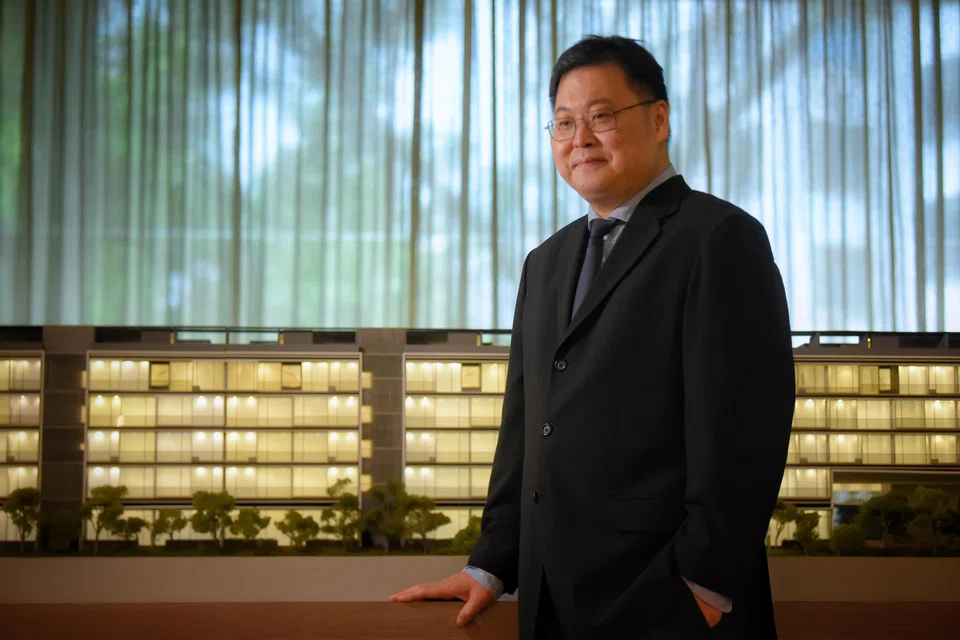
    • William Liem leads Tuan Sing Holdings, which is thinking of venturing into the hospitality sector in Singapore.
    • William Liem leads Tuan Sing Holdings, which is thinking of venturing into the hospitality sector in Singapore. PHOTO: BT FILE

    DEBT is expensive these days. That is to be expected in a high interest rate environment.

    But when property group Tuan Sing Holdings issued S$150 million in four-year Singapore dollar notes at an annual interest rate of 7.5 per cent on Nov 2, it raised some eyebrows.

    Should debt have been raised at such a pricing?

    Many holders of Tuan Sing’s outstanding three-year Singapore dollar notes – which pay a coupon of 6.9 per cent per annum and mature in October 2024 – accepted the group’s tender offer for their notes, at 102 per cent of the principal amount. 

    Investors who accepted the above offer and rolled-over their investment into the new four-year notes may have made a good trade. They received a premium to the principal amount and swapped existing notes for new notes which pay 60 basis points more in annual interest.

    However, Tuan Sing should perhaps have thought twice about issuing the new notes. It is paying a high coupon rate relative to other property groups.

    In the third quarter, GuocoLand issued five-year Singapore dollar bonds priced at 4.4 per cent per annum. Wing Tai Holdings issued a five-year Singapore dollar note, priced at 4.8 per cent per annum in late October.  

    Squeezed returns

    Property groups need to be super careful in taking on debt at a time of high interest rates and heightened market uncertainty. Higher financing costs squeeze returns on property development and investment.

    Take, for example, a group that is carrying out a property development project with costs totalling S$400 million (excluding financing costs), which is to be funded 65 per cent by debt and 35 per cent by equity.

    Assuming an average loan duration of three years, the interest cost rises from S$19.5 million to S$39 million when interest rate per annum jumps from 2.5 per cent to 5 per cent. 

    If the project’s gross development value is S$460 million, the profit shrinks from 9.7 per cent to 4.8 per cent, based on annual interest rates of 2.5 per cent and 5 per cent respectively.

    To put this in perspective, the three-month compounded Singapore overnight rate average today is up by over 350 basis points from the level in early 2022; it is also up about 130 basis points from early November last year. 

    The returns to the group fall further after accounting for using proceeds from a bond issuance to finance part of the group’s equity contribution to a project. 

    With high interest rates, a building owner may try to reduce the size of a loan secured on an investment property because of a high loan-servicing cost. However, reducing the size of an asset-linked loan by using proceeds from a bond issue can be costly.

    Opportunities

    In its corporate update last month, Tuan Sing identified several potential value-creation opportunities.  

    The group could move into the hospitality sector in Singapore. It can turn its headquarters at The Oxley, located along Oxley Rise, into a hotel or serviced residence.

    The group is also looking to potentially redevelop its assets in Bukit Timah – Link@896 and the adjacent 870 Dunearn Road – including possibly converting the latter for hospitality use.

    Venturing into the hospitality sector here might pay off because the sector enjoys good prospects, given strong air connectivity, rebound in travel and the mega investments made to improve Singapore’s tourism offerings. 

    Other possibilities include developing the remaining 1.05 million square metres of land in Opus Bay in Batam, Indonesia, and redeveloping the Grand Hyatt Melbourne Complex in Australia into a mixed-use development, comprising premium-grade office space, luxury retail and dining experiences, as well as high-end hotel/serviced residences.

    Kudos to Tuan Sing’s board and management for exploring ways to optimise the value of its assets.

    However, capital is a real constraint. Tuan Sing’s net debt to total equity was 0.8 times as at end-June – higher than that of some property groups. And raising equity is a poor option, as the group trades at a deep discount to net asset value. 

    Prudent options

    While opportunities abound, Tuan Sing’s board and management should exercise prudence.

    First, it should prioritise the projects to pursue.

    For example, the group may not need to expedite a redevelopment of Link@896. Going by the group’s corporate update, occupancy at the property is improving, which contributes to its recurring income.

    Second, Tuan Sing should leverage its experience in working with partners. Amid high interest rates, the group can actively work with partners who can contribute capital in new capital-intensive initiatives. Working with good partners means being able to scale up faster by undertaking more projects concurrently.

    Third, it should actively recycle capital by selling lower-yielding or less-strategic assets to free up funds for use in more attractive opportunities. Perhaps, Tuan Sing can exit or reduce its stake in printed circuit board manufacturer Gul Technologies Singapore.   

    The travails of once high-flying Chinese property giants China Evergrande Group and Country Garden remind all property groups that debt can be a killer. If sales stall or rental revenue falters unexpectedly for an extended period, a group holding plenty of debt – especially pricey debt – can become undone by its failure to fund debt obligations.

    Tuan Sing has transformed from a niche Singapore property developer into a regional player in real estate investment, real estate development and hospitality.

    Chief executive officer William Liem, who has an interest in Tuan Sing’s majority shareholder, Nuri Holdings, leads the group. 

    Tuan Sing’s shareholders and bondholders can draw comfort that Liem should be steering growth sustainably as he has much skin in the game. 

    Still, taking on pricey debt must be done with great care. Building a property business able to withstand demand shocks is non-negotiable.