

Tumultuous times ahead for Thailand as a heated election looms
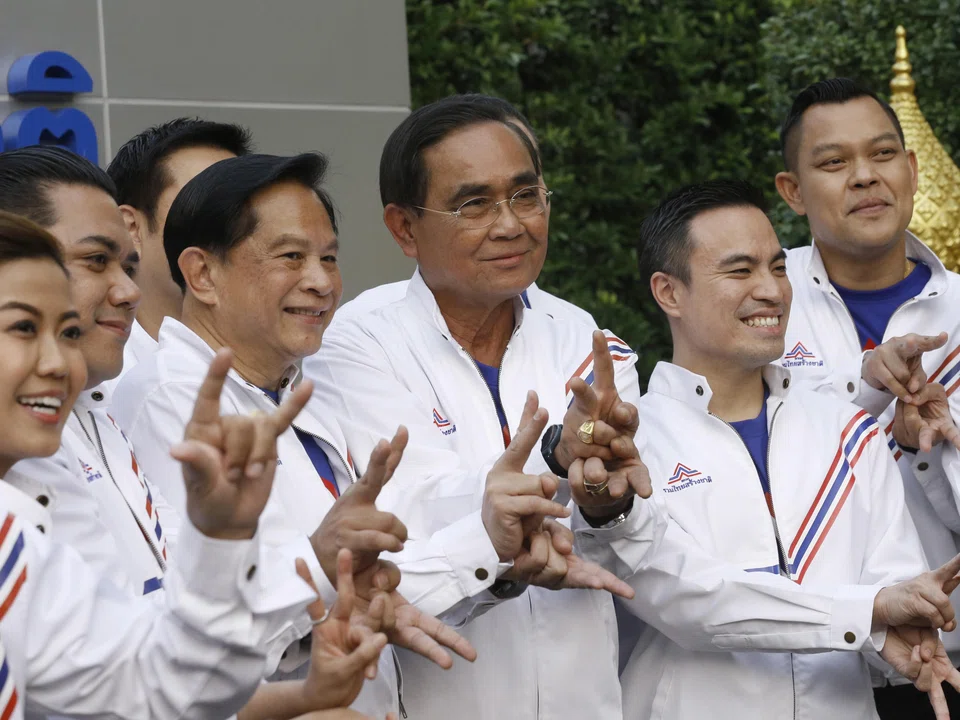
THAI Prime Minister Prayut Chan-o-cha has yet to officially dissolve Parliament, but campaigning for the next general election – which must be held no later than May this year – is already in full swing across the country.
Prayut, who has been in office since 2014 after seizing power following a military coup, last week indicated he will call for a dissolution in early March, which would allow the polls to be held on May 7 as scheduled by Thailand’s Election Commission.
In the run-up to the big day, one big question being asked is whether Prayut, a 68-year-old former army chief, has enough support to remain as prime minister.
As recently as a week ago, a survey by private research agency Super Poll on Thailand’s preferred choice for the premiership showed that Prayut was backed by 25.7 per cent of respondents. That left him trailing political newcomer Paetongtarn Shinawatra – the 36-year-old daughter of exiled former prime minister Thaksin Shinawatra – with a support level of 28.5 per cent.
On Sunday (Feb 26), the findings of a separate poll by the National Institute of Development Administration revealed that 20 per cent of eligible voters would pick the incumbent as their preferred candidate. This is higher than the 17 per cent who back Paetongtarn; former House of Representative speaker Wan Muhamad Noor Matha is also in the running with 18 per cent supporting him.
All things considered, the upcoming election is set to take place at a time when Thailand’s economy – South-east Asia’s second-largest – is firmly on the road to recovery.
Official estimates put growth at between 3 per cent and 4 per cent this year, which would be higher than the 2.6 per cent expansion in 2022. The Bank of Thailand has said that headline inflation, which was 5.02 per cent in January, will dip to within the target range of 1-3 per cent some time in the second half of 2023.
What’s important for the country’s political and economic stability over the long term is for all Thais – regardless of their political affiliation – to accept the results of the election. Thailand, which remains one of the most visited countries in the world, has experienced intermittent political turmoil over the last 17 years or so.
It is not inconceivable for Paetongtarn, despite her political inexperience, to do well at the election. Her Pheu Thai party and its previous incarnations have won every election held in the last two decades thanks to strong support from voters in the mainly rural and populous north-east of Thailand.
Three of their governments, however, never got to complete their term as they were forced out either by coups or court rulings. And it was Prayut himself who led a bloodless coup against the government of Yingluck Shinawatra – Thaksin’s sister and Paetongtarn’s aunt – nine years ago.
Prawit Wongsuwan, another former army chief and a candidate to be the next prime minister, perhaps said it best earlier this week when he stressed that democracy should be allowed to take its course in Thailand, and that authoritarian governments helmed by the elite would always lose out to elected, liberal forces.
An immediate end to the bitter power struggle among Thailand’s leading political figures may not be in sight, but the hope for now must be for a smooth election – where the results are accepted and enable the country to take a significant step towards restoring democracy.
TRENDING NOW

First Resources blames El Nino, outside fires for Kalimantan hotspots amid haze scrutiny
High Court rules against Julius Baer’s Singapore trust arm in US$50 million family trust dispute
Singapore key exports jump by higher-than-expected 68.4% in September, led by non-electronics
MSCI proposes downgrading Indonesia to standalone market status

