For Turks, it wasn’t just the economy
And comparison with old rival Greece is an instructive study in pain management, currency independence, and electoral outcomes
FOR years, political scientists believed that elections were driven by “retrospective evaluation” of voters’ economic consequences. In folksier terms, the key was Ronald Reagan’s key question: “Are you better off than you were four years ago?” If the answer is “yes”, then incumbents can expect to win re-election and if not, not. And if you’re Recep Tayyip Erdogan, all bets are off.
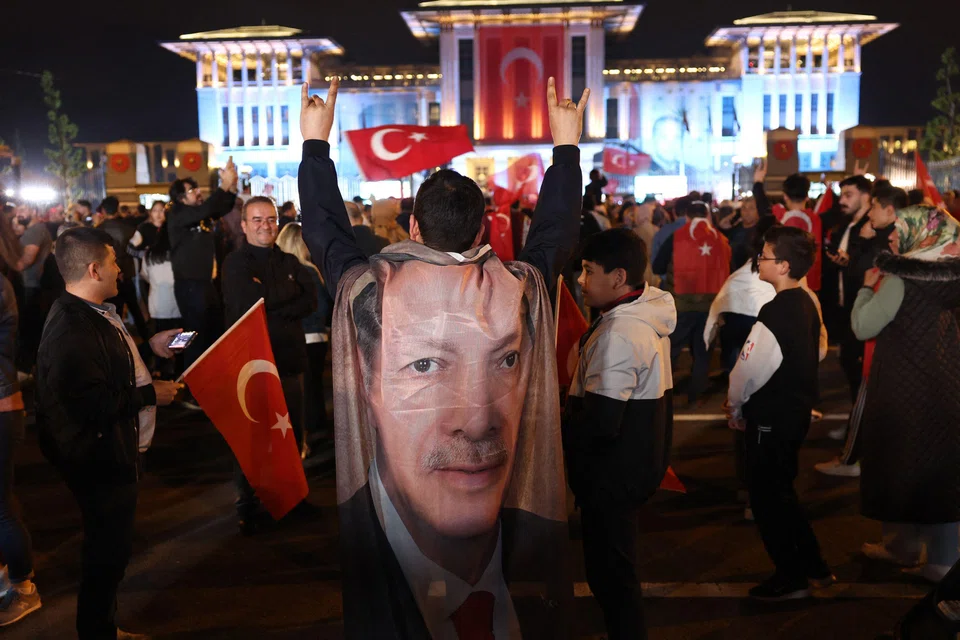
Over the weekend, Erdogan, who has effectively ruled Turkey for two decades, was re-elected for another term despite truly dreadful economic performance over the last five years. The number of Turks who feel better off since 2018 must be vanishingly small. But he managed to get back in. Erdogan has made a habit of attacking orthodoxies. The retrospective evaluation model of elections has to be added to the list.
Erdogan has done almost everything that “Davos Man” would dislike. The consensus of those who meet at the World Economic Forum and create the globalised expression of elite thinking each year would come down overwhelmingly against the Erdogan monetary policy of cutting interest rates because raising them would increase inflation. It also seemed inevitable after one of the worst earthquakes in history, only a few months ago, that people would turn against a government that appeared to botch the response. Away from the narrowly economic, Erdogan’s friendliness toward Vladimir Putin’s Russia is also a finger in the eye for Davos Man. But Turks decided, even though forcing him to a second-round runoff for the first time, to give Erdogan another term.
There are many dimensions to this. Erdogan’s increasingly authoritarian rule and the restricting of press freedoms matter a lot. But the bottom line is that voters aren’t obliged to make decisions based solely on the economy, and nobody outside the country has a right to tell Turks how they should vote.
That said, Erdogan doesn’t get to tell the rest of the world how much his currency should be worth. The cost of Erdogan’s eccentric economic policy (which a majority of voters have now deemed worth paying) has been a massive depreciation of Turkey’s currency, the lira. Since Erdogan became prime minister 20 years ago, it has shed more than 90 per cent of its value, both against the US dollar and a basket of currencies.
If Erdogan can take it, and his populace can take it, then so be it. He didn’t have to do what was expected of him.
Meanwhile, across the Aegean…
In a fascinating conjunction, Turkey’s ancient rival Greece also went to the polls last weekend (May 21). The government in Athens has of late done what Davos Man asked. And it emerged from the election as clearly the largest party. Kyriakos Mitsotakis, scion of a Greek political dynasty, has decided to call another election on Jun 25 to see if he can get an overall majority for his New Democracy (ND) party, but it’s plain the electorate hasn’t rejected him.
After the last 15 years of Greek history, this offers a mind-blowing contrast with what is happening in Turkey. For decades, ND was the centre-right party that alternated power with the centre-left Pasok. In 2009, Pasok took over and discovered that the deficit was deeper than its ND predecessors had let on, putting the country in breach of its commitments as part of the eurozone. Two bailouts ensued, with increasingly stringent provisions to cut spending as eurozone banks desperately disentangled themselves from Greece. Pasok lost an election, to be replaced by ND after significant blocs of voters supported both Trotskyites and neo-fascists. In 2014, Alexis Tsipras of the radical left-wing Syriza grouping won on a platform to confront the European Union. What followed was the so-called “Grexit” crisis (brilliantly detailed by my colleague Viktoria Dendrinou in The Last Bluff). Everyone called everyone else’s bluff, Greece’s banks were forced to close for two weeks, and eventually the country consented to extremely austere terms that allowed it to stay in the euro.
At all times, the Greek electorate has applied the Reagan question, booting out governments who had not made them better off during their time in power. Thus, Mitsotakis won the election for ND (even though the party can in a real sense be blamed for the whole crisis in the first place) over Syriza, and for the last few years Greece has done exactly what Davos Man wanted. And now, ND has easily beat the far-left and far-right forces that had massed against the European Union.
The comparison with Turkey is remarkable. In early 2010, Greek unemployment was a little lower than in Turkey. As forced austerity bit, it rose to more than 25 per cent. Only now has it returned to its 2010 level. The two countries currently have more or less the same unemployment rate of around 10 per cent to 11 per cent.
The Greek experience during the decade from 2010 to 2020 was fully comparable to the US Great Depression of the 1930s. After half a decade of doing what they’re told, however, Greek sovereign debt is back as a safe investment, while confidence in Turkish debt has steadily eroded. If you want to insure against the risk of a Turkish default in the credit default swaps market, it will now cost you far more than for a Greek one. Erdogan’s successful election, note, has pushed up the perceived risk for Turkey.
Greece attempted confrontation, like Erdogan. It suffered a much greater penalty, gave up, and only now appears to be reaping any advantage. A positive spin on the Greek experience, if there is one, might be that its membership of the euro created the discipline to get its historically inefficient public sector under control and create a base for growth. A positive spin for Turkey is that Erdogan has delivered plenty of positive economic improvements, and whatever the international currency and credit markets did about it, the voters are still happy enough.
What conclusions can we draw from this? The key is that Erdogan is not going to be disciplined by international markets. There is no reason to expect a change in Turkish economic policy, and so there is every reason to brace for a further decline in the lira.
Taking advantage of this in investment terms, however, is difficult. Matt Gertken of BCA Research suggests a “long MSCI Greece/short Turkey” trade, capitalising on the likelihood that Greece will now reap the benefits of its orthodoxy, while Turkish asset prices will be punished for unorthodoxy:
“The key is that voters have rewarded Erdogan’s expansive monetary and fiscal policies, which means that inflation will continue to erode real returns over time. The election was competitive enough to cause lasting insecurity within Erdogan’s administration, which means that the impetus to take populist, nationalist, or simply expedient measures to maintain political control will continue to outweigh the need for neoliberal structural reforms.”
This is fair enough. What’s less clear is whether there will be a payoff for investing in Greek equities. There have been some very big short-term profits on Athens’ stock exchange at different times over the years, but in general there is yet to be a sustained reward. However, with Greek stocks now at last overtaking Turkey (in common currency terms, to take account of the devaluing lira), it does seem very reasonable to hope for Greek investments at last to flourish.
Remember, however, that Greek tragedies don’t generally end with justice being done and the good being rewarded for their virtue. And for the future, just remember the critical difference between the two countries that allowed Turkey to go its own way while Greece could not; Greece no longer had its own currency, and had no monetary policy of its own. If it had not been part of the euro, Greece would have defaulted by means of a massive currency depreciation, much as has happened in Turkey. Judging by the electoral choices the two countries have made, that might have been the more popular option. BLOOMBERG