Turning AI factories into climate assets
The focus must shift to how they can be designed to better integrate with – and contribute to – the systems around them
THE environmental footprint of data centres has come under the spotlight. As data centres expand rapidly to power artificial intelligence (AI) training, cloud computing and digital services, concerns around energy and water use have risen in prominence.
These tensions are increasingly visible on the ground. Recently, data centre developments in Johor drew public scrutiny as residents raised concerns about noise, dust and water shortages, culminating in Malaysia’s first protest against data centres in February.
Such reactions reflect a broader reality: digital infrastructure is inherently resource-intensive, and its footprint will continue to grow alongside demand for AI.
But focusing on reducing their footprints alone risks overlooking the bigger picture.
If AI infrastructure is here to stay, the question is not just how to make them more water and energy-efficient, but also how they can be designed to create value at the system level – functioning as “climate assets” that are integrated into the wider energy and industrial ecosystem.
Realising this potential depends on the intentional design of data centres as flexible, integrated and resource-productive infrastructure.
To make that shift, we will need a fundamental rethink of how AI infrastructure is designed, operated and connected to the wider systems around it.
From standalone facilities to integrated energy systems
Data centres are still largely treated as standalone facilities, drawing electricity from the grid but otherwise operating independently of it.
Yet new AI workloads demand higher rack densities, greater thermal management and more precise power delivery. The result is a new generation of data centres – AI factories – that requires far more sophisticated engineering.
This is why technologies such as advanced liquid cooling, digital twins and grid-aware control systems are becoming increasingly important.
Individually, these innovations improve efficiency. But their real value emerges when they are integrated into the wider system.
With the right systems thinking, data centres can interact more dynamically with the power systems they depend on.
Certain computing workloads, for instance, can be scheduled to align with periods of lower grid stress or higher renewable energy availability. In times of strain, their large backup systems could even support grid stability.
This way, data centres act as flexible energy users that match grid conditions accordingly.
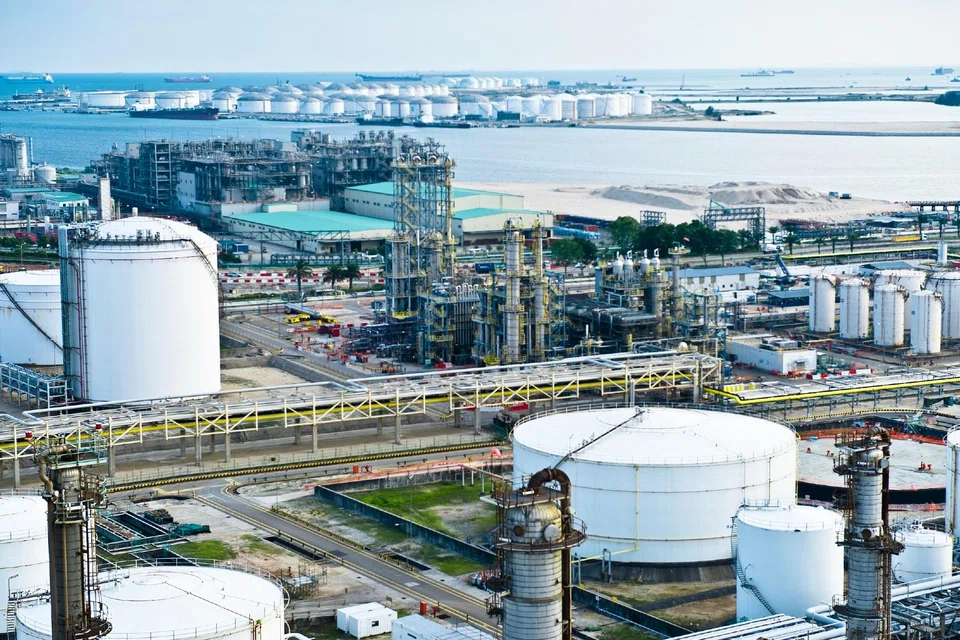
Jurong Island offers an instructive example. It already functions as a highly integrated industrial ecosystem, where companies share cooling water networks, seawater circuits and wastewater treatment infrastructure. Resources are managed collectively rather than facility by facility.
Plans for a low-carbon data centre park on Jurong Island extend this model further.
Instead of operating in isolation, data centres could be integrated into the island’s wider industrial network. Wastewater from nearby factories could be reused for cooling, while residual heat from data centres is recaptured for surrounding industrial processes.
Data centres can also serve as anchor tenants, helping to de-risk and fund these large-scale green projects, while supporting system-level optimisation across both energy and industry.
In this context, data centres help contribute to industrial symbiosis, where energy and materials are used far more productively.
De-risking innovation through collaboration
Turning AI factories into climate assets requires continuous innovation – and careful management of technology risk.
The technologies shaping next-generation data centres are evolving rapidly, creating a challenge for operators seeking to adopt new solutions while maintaining reliability. Collaborative testing platforms can help address this.
In 2023, the Singapore Tropical Data Centre Testbed (STDCT) was established to test emerging data centre technologies under tropical operating conditions.
This matters because solutions developed for cooler climates often perform differently in hot, humid environments.
Located within Jurong Island’s low-carbon data centre park, the next phase – STDCT 2.0 – aims to go further by serving as a platform to validate technologies in real-world conditions, support industry standards development and accelerate talent training.
Such platforms help build confidence among investors and operators by demonstrating the viability of new technologies before large-scale deployment.
Industry participation also plays an important role.
For example, Schneider Electric has partnered the National University of Singapore, contributing equipment and solutions to support the development of STDCT 2.0. Such partnerships help bridge the gap between research and real-world deployment, accelerating innovation while reducing risk.
From AI factories to climate infrastructure
Singapore faces clear constraints in land, power and water. While often viewed as limitations, these constraints can also be a competitive advantage by forcing a focus on efficiency and system-level optimisation.
This philosophy is reflected in Singapore’s latest data centre framework.
Under the second phase of the Data Centre – Call for Application programme, new facilities must achieve a power usage effectiveness of 1.25 or lower and source at least half of their electricity from low-carbon pathways.
Rather than competing with larger markets on scale, Singapore can lead in a different way – by maximising computing capability for every megawatt of electricity consumed.
In the age of AI, that may well become the defining metric of digital infrastructure.
This shift in perspective is necessary for the conversation about AI and climate change to move forward. As AI continues to reshape our economies and societies, the infrastructure that powers it must evolve accordingly.
Data centres will place increasing pressure on our energy and water resources, so the focus must also shift to how they can be designed to better integrate with – and contribute to – the systems around them.
Through systems thinking and cross-sector collaboration, these AI factories can become climate assets that support both the digital economy, as well as the resilience and efficiency of the wider energy and industrial systems they are part of.
Yoon Young Kim is cluster president for Singapore and Brunei at Schneider Electric. Lee Poh Seng is professor and head of the department of mechanical engineering and the executive director of the Energy Studies Institute at National University of Singapore.