

Turning businesses into prosumers can strengthen Singapore’s energy resilience
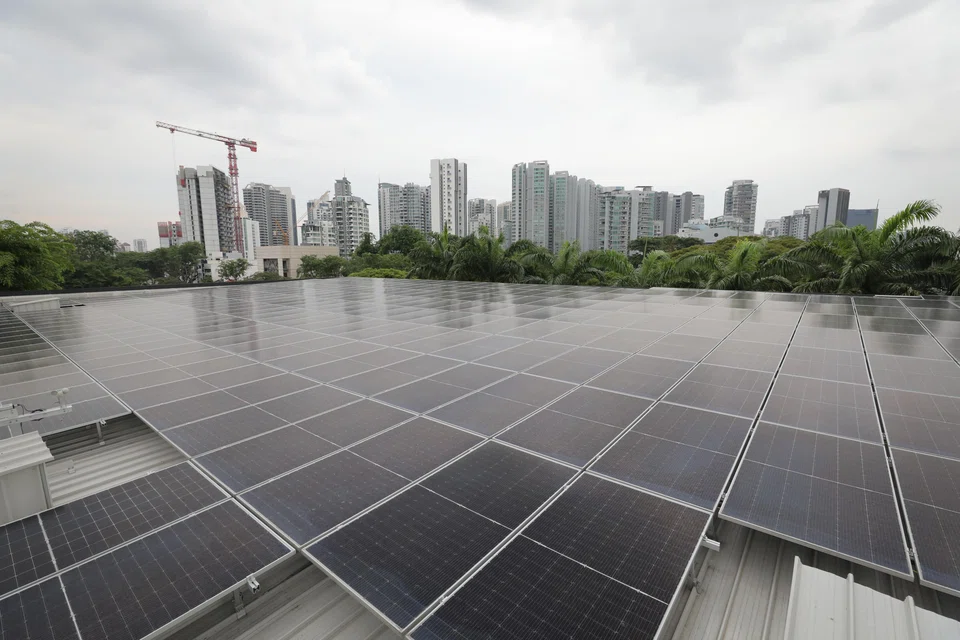
AS A country dependant on fossil fuels to fulfil most of its power needs, Singapore is exceedingly vulnerable to supply chain disruptions and uncertain economic conditions. The ongoing Russian-Ukraine war is a prime example of how global volatility can disrupt the energy market in real and serious ways.
The Singapore government has doubled down on efforts to diversify its energy supply and support the development of low-carbon solutions in a bid to improve energy resilience. In particular, increasing solar deployment and solar energy capacity is a priority for the city-state. Today, it is not uncommon to spot solar panels across the island, on rooftops and even reservoirs.
However, while solar capacity has increased by at least eight-fold since 2015, there is some way to go if Singapore is to meet its 2030 goal of at least 2 gigawatt-peak (GWp) of solar energy in its energy mix. Encouraging corporations to reimagine their role as not just power consumers but prosumers will be key to tackling the challenge of large-scale solar deployment in Singapore.
Awareness does not always translate into action
As of 2021, Singapore’s solar capacity is at over 500 megawatt-peak (MWp). To truly make the switch to renewables –without relying on energy imports – the government cannot be the sole provider of solar energy.
Due to the intermittent nature of solar energy, high cloud cover and limited land area in Singapore, it would be challenging to rely mainly on governmental efforts and grid operators to harness sufficient energy from the sun.
Corporate participation in the deployment of solar power thus remains key and necessary to ensure its large-scale viability. Unfortunately, high upfront costs involved in installing and deploying solar panels, as well as grid modernisation and storage, deter most corporations.
Nevertheless, Singapore’s emphasis on sustainability is strong – developments are underway that will further strengthen the case for businesses to deploy solar energy.
Scaling solar generation from ground-up
While there are no financial subsidies specifically for the adoption of on-site solar power generation, there is opportunity for corporations to benefit from becoming prosumers. When corporations transition to prosumers, they not only consume energy but are also able to produce energy. The excess can then be sold back to the energy grid to offset the electricity bill, providing an incentive for businesses to consider solar generation as an additional energy source.
And with the carbon tax due to rise in the years ahead, corporations should have a strong impetus to consider solar energy to reduce their carbon emissions. Industry players will be able to make use of International Carbon Credits (ICCs) to offset some of their emissions while they develop and implement new technologies to decarbonise and transform their operations.
More importantly, the decision to deploy solar energy has to be led by a mindset change that sees solar deployment as more than just a lofty aspiration. The development of cost-efficient, reliable technologies and solutions to support grid transformation will go a long way in helping to make solar energy more viable from a cost perspective. Industry collaborations, such as the Asia Green Grid Network, can encourage the sharing of knowledge and best practices to advance electricity grid innovation.
Wider sustainability trends and regulations, such as the move towards electrification, will provide an added boost to organisations considering solar generation. Last year, the EV Charging Bill was passed, which requires all new buildings to be fitted with electric charging infrastructure. Building management and facilities teams in many organisations may be driven by a “don’t fix what’s not broken” mentality, as there may not have been sufficient reasons to justify the cost and time investment needed to understand the technology, in order to upgrade their power network and support solar deployment. With growing electricity demand and an emphasis on shaving carbon emissions, this may encourage corporations to take a leap of faith in exploring solar generation.
Burgeoning environmental awareness and a spotlight on sustainability globally has been a positive first step, but it is now time to take concrete action towards a low-carbon future. There will be many aspects to address as we ramp up the deployment of solar power, such as ensuring efficient recycling systems for solar panel waste, and grid resilience against cyber-attacks. Nevertheless, continued industry collaboration and advancements in grid technologies will enable businesses to work together to achieve a greener, more resilient future.
The writer is vice president, East Asia at Eaton Electrical
TRENDING NOW

Britain’s mansion tax shows the difficulty of targeting wealth

Once staunchly pro-China, Malaysian Chinese businesses are now distancing themselves from Beijing

The only common thing in S-E Asia is that we all eat rice: Cisco’s Asean president

Singapore data centre operator DayOne opts for US IPO at likely US$20 billion valuation

