Turning climate commitments into proof: A leadership imperative
Companies earn trust when they can point to tangible measures of resilience and adaptation
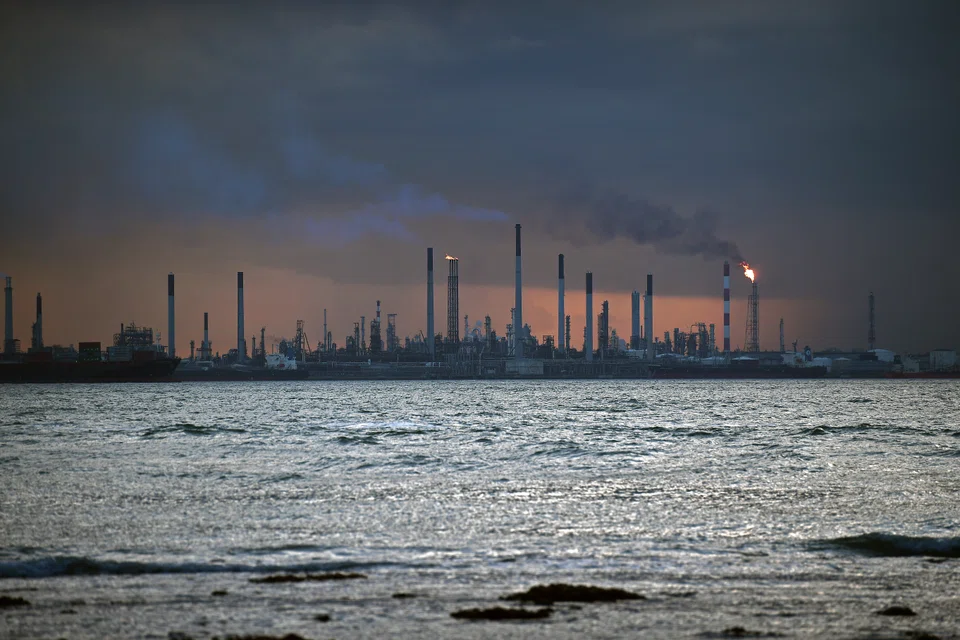
CLIMATE change has been an issue in the public eye for many decades. And as the recent conclusion of the 30th edition of the United Nations Climate Change Conference (COP30) proved, there remains a fight for action.
With the biggest criticism of COP30 being its lack of clear road maps, it is evident that the climate conversation has shifted. National pledges to do better will no longer suffice; concrete action is what counts.
The same applies to companies, in an era of upholding public sustainability commitments and complying with mandatory climate reporting.
As climate discourse grows increasingly fragmented, businesses must demonstrate greater clarity and communicate with consistency. Success in this will build credibility; conversely, failure to do so can erode reputational trust.
Humanise the message
Penta conducted a deep-dive analysis of how organisations across different sectors can succeed in climate change messaging, which offered key insights on how best to engage stakeholders. In relation to climate change specifically, we found alignment across stakeholders – but opinions are broadly negative.
Customers and local communities around the globe recognise the need for decarbonisation. However, these stakeholders now seek clarity on how this transition will directly affect them.
'%3e%3cpath%20d='M12.1475%2025.5262C13.7713%2025.4295%2014.94%2023.913%2014.94%2021.8832C14.94%2019.5359%2013.474%2018.093%2011.5917%2018.093C11.3745%2018.093%2010.9582%2018.093%2010.8393%2018.1413V25.2086L11.8891%2025.5745C11.8891%2025.5745%2012.207%2025.5262%2012.1475%2025.5262ZM11.4934%2017.6281C13.2567%2017.6281%2014.3843%2016.4292%2014.3843%2014.4501C14.3843%2012.372%2013.275%2011.2973%2011.4339%2011.2973H10.8393V17.6305H11.4934V17.6281ZM6.66078%2025.6482L7.39265%2025.5492C8.02617%2025.4502%208.26403%2025.3053%208.26403%2025.1097V11.6149C8.26403%2011.4193%208.1451%2011.3709%207.23484%2011.249L6.68137%2011.173L6.6219%2010.7588H11.9508C15.7153%2010.7588%2017.0624%2012.0797%2017.0624%2014.1578C17.0624%2015.9666%2015.7748%2017.1909%2013.4969%2017.6305V17.7041C16.111%2017.948%2017.6571%2019.5382%2017.6571%2021.7636C17.6571%2024.3318%2015.8937%2026.0417%2012.1109%2026.0417H6.60132L6.66078%2025.6482Z'%20fill='%232B2B2B'/%3e%3cpath%20d='M20.6287%2025.6505L21.5596%2025.5515C22.1725%2025.4779%2022.4104%2025.3076%2022.4104%2025.112V11.249H21.9346C20.073%2011.3479%2018.982%2013.0095%2018.408%2014.6227L18.1907%2015.5018H17.6555L18.1701%2010.7588H29.3837L29.6421%2015.4787H29.1664L28.9491%2014.6227C28.3728%2012.8645%2027.3047%2011.2743%2025.5002%2011.249H24.9856V25.1856C24.9856%2025.3812%2025.1251%2025.4548%2025.9965%2025.5515L26.7695%2025.6505L26.829%2026.0417H20.5693L20.6287%2025.6505Z'%20fill='%232B2B2B'/%3e%3c/g%3e%3cdefs%3e%3cclipPath%20id='clip0_5242_21648'%3e%3crect%20width='24'%20height='16.8'%20fill='white'%20transform='translate(6%2010)'/%3e%3c/clipPath%3e%3c/defs%3e%3c/svg%3e)
Concerns persist over affordability, environmental trade-offs and a limited understanding of personal or community benefits. As a result, the conversation among individuals has evolved from emissions and mitigation to public health and human survival. Media coverage linking climate change to its negative consequences on diseases and extreme weathers speak better to stakeholder groups.
Organisations are also realising that humanising climate communications lands a bigger impact and, subsequently, wins greater trust.
For example, Patagonia highlights its investments in organic sourcing and supporting farmer livelihoods, while Unilever frames its Sustainable Living Plan as helping consumers improve their health and well-being. Meanwhile, Nike positions its “Move to Zero” initiative as protecting the planet for athletes and communities.


Making sustainability messages personal and directly relevant strikes a better chord with stakeholders. Ultimately, businesses must anchor their sustainability narratives in human experience – making them relatable and fundamentally connected to people’s lives.
Innovation in resilience defines leadership
Stakeholders are increasingly viewing climate adaptation as a core measure of credibility. Companies must position resilience as evidence of their foresight and innovation, instead of merely risk management or mitigation.
Across industries, leadership emerges when organisations link their technologies or innovations directly to pressing climate issues such as water scarcity, extreme heat, food security and biodiversity loss.
Several companies exemplify this shift. Veolia’s desalination and reuse technologies receive praise as they reduce water scarcity and pollution. Iberdrola’s storm-resilient grids demonstrate how the company is shifting from reactive maintenance to systemic risk management through predictive technology and renewable integration.
Likewise, Xylem’s artificial intelligence-driven leak detection and flood modelling are also examples of forward thinking.
By contrast, companies such as Shell and PG&E come under scrutiny when innovation is absent or comes only after a crisis hits.
Being on the front foot is more essential than ever. Companies earn trust when they innovate before disruption hits. This will be more important than ever in a world facing accelerating climate impact.
Visibility and credibility must converge
It is widely understood which industries, companies and countries are the biggest carbon emitters in the world. Unsurprisingly, fossil fuel producers continue to be scrutinised.
Saudi Aramco reportedly accounted for roughly 4.4 per cent of all global carbon dioxide emissions in 2023, while big players BP, ExxonMobil, Chevron and Royal Dutch Shell continue to share the blame.
Notably, industry leaders that make a positive impact have far less visibility than their peers who receive bad press. This sentiment tracks similarly across different climate issues.
Within food security and supply, for instance, McCain Foods is praised for promoting sustainable farming practices and launching its first regenerative agriculture demonstration farm in India.
However, its public visibility remains limited, falling behind companies such as Tesco – which has been criticised for allegedly overfishing in Senegal.
Looking at the world’s biggest infrastructures, big names such as Microsoft, Nvidia and Amazon Web Services are criticised for energy and water usage from data centres.
Conversely, EDF, Siemens Energy and DP World have each made laudable climate-resilient engineering advances, but their achievements struggle to make a mark on stakeholders.
What is the takeaway? Companies making progress in climate adaptation and resilience are often under-recognised. But by communicating with a clear, data-backed narrative, they can look to convert their impact into tangible public trust, and emerge as clear climate leaders.
Proof over pledges
Across Penta’s analysis, a consistent theme unfolds: the public, media, investors, non-governmental organisations and communities all want proof of climate action.
Trust is earned when companies can point to tangible measures of resilience or adaptation. The era of signalling credibility through broad promises or distant net-zero targets has passed.
The world’s major emitters offer a clear example: Shell, BP or ExxonMobil still make broad environmental claims but will continue to receive negativity as the public registers only their insufficient action.
What stakeholders now reward are measurable outcomes: emissions reduction, community benefit, water and land restoration, supply-chain transparency and, ultimately, real improvements for people’s lives and ecosystems.
The writer is director at Penta
Decoding Asia newsletter: your guide to navigating Asia in a new global order. Sign up here to get Decoding Asia newsletter. Delivered to your inbox. Free.
Share with us your feedback on BT's products and services