UK budget will set country’s political agenda for years

It comes as the government seeks to reset the UK political and economic landscape ahead of the next election in 2028 or 2029
    • One reason Wednesday's Budget could be an epoch-defining fiscal event is because a very large net tax rise is expected.
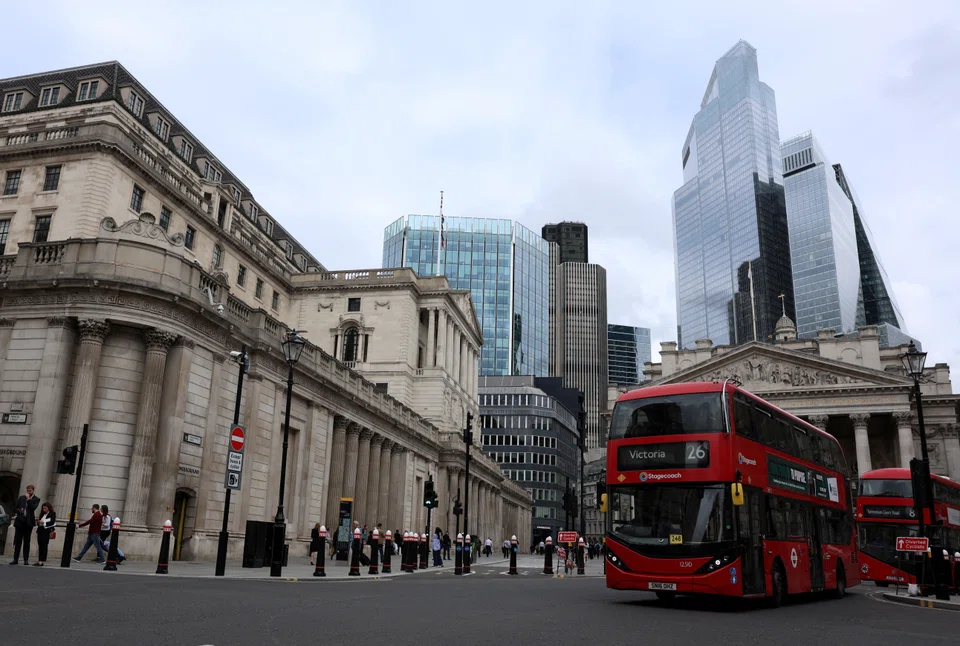
    • One reason Wednesday's Budget could be an epoch-defining fiscal event is because a very large net tax rise is expected. PHOTO: REUTERS
    Published Tue, Oct 29, 2024 · 05:00 AM

    UK fiscal events relatively rarely raise big ripples globally. However, Wednesday (Oct 30)’s Budget could be different with many international investors looking closely at the details of what may be the most important such statement for a generation by the UK government.

    The reasons why the Budget is potentially so important are multi-fold. This includes the fact that it is the first fiscal event by any Labour government since 2010 in the last days of then-prime minister Gordon Brown’s administration.

    A second related factor is that, given the huge size of current Prime Minister Keir Starmer’s government’s majority in the House of Commons, Labour may well remain in office not just until 2028 or 2029. But possibly well into the 2030s if a second term is won, even if with a much reduced majority, so Wednesday could set the agenda for much of the next decade.


    On Sunday, Chancellor Rachel Reeves said she will launch “a new era of public and private investment in hospitals, schools, transport and energy as momentous as any in Labour’s history in this week’s Budget”. This draws comparison with the historic reform programmes begun in 1945 under then-prime minister Clement Attlee, in 1964 under then-premier Harold Wilson, and in 1997 under then-prime minister Tony Blair.

    A third reason that Wednesday could be an epoch-defining fiscal event is because a very large net tax rise is expected. To be sure, tax raising is far from unprecedented following an election.

    However, the tax measures announced by Reeves could amount up to around £40 billion (S$68.7 billion). If so, this would comfortably exceed her predecessors Brown’s and George Osborne’s first budgets in 1997 and 2010 of £14 billion and £13 billion tax take, respectively, in today’s prices. Indeed, it may even exceed the biggest tax-raising budget in half a century which was then-chancellor Norman Lamont’s in 1993 which raised £33 billion in today’s terms.

    A fourth reason the budget is key is the almost-two-decade context it comes in. Since the 2007/2008 global financial crisis, UK economic growth has flatlined compared with the era immediately before, and international investors are watching closely to see if the country can get out of this funk.

    So with the No 1 mission of the Starmer government of trying to rejuvenate growth, Reeves will also present the latest economic forecast from the independent UK Office for Budget Responsibility (OBR). Other independent forecasters, including the Bank of England, have recently upgraded their growth outlook so there could be some modest upside in the OBR study too. In part, this is because of falling interest rates, plus policy changes including the government’s plans to kickstart reforms to the planning system to ramp up housebuilding and infrastructure development.

    Any growth upside the OBR highlights will be seized on by the Starmer team which is keen to try to move its economic narrative away from fiscal “black holes” to a more optimistic mood music. This includes focus on the UK’s long-term growth potential into the 2030s, fuelled by a new wave of investment to deliver on goals including tackling the nation’s crumbling infrastructure, and becoming a “clean-energy superpower”.

    Take clean energy, which has become a super-priority for the new government, as highlighted at the UK Investment Summit earlier this month. Around half of the more than £50 billion in business deals announced at the event were energy-related.

    One driver of this spurt is the launch of the new Great British Energy – an investment body and publicly owned energy generation company which aims to ensure a massive expansion in clean energy to help enhance UK energy security. In July, moreover, the government overturned a nine-year ban on onshore wind power construction under the last several Conservative governments. This was followed by one of the most successful renewable auction rounds in history.

    Building from the UK investment summit, the government will announce its plans for enhanced public investment. This will flow from the plans Reeves inherited from the Conservative administration of ex-prime minister Rishi Sunak which would have seen public sector net investment falling from 2.4 per cent of gross domestic product this year to 1.7 per cent by 2028 to 2029.

    The new government wants to boost this amount significantly, as outlined in Labour’s July 2024 election manifesto which committed to keeping public sector net investment constant as a share of GDP. This implies a big additional investment commitment each year, especially if the economy grows significantly in coming years.

    To facilitate this plan, Reeves has said that the UK government will redefine its fiscal rules, in a bid to free up extra cash. The budget will clarify this with the chancellor already asserting that a new revised investment rule will “make space” for more money.

    The proposed changes may allow Reeves the potential for tens of billions more borrowing to fund long-term investment, while still potentially delivering on a Labour manifesto pledge to get debt down as a proportion of the UK’s economy. While the full details of the announcement won’t be confirmed till Wednesday, much speculation centres upon Reeves potentially adopting a definition of debt known as “public sector net financial liabilities” (PSNFL), rather than continuing with the “public sector net debt” benchmark.

    The PSNFL measure takes a wider account of the government’s balance sheet, including financial assets and liabilities, than public sector net debt. The independent Institute for Fiscal Studies think tank asserts that changing the fiscal rules to target PSNFL would offer as much as £50 billion of additional investment headroom for the government.

    Much of this new investment will be sunk into infrastructure spending in coming years. Chief Secretary to the Treasury Darren Jones, who is No 2 to Reeves in the UK finance ministerial team, has announced that a new National Infrastructure and Service Transformation Authority will “fix the foundations of our infrastructure system”. The budget will give more details of how this will work, including how ministers will try to ensure that public investment will be better managed in the future.

    Taken together, the UK budget will therefore be the most important event yet for Starmer’s government as it seeks to reset itself after an uneven first 100 days in power. The fiscal measures will help define the next 1000 days, and beyond, of the administration as it seeks to reset the UK political and economic landscape ahead of the next election in 2028 or 2029.

    The writer is an associate at LSE IDEAS at the London School of Economics