

UK energy policy becomes political dividing line
Tory leader Rishi Sunak seems to fear that a messy transition from fossil fuels to renewables could lose him votes
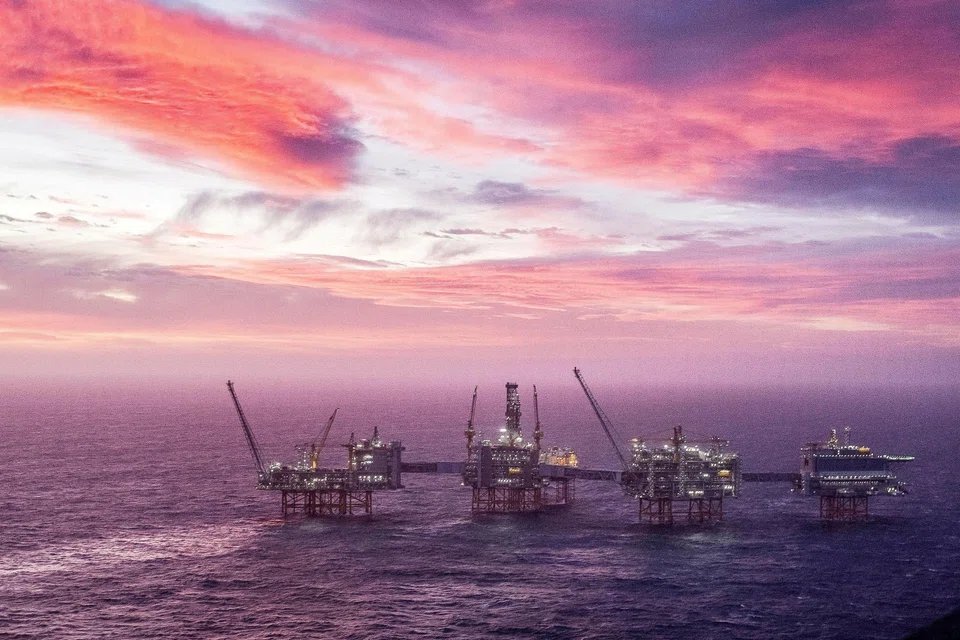
ON MONDAY (Jul 31), UK Prime Minister Rishi Sunak unexpectedly decided to grant hundreds of new licences for oil and gas production in the North Sea. His intent is to open up new fossil-fuel energy sources, but he has also begun a huge political furore about the UK’s net-zero commitments.
Turning the conventional wisdom on its head, the prime minister said the new licences would help the UK achieve net-zero carbon emissions, strengthen its energy independence and reduce reliance on hostile states such as Russia.
He also claimed that even if the UK hits net zero, it would still consume much oil and gas – so using domestic oil and gas would still be much better for the environment than importing it.
Sunak’s assertions have been disputed even by some backbench Members of Parliament (MPs) within his own Conservative Party. These include Chris Skidmore, who led a review of the UK’s climate goals earlier this year. He has asserted the prime minister is on the wrong side of history and has called for an emergency debate.
Significant as internal Conservative opposition may be to Sunak’s new move, there may be even more MPs in his party who feel that the government needs to dilute its net-zero commitments.
More than 40 Conservative MPs and Lords wrote to Sunak recently, calling for an extension of the 2030 deadline for banning the sale of new petrol and diesel cars in the UK.
Conservatives vs Labour
The bigger issue is that a clear dividing line is opening up in UK politics between the Conservative government and Labour.
The latter party’s climate and net-zero spokesperson Ed Miliband called Sunak’s plans a “weak and confused policy… which will do nothing for our energy security and drive a coach and horses through our climate commitments, while continuing to leave us at the mercy of fossil-fuel dictators like Russian President Vladimir Putin”.
This follows Labour leader Keir Starmer’s announcement in June that any future government he leads will end new North Sea oil and gas exploration, and help communities profit from clean-power projects.
It would be a “historic mistake” to wait until North Sea oil and gas run out and let the opportunities “pass us by”, he said then.
UK fossil-fuel extraction from the North Sea has fallen significantly. Production is forecast to continue declining as North Sea fossil-fuel stocks fall, with extra costs required to extract new sources.
Sunak’s decision was made in the context of recent Conservative governments being criticised for their lack of long-term energy focus over the last decade and a half.
While Monday’s announcement has been depicted as an attempt to reset UK policy, it is probably in large part a political move, attempting to create a wedge issue ahead of the general election expected next year.
One reason for this is the result of last month’s Uxbridge by-election in London.
The Conservatives’ slim victory there has been attributed to Labour mayor Sadiq Khan’s plans to extend the Ultra Low Emission Zone. The scheme that aims to boost air quality via a daily £12.50 (S$21.40) charge for driving in London if a vehicle does not meet emission standards.
The interpretation Sunak appears to have gleaned from that win is that a fast, messy transition from fossil fuels to renewables could cause a significant loss of votes.
In his Monday proposals, Sunak sought to take the edge off the controversy by announcing plans to also fund more carbon capture and storage (CCS).
However, as welcome as the CCS announcement is to many environmentalists, there is a danger that the core fossil-fuel commitment could further undercut the UK’s green economy leadership credentials.
The UK’s independent Climate Change Committee has said that the best way to lower bills during the cost-of-living crisis, while also boosting energy security, is to cut fossil-fuel use and invest in renewables.
Race for green investment
However, this requires investors willing to bet on the UK in the global green-investment race, when much larger subsidies can be secured elsewhere, such as under the US Inflation Reduction Act.
Lord Richard Harrington, who is conducting a review of the UK’s foreign direct investment regime, has already warned that such subsidies pose a “big threat”. He is expected to soon recommend a big shift in how the UK attracts funds, so as not to miss out on the rising tide of green investment.
MP Skidmore made a similar warning in his net-zero review, highlighting that the UK risks losing out on more green investment due to factors such as inconsistent decision-making at the top of government, and delays to crucial planning decisions at a local level.
If the UK does not attract sufficient investment, it risks failing badly in its strategy to provide high-skilled jobs, transition from fossil fuels, secure its energy supply, and use green technology to drive economic growth.
The government hopes to create up to 440,000 jobs by 2030, leveraging up to £90 billion of private investment. This promised vision is now under threat.
But with the right ambition and policies, the situation could yet be turned around. The UK’s strong financial industry is a key strength in the green-economy push. The energy transition requires much capital, and many countries could learn from UK best practices, including using fintech to support the development of green technologies.
With United Nations Secretary-General Antonio Guterres warning last week that we are entering the age of “global boiling”, the UK government needs to raise its game. If it does not, it will let down not just the UK public, but the wider world – which could be encouraged to make the green transition faster with UK leadership post-COP26.
The writer is an associate at LSE IDEAS at the London School of Economics






