

UK grand strategy faces formidable post-Brexit test
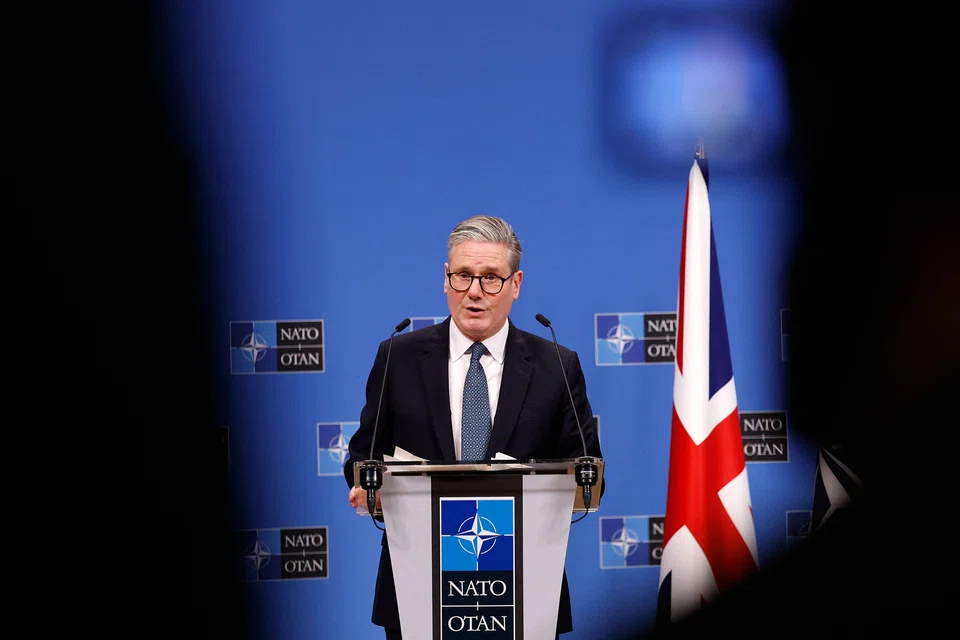
UK PRIME Minister Keir Starmer has been boosted by US President Donald Trump’s assertion that London may be spared US trade tariffs, unlike the European Union. However, the UK’s grand strategy may still be facing, in 2025, its toughest test of the post-Brexit period.
At the heart of this dilemma is the Starmer government’s attempt to answer one of the fundamental questions unresolved since the UK’s 2016 EU referendum. That is, what kind of country the United Kingdom wants to be as it moves into the second quarter of the 21st century.
The two pillars of UK foreign policy in the post-1945 period – its US and European alliances – are in flux. Starmer is misaligned with Trump on multiple key issues – from climate change to those on security, such as the future of the US-UK military base on the Chagos Islands in the Indian Ocean. It is expected that Starmer will visit Washington for talks with Trump within weeks, when these and other challenges will be discussed.
Starmer also faces tricky post-Brexit relations with the UK’s EU neighbours. This, despite becoming on Monday (Feb 3) the first UK prime minister since Brexit to attend a European Council meeting with the 27 EU national leaders, plus senior European Commission officials including President Ursula von der Leyen.
Starmer wants to remove some of the key barriers to trade with the EU bloc imposed by Brexit, but has ruled out the two big moves that would make the most difference – rejoining the bloc’s customs union and single market. EU politicians have welcomed the change of tone from Starmer’s Eurosceptic Conservative predecessors, but want concrete proposals from his government before a full European leadership summit later this year which aims to formalise a reset in ties.
Starmer has repeatedly insisted that he does not think it will be necessary for London to choose between the US under Trump, and the EU. He said on Feb 3, for instance, that “in relation to the United States and the EU, it’s really important that we work with both, and we don’t see it as ‘either-or’ on defence and security. We are working very closely with our European allies every day, particularly in Ukraine, but equally on defence and security with the United States with the special relationship”.
However, Trump has implied that he is seeking to force the UK government to side with his administration as the price for avoiding tariffs. For instance, he has contrasted the “nice” treatment he is getting from the UK prime minister with that of the “atrocity” of the EU.
The bigger issue, however, may be that the UK’s trade balance with the US is much more balanced than the EU’s. Trump said last month that “we have a US$350 billion deficit with the EU. They treat us very, very badly, so they’re going to be in for tariffs”.
This creates a headache for Starmer at the same time that he wants to recalibrate UK international policy in many parts of the globe. And at a moment too when the nation faces massive challenges, from Russia’s stridency to China’s growing power.
In a previous generation, former UK foreign secretary Douglas Hurd asserted that London had been able to “punch above its weight” in the post-war era, despite it no longer being a great power. Today, with one of the world’s largest defence and aid budgets, diplomatic networks, and economies, the UK’s international influence remains significant. So Hurd’s statement may still be true, but is under increasing scrutiny.
Previous UK prime ministers, including Boris Johnson, had wanted to use Brexit to transform the UK’s political economy, identity, and place in the world by using it to help rebalance the economy and pursue what he called a Global Britain agenda. However, he and others found it difficult to lead, let alone sustain, a coherent, lasting consensus.
The result, following the still-divisive 2016 EU referendum, is that instead of a defining narrative, the UK’s sense of itself and its place in the world remain disputed. One key debate here is around rebalancing the UK economy, with some Brexiteers favouring a deregulatory agenda.
However, the ultimate outcome in terms of a potential new economic model remains unclear. Conservatives have long struggled to balance a commitment to globalisation and international trade with sovereignty and nationalism.
One critical question is to what extent the UK should remain a European-aligned economy. Many Brexiteers argue that diverging, significantly, will boost growth by developing stronger links with key non-EU industrialised nations and emerging markets, including Commonwealth nations such as India, Australia, and Canada, emerging markets including China and the Gulf Cooperation Council states, and other key industrialised countries, such as Japan and the US.
The Starmer team is more favourably inclined towards the EU, than Brexiteers. Nonetheless, the prime minister is also keen to exploit new trading opportunities.
Some post-Brexit divergence may be inevitable as the UK and EU economies evolve. However, the UK’s ability to leverage this, in the short term at least, can be overplayed. Even some Brexiteers have argued that new UK trade deals, such as its accession to the Comprehensive and Progressive Agreement for Trans-Pacific Partnership, are only a means to an end and that the UK economy needs to be better configured to benefit from them.
So as UK politicians seek to articulate where they want the nation to diverge from the EU, there is recognition that this is not a simple process. Historically, Europe has been the UK’s main trading partner, except when the world economy descended into protectionism, when London opted for imperial preferences.
One of the big options for divergence is greater alignment with the US. A trade deal with Washington remains one of the UK’s big goals as it potentially offers significant scope for lowering or eliminating tariffs on goods. Yet such an agreement will be a very tricky prospect with the Trump team over the next four years. Even if Starmer can maintain cordial relations with the new US president, the structure of the UK economy, the costs of change, and the continued pull of the EU as a regulatory superpower may temper such US trade deal ambitions.
Taken together, despite the historic change that his party’s 2024 landslide election brought, Starmer faces a hugely complex set of international economic and political challenges. Almost six months into his premiership, the UK grand strategy may be facing its toughest challenges yet in the post-Brexit era.
The writer is an associate at LSE IDEAS at the London School of Economics
TRENDING NOW

Singapore identifies 7 firms responsible for haze fires, notices issued urging action: Grace Fu
DBS remains analysts’ pick ahead of Q3 earnings after Singapore banks’ share slump

High Court rules against Julius Baer’s Singapore trust arm in US$50 million family trust dispute

Could stablecoins be the future of money?

