The ‘ultimate luxury’? Inside Singapore’s premium health boom
A wave of new operators is targeting the wealthy with wellness clinics, five-figure fitness plans
[SINGAPORE] From the traditional environs of the golf course or country club, the Republic’s well-heeled are now heading to upscale gyms and paying five-figure fees for personal training plans.
The city’s luxury fitness industry is growing, with premium brands expanding their footprints in prime locations.
The move is part of a global trend, as what arguably began as a Silicon Valley niche – popularised by tech entrepreneurs like Bryan Johnson and his multi-million-dollar anti-ageing regimens – finds a lucrative foothold in Asia and elsewhere.
Private wealth managers have noted this shift. In its 2026 Global Wealth and Lifestyle Report, Swiss private bank Julius Baer noted a global surge in health-related spend.
In Asia-Pacific, 66 per cent of high-net-worth respondents said they were taking active steps to improve their long-term health, with 58 per cent planning to increase their health spending over the next 12 months.
“Preventive, personalised health investments are becoming central to affluent lifestyles and longevity planning,” the report noted.
Similarly, a 2025 Forbes-Manulife report found that 96 per cent of 250 high-net-worth individuals surveyed in Singapore, Hong Kong and mainland China agreed that “nothing is more important than health”.
The price of performance
Globally, luxury wellness club memberships were valued at US$68.4 billion in 2025, and are projected to double to US$138.7 billion by 2034, according to research firm Market Intelo.
While no specific figures are available for the luxury tier in Singapore, the Republic’s broader wellness economy reached US$23.2 billion in 2024, according to the Global Wellness Institute.
Separate data from Research and Markets shows that Singapore’s gyms, health and fitness clubs market hit US$700 million in total revenue in 2022, with a 12.1 per cent compound annual growth rate since 2017.
At the top end are offerings that range from S$13,000 12-week “transformations” to a US$150,000 annual membership at Elyx Life, an ultra-exclusive longevity clinic at Raffles Hotel Arcade where members have their health tracked even when travelling.
Craig Corte, the 56-year-old global head of digital at Standard Chartered, spends some S$3,200 a month at premium gym Ultimate Performance (UP).
His gruelling regimen involves strict diet control and four weights sessions a week, starting well before sunrise. After about two years with the gym, he credits it with reversing years of corporate wear-and-tear and stabilising a degenerative disc disease.
“Cheap or expensive is only relative to value,” Corte says. “I have more energy, I have more memory, I’m able to work harder and take on more stress.”
For some, radical lifestyle shifts in the name of fitness may bring savings elsewhere. One mid-30s C-suite level executive at a logistics firm, who declined to be named, paid roughly S$8,600 for a six-month transformation at boutique facility OnePT.
“Drinking was completely cut out... and going for restaurants was completely cut out as well,” he recalls.
The extreme S$180-per-session regimen paid off, as he dropped 20 kg and slashed his body fat from over 30 per cent to 11 per cent.
While it did not cure his corporate burnout, and left him feeling “hungry all the time”, he says he appreciated the discipline. “You’re paying, and in my mind I figured if I don’t show up, I’m gonna pay for it.”
Premium real estate
Premium operators are fighting not just for C-suite wallets, but also for prime real estate. In the past 24 months, a flurry of premium fitness or wellness brands have opened outlets ranging from 9,000 to 45,000 square feet (sq ft) in prime locations such as Orchard Road and Raffles Place.
This is even as rentals rise for such spaces. Prime Orchard Road retail rents are forecast to grow by 1 to 2 per cent in 2026, according to real estate firm Cushman & Wakefield.
Retail rents in “other city areas”, which include prime Central Business District retail podiums and mixed-use developments, are expected to rise 1.5 to 2.5 per cent.
Historically, department stores were valued as anchor tenants for driving transaction-led footfall, says Wong Xian Yang, head of research for Singapore and South-east Asia at Cushman & Wakefield.
However, today’s landlords want tenants that encourage longer dwell times and multiple visits per week, he adds. Wellness facilities can play such a role.
Some premium wellness facilities are located inside office blocks themselves, such as TSquared Lab’s outlet in the 30 Raffles Place office tower.
Having a luxury wellness hub inside an office block can be a calculated “amenitisation” move for Grade-A landlords, says Wong.
Multinational corporations increasingly view the office as a destination that must support employee well-being, he explains.
Landlords thus use these high-end facilities to differentiate their buildings, boosting their value proposition to attract these lucrative corporate tenants.
Tech vs execution
On the demand side, private banks and family offices are providing a boost to the industry, increasingly offering their ultra-wealthy clients access to longevity clinics.
Singapore has a median life expectancy of 84.8 years, but World Health Organization data shows that the Republic’s “healthy life expectancy” is only 74.2 years. Preventing that decade of decline has become a major focus for the wealthy.
One industry response is the growth of high-tech clinical longevity, represented by players such as local company Morrow.
Backed by US$156 million in committed investment from Seveno Capital, Morrow is aiming for US$230 million in annual revenue and plans to open 10 new locations across Asia and the Middle East.
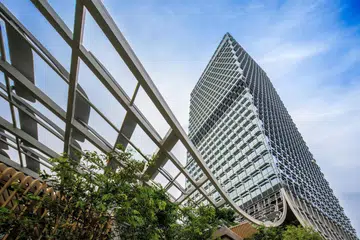
It recently launched a 45,000 sq ft flagship place, serving as the anchor tenant of the Longevity World development at 10 Coleman Street. Also backed by Seveno, the three-storey Longevity World is dedicated to wellness and preventive medicine.
Spanning two floors in the building, Morrow’s flagship offers clinical diagnostics powered by artificial intelligence, including bone-density scans and blood work. Health coaches and movement specialists also meet customers under the same roof.
Gym group UP takes a different approach. Its managing director for Asia-Pacific, Chris Richards, argues that fitness must go beyond diagnostics.
“The risk with these newer longevity clinics is that an ice bath or a blood test on its own doesn’t change too much,” he says. “They do all these cool tests, and then people are left wondering, ‘Okay, now what do I do?’ Can they actually execute on the programme after the testing?”
UP does not offer fancy medical tech. Instead, it offers a 12-week transformation package at S$13,000, justifying this premium through strict accountability that includes meal-logging and daily check-ins.
The gym’s back-to-basics approach resonates with clients such as Corte, who says: “The sophistication is in its simplicity. It’s not about 53 peptides you’ve got to go and find. It’s very solid protocols.”
More younger spenders
One premium player that has decided to widen its scope is TSquared Lab, which has facilities at Raffles Place and Gillman Barracks, as well as a medical wing at SBF Center.
Customers can undergo strength training, pilates or physiotherapy, and also sign up for meal preparation packages. Typical one-to-one personal trainer sessions cost S$160 for one hour, and can be bundled with other services.
But TSquared also offers an “entry-level” diagnostic tier priced at S$299 per year, to reach a wider customer base. This includes blood work, AI diagnostics and a doctor consultation.
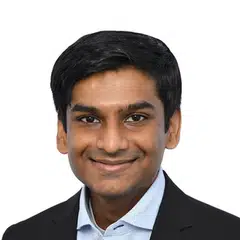
The “economics don’t quite work” for this cheaper tier, says Dhanya Thakkar, who co-founded the company with his wife Afshan. The offering is meant to be a strategic loss leader, acting as a gateway to get clients started on their longevity journey, he adds.
This lower entry cost has brought clients the Thakkars did not quite expect: a surge of what they call “young optimisers”.
“We thought the demographic was going to be 50-plus,” Dhanya recalls. Instead, roughly half their clients are aged between 25 and 40.
“They feel good, they train, but they want to get a Dexa scan (for bone density) done, see their visceral fat, look at their cortisol,” he adds.
With regional wealth continuing to grow, the immediate threat to these luxury facilities is unlikely to be a lack of client spending power.
In its report, Julius Baer noted that “health-related expenditures have surged” among high-net-worth individuals.
NUS Business School senior lecturer Dr Samer Elhajjar agrees that the ultra-wealthy segment of high-end gymgoers will remain relatively resilient, because wellness spending represents a small fraction of their overall wealth.
Conversely, the “aspirational affluent” segment – which comprises younger consumers who are more financially sensitive – may prove more cyclical.
Still, Dr Elhajjar does not believe that wellness spending is a temporary fad.
“What we are witnessing is a broader redefinition of luxury itself,” he says. “For many affluent consumers today, the ultimate luxury is no longer another watch, handbag or sports car. It is time, health, vitality and functional longevity.”
Consolidation looms
But, as the market becomes increasingly crowded, operators will have to constantly justify their price tags.
Consolidation is already under way. In March 2026, boutique player Trapeze Rec Club closed after facing high costs and lease pressure.
Separately, UP’s Richards warns that while newer competitors might boast a “fancy fit out and shiny new trends”, they often lack the coaching calibre required to survive long term.
As commercial rents continue to climb, he predicts a “survival of the fittest” scenario, where only those delivering measurable, data-backed results will keep their doors open.
Dr Elhajjar, who is a marketing strategy expert, notes that not every operator charging premium prices will survive, even with consumers keen to effectively buy “the possibility of extending their productive years”.
While the industry is likely to grow, “individual firms must continuously demonstrate measurable outcomes”, he remarks.
“Luxury pricing can be sustained only when consumers perceive exceptional value, exclusivity and expertise. Once clients begin to view such services as interchangeable, price premiums become much harder to defend.”
High-end gyms and wellness operators that can build brand communities, collect and deploy proprietary health data and personalise client journeys will be able to charge premiums, Dr Elhajjar adds.
“Eventually, the operators that succeed will resemble luxury hospitality brands more than gyms. They will sell identity, belonging, expertise, access and transformation, rather than merely fitness sessions.”
Decoding Asia newsletter: your guide to navigating Asia in a new global order. Sign up here to get Decoding Asia newsletter. Delivered to your inbox. Free.
Copyright SPH Media. All rights reserved.
TRENDING NOW
Grab CEO’s wife Chloe Tong on life with Anthony Tan and finding her purpose
Hwa Seng Builder, two China companies win S$1.2 billion Tuas Road Viaduct phase two contracts
Deal between tycoon friends sparks scrutiny of Philippine power sector
Canada is upping oil flows to Asia, but South-east Asia’s refineries aren’t ready to handle them yet