

The UN needs to prioritise the best development solutions
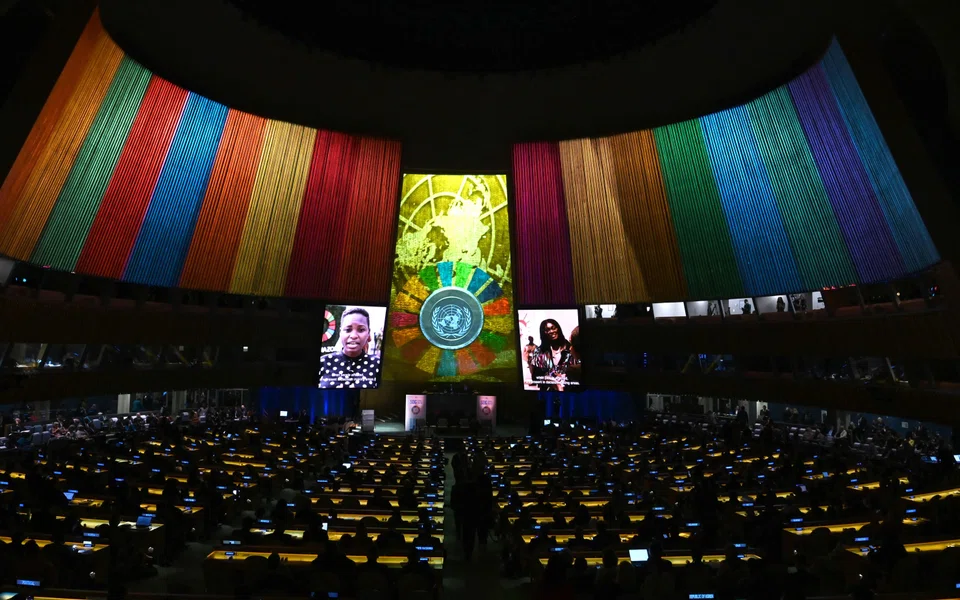
THE world is failing on its development promises: the Sustainable Development Goals (SDGs), agreed by all governments in 2015 to be achieved by 2030.
Progress across all these promises – including in areas as important as eradicating poverty and ending hunger – is happening at less than a quarter of the pledged speed. On current trends, the world will reach its 2030 promises half a century late.
This week, as world leaders meet in New York for the United Nations (UN) general debate, this failure looms large. We need to urgently change our approach to maximise development benefits for the world.
Too ambitious, too unfocused
One reason for the slowness is that many SDG promises are impossibly ambitious. They pledge to achieve the complete elimination of hunger and infectious diseases, deliver jobs for all, and social protection systems for everyone. These aren’t development targets; they are worthy but far-fetched ideals.
The global promises also lack focus: there are 169 long and detailed targets, and all are given equal importance. The vital promise to eliminate child starvation is placed on par with the decidedly less crucial promise to provide information on how to have a lifestyle “in harmony with nature”.
Furthermore, most nations have failed to set aside sufficient additional resources to achieve the promises. This is true of the world’s poorer nations, which are understandably already struggling – but it’s also true of the big development organisations and rich country donors that have increased their spending only slightly.
The total shortfall to achieve all the SDGs is likely a spectacular US$10 trillion to US$15 trillion each year, about the same as the total global tax intake. It is a safe bet that governments are not going to double taxes to achieve these promises.
At their heart, these goals promise something important: improving conditions for the worst-off. So we need to get smarter. Some SDG targets have more effective solutions than others: there are policies that will have a better chance of success, programmes that are cheaper, and outcomes that are more valuable than others. We should start to focus on these solutions first.
I argued for prioritisation back in 2015, when the goals were being hammered out by the UN, governments and civil society, but others optimistically believed that the sweeping promises would encourage the world to deliver everything.
That didn’t happen. We’re now at halftime for our promises but nowhere near halfway. To rescue the global goals, we must find targets where delivery can be turbocharged even with few resources.
My think tank, the Copenhagen Consensus, has worked with Nobel laureates and leading economists to research the most effective policies among the 169 targets. We have identified 12 powerful policies that would deliver enormous benefits across the SDG agenda at relatively low cost.
One such policy is expanding childhood immunisations for the world’s poorer half. These include vaccines for rotavirus, the most common cause of diarrhoea in young children; pneumococcal vaccines to avoid deaths from serious infections and meningitis; and increased coverage of the measles vaccine.
For US$1.7 billion per year, we could avoid half a million deaths each year, mostly of very young children. Each dollar spent would deliver an astounding US$101 in social benefits.
And that’s just one of the 12 policies. Our research shows that for a total of US$35 billion annually, we could boost maternal health to save the lives of 166,000 mothers and 1.2 million newborns each year; save another million lives annually by nearly eradicating tuberculosis; improve educational performance in low-income countries to transform the future for children; improve land ownership records to give people security; boost trade to create economic opportunities; reduce malaria; enable more movement of skilled workers to reduce inequality; tackle child malnutrition; and save 1.5 million lives from chronic diseases such as hypertension.
In total, these policies will save 4.2 million lives each year and make the poorer half of the world US$1.1 trillion better off annually. Put in economic terms, every dollar spent will deliver an amazing US$52 of social benefits.
The SDG agenda is broken. We mustn’t tolerate world leaders making more empty promises, or the UN continuing to spread funds and attention around an unprioritised, endless list of lofty but unachievable goals.
We can rescue the global development agenda and make the most of the next seven years. We just need to prioritise the best things first.
The writer is president of the Copenhagen Consensus and visiting fellow at Stanford University’s Hoover Institution. His latest book is Best Things First.






