

Undersea plan to sell sunshine to Singapore back on track
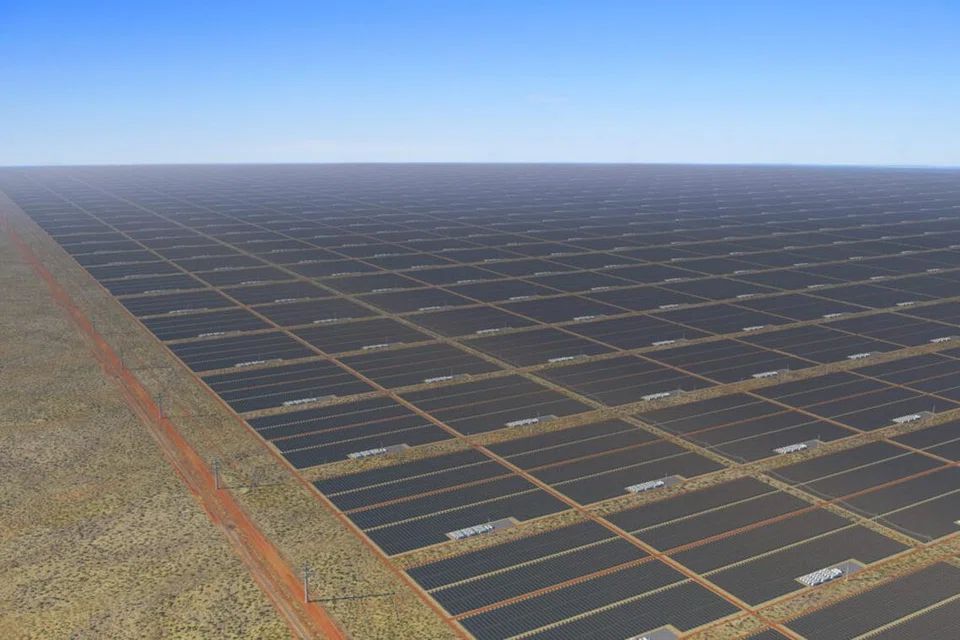
AN AUSTRALIAN project to harvest sunlight from its deserts and export that energy to Singapore seems to have been given another lease of life. The idea is to ride on the plan of Singapore’s Energy Market Authority to import up to 4 GW of low-carbon electricity by 2035.
But Sun Cable, the company behind the solar farm and power export plan, went into voluntary administration earlier this year when one partner fell out over the scale of the undertaking. He was unconvinced that it could be done. The proposal seemed doomed. Now the firm has been wholly acquired by the other partner, one of the country’s richest men, billionaire Mike Cannon-Brookes, who wants to push on with the project to deliver power via a 4,200 km undersea cable. He is quoted as saying: “It’s time to stretch our country’s ambition. We need to take big swings if we are going to be a renewable energy superpower. So swing we will.”
Certainly it will be ambitious. Technically, there should not be any real obstacle to such a long energy conduit. For example, when the Soviet-era Gazprom proposed piping gas to Germany in the early 1970s, that too was considered hugely audacious. Yet, until the outbreak of the Ukraine war, gas from the Urals powered German factories without major problems. Then there is the example of the 4,000 km pipeline that delivers Siberian gas to China.
Electricity, too, moves across borders seamlessly. US power companies routinely buy hydroelectic power from Quebec. Now there are proposals to supply Europe with solar power generated in the Sahara desert. A 1,200 km long undersea power cable will soon connect the power grids of Israel, Cyprus and Greece. In 2021, Egypt and Saudi Arabia signed construction contracts for a cross-border electricity connection, set for completion in 2025.
All that said, it is important also to note that there remain significant hurdles. First is the question of whether it might be easier and more profitable to supply the local market. Canberra has legislated emissions reduction targets of 43 per cent by 2030 (from 2005 levels) and net zero by 2050. So there is a burgeoning local market for solar energy. Building the infrastructure overland to supply consumers locally would be a lot easier, faster and cheaper than any undersea cable to Singapore. There is also an energy security dimension to the proposal. Pressure from Canberra to keep the supply for domestic consumption may prevail in the end.
Then, there is the need to consider the route the supply cable will run. As it will cross borders, will there be a need to pay transit fees? Ukraine used to extract a fee for gas flowing through its borders to the rest of Europe. Any such fee would add to the cost of supply, which would have an impact on the supplier’s ability to compete on price.
In these days of geopolitical tensions and international terrorism, could such a cable network be held to ransom or disruption? This can come both as a physical attack on supply cables or in the form of a cyber strike. Both supplier and buyer have to very carefully assess such risks.
Nevertheless, Cannon-Brookes seems to be a visionary businessman. To the extent that his enterprise-driven zeal and plans to supply green energy to Singapore help diversify its power supply, the venture should be welcomed.






