As unemployment improves, focus on underemployment as well
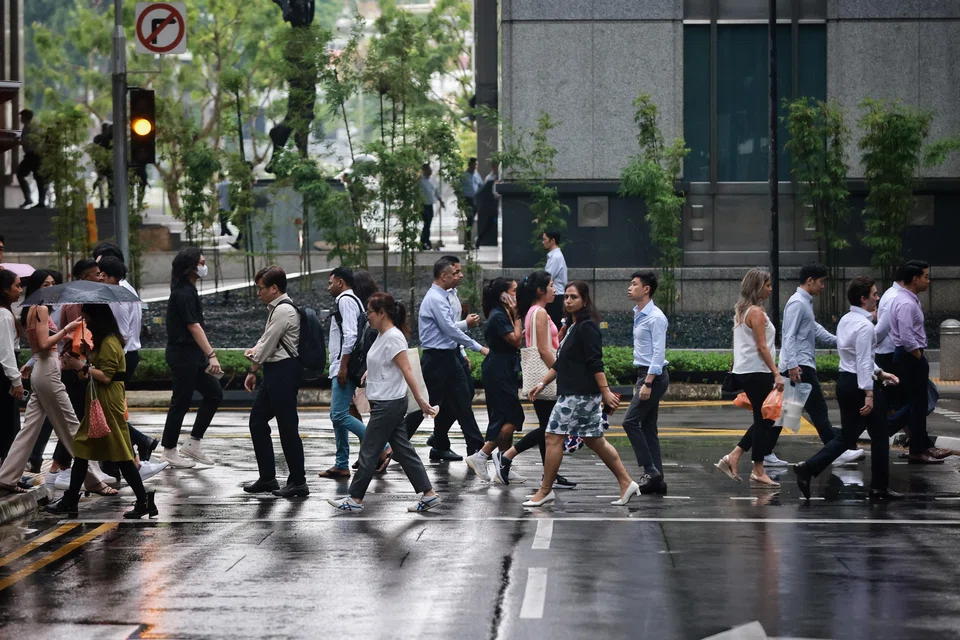
THE job market ended 2022 with a flourish in many markets – Singapore, for example, ended the year with a record 227,800 more workers employed, surpassing the pre-pandemic 2019 numbers by about 3 per cent.
But as the effects of the pandemic begin to wane, the Asia Pacific region is facing new challenges from global financial tightening and a projected slowdown in external demand. Job security remains a top concern for many people, particularly among the Gen Z and millennial population.
While the numbers show declining unemployment, there is a larger and, with the fiscal tightening, potentially looming issue of underemployment that is getting little to no attention. Underemployment is a measure of the total number of people who are unwillingly working in low-skill and low-paying jobs or only part-time because they cannot find full-time jobs that use their skills and abilities. This represents the talents and aspirations of millions of people in our region going to waste, with cost to both individuals and economies.
As problematic as unemployment
Like unemployment, underemployment is driven by a fundamental mismatch in market supply and demand, as well as institutional biases in the hiring and talent-matching process. Underemployment is particularly wasteful economically as, by and large, those who are underemployed are strongly motivated to become fully employed; as a result, significant real economic potential is being lost. And those in underemployment may actually face more barriers to accessing the skill-building and job search support needed to break into meaningful, long-term employment than those who are fully unemployed.
Both unemployment and underemployment are forms of labour underutilisation that are detrimental to the economy and society. However, underemployment may be even more insidious as it is harder to quantify and often not systematically tracked, despite the fact that underemployment rates are higher than employment rates in most countries.
Even the measurement of underemployment varies across different countries. In Australia, the number of reported underemployed individuals is 5.8 per cent, almost double the jobless rate. According to the Australian Bureau of Statistics’ November 2022 report, 1.5 million people were underemployed, whereas 884,000 individuals were unemployed. The report further notes that underemployment among women is almost double that of men, even though both genders have the same jobless rate.
On the other hand, Malaysia reports underemployment as a skill-related issue. According to Q4 2022 data, 37.4 per cent of employed Malaysians with a tertiary education were underemployed. In Indonesia, underemployment is measured in “time-related” terms, with the rate referring to individuals who work fewer hours than they want or need to work. According to the International Labour Organization (ILO), in 2022, some 8 million people in Indonesia between 15 and 64 years of age worked fewer hours than desired.
While the different measures of underemployment make it difficult to make meaningful comparisons across markets, they all highlight that a significant percentage of the population is not fully utilising their skills, education and experience in their current job, and their income or job status is below their potential and, in many cases, perhaps below the subsistence income level.
The negative effects of underemployment are felt not only in the financial realm but also in the physical and mental health of workers. Research has shown that underemployment is significantly related to a decline in self-rated health, an increase in depressive tendencies, and a rise in the prevalence of certain illnesses. Underemployed individuals are often working jobs that do not provide enough full-time hours for benefits, or enough to earn a living wage, which can make it difficult to access even basic healthcare or well-being support, putting further stress on themselves and their families.
Tackling underemployment
To ease underemployment, it is important to have a deep understanding of the current and emerging demand for certain skills, abilities and roles in the workforce, and to steer the underemployed to those sectors and opportunities. For example, in Singapore, our data shows that jobs that are currently in high demand include technology roles such as web and software development, cloud operations and data analytics, as well as healthcare jobs in an ageing population. The gig economy and digital marketing are also among other sectors that have hiring potential.
Naturally, resources should be allocated to reskilling and training programmes that match the needs of the “hot” sectors and roles, but traditional training courses are often biased against those who are underemployed due to economic necessity. If one is struggling to even make a living wage, they are unlikely to be able to enrol in any multi-year training initiative, or to even join a short course that is run full-time. They also must have the confidence that the upskilling they undergo is likely to result in getting employed full-time, which most traditional training schemes cannot assure.
More rapid, fit-for-purpose solutions to skill up these individuals for immediate employment are critical to breaking them out of underemployment. These initiatives need to be tightly linked to industry and employer demand, which, in some sectors like technology, are constantly evolving.
But classroom training isn’t enough – it is also important to link the courses with career counselling and job placement support. Thoughtful, “fit-for-person” talent matching is vital to ensure a “best fit” for an individual’s transferable skills with the needs of specific jobs, beyond the technical skills learnt for the role.
Coaching or mentorship from those with experience in the industry will also significantly increase the likelihood of individuals completing training and being placed into new roles. Further, many individuals also require social support for health issues, caregiver requirements or other personal challenges they may need to overcome to be successful longer-term in the workforce. Continued coaching and social support services are additionally beneficial for at least a short time once individuals start new jobs, to ensure they successfully navigate the transition and stay in their new roles.
The support of government subsidies for training (which many countries such as Singapore do provide) may be absolutely required for many underemployed individuals to get the upskilling they need. In some cases, stipends may even be required for them to be able to shift more time from work to training. These payouts obviously benefit the learner, but they can also make sense economically for governments in reducing the dropout rate of individuals in training. Every dollar spent on a learner who doesn’t complete training is a dollar wasted, in addition to the loss of the potential economic impact of an individual successfully placed into a long-term career.
The proper integration and coordination of these interventions are critical for individuals to have a seamless transition from underemployment to a new career. We can’t expect an individual who is already struggling to put food on the table to curate these multiple services from the open market for their own maximum benefit. These services can be integrated and delivered by a single provider (as we do in Generation), or multiple service providers can come together as a coalition, likely with government support around a single job-placement incentive, to shepherd individuals throughout the journey.
Singapore has recently made a strong move in this direction – the government announced during Budget 2023 that it is working towards developing labour market intermediaries who can bridge skill gaps in the nation’s workforce. These new entities, known as Jobs-Skills Integrators, will link up industry, training and employment facilitation partners to ensure training translates into positive outcomes and job opportunities. In addition, the government also announced measures to support employers in hiring certain demographics, such as senior folk, lower-wage workers, people with disabilities, and ex-offenders.
Underemployment is a social and economic drain that receives far less attention than unemployment, despite affecting more people in many markets. It is essential to prioritise and focus on policies and programmes that not only look to provide training and employment support, but which do so in a way that works for those who are underemployed. That would mean, ideally, short, fit-for-industry training programmes, placement support, wraparound services, and with the flexibility and financial support that allow them to participate and complete their journey into a new career. In doing so, we can change the lives and futures of millions of people across Asia who struggle every day to support themselves and their families, and create significant economic value for industry and society.
The writer is regional chief executive of Generation in Asia-Pacific