

The unreliable and fickle flavours of corporate values
Don’t expect firms to display moral backbone – they were never meant to have one
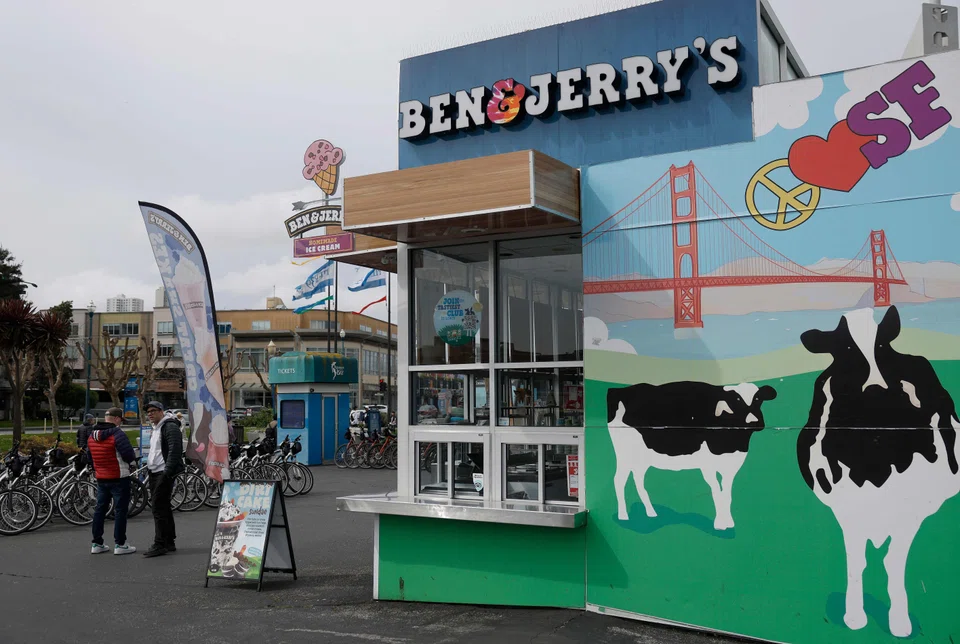

[SINGAPORE] Forget about eating the rich, just eat ice cream. Ben & Jerry’s, long known for its progressive activism, has accused its parent company Unilever of ousting the ice cream maker’s CEO over his refusal to rein in the brand’s social mission. Unilever, for its part, is contending that the producer of Cherry Garcia has ventured into advocacy so polarising that it has put the company and its employees at risk. This latest tug-of-war, currently unfolding in a US federal court, is part of a broader corporate retreat as a conservative tide in Washington DC turns against social activism. Unilever now finds itself in ample corporate company alongside firms such as Disney, Amazon and BlackRock, taking cover from the White House by backing away from progressive causes.
Consequently, much has been made of the corporate sector’s cravenness, but assigning a human trait to a legal entity is fundamentally problematic. Would it be lovely if corporations, with their ample pockets and incredible sway over society, conducted themselves impeccably with the most unerring of moral compasses? Of course it would. Would it be folly to expect such a thing from a bean-counting, arse-covering, lawsuit-avoiding group of people held together by the most transactional of covenants? Indubitably.
Firms only make good guardians of social causes for as long as enlightened self-interest prevails. But, enlightened self-interest cannot be held constant when external factors change. The reality of 2025 is that having an administration that is hostile to your business holds more downside risk than championing a trendy cause holds upside potential. As long as businesses have shareholders and employees, these interest groups will always need to be prioritised, and rightly so. And for as long as firms have a profit to turn, they will have a flank to expose to critics who say that social causes are a distraction from the bottom line.
In fact, you could argue that firms have the obligation to maximise profit, and governments have a corresponding obligation to its citizens to prevent unfettered profiteering by the private sector, and never the twain shall meet. Today, both parties appear to have swapped motivations with each other, and we have had to watch a US president hawk Teslas on the lawn of the White House. The problem with conflating profit-driven motives with moral imperatives is that, when conflicts arise, neither is served well.
Perhaps this debacle will be a chance to re-focus on the parts of civilisation that already live up to the values that companies are disavowing, such as non-profit and advocacy groups. If we cannot be activist consumers because companies want to sell apolitical ice cream, we can be activist donors to non-profit organisations. If we cannot find employers whose values we can stomach on weekdays, we can volunteer for societies that fit the bill on weekends.
There are some valuable lessons to be gleaned from recent events, if only we would learn them: it is naive to rely on corporations to advance humanitarian interests, and equally pointless to vilify them when they inevitably fall short in this regard. Eventually, when the pendulum swings back from whatever fresh hell of a climate we currently inhabit and corporations look for another social bandwagon to jump on, we would do well to remember how the wheels came off this one in 2025.
TRENDING NOW

Two Singapore-listed palm oil firms named in Greenpeace report on Indonesian plantation fires

Singapore Airlines flight returns to San Francisco after ‘unruly’ passenger incident

Singapore looking into which companies responsible for haze-causing fires: PM Wong

Deluge IPO 3.86 times subscribed ahead of SGX debut

