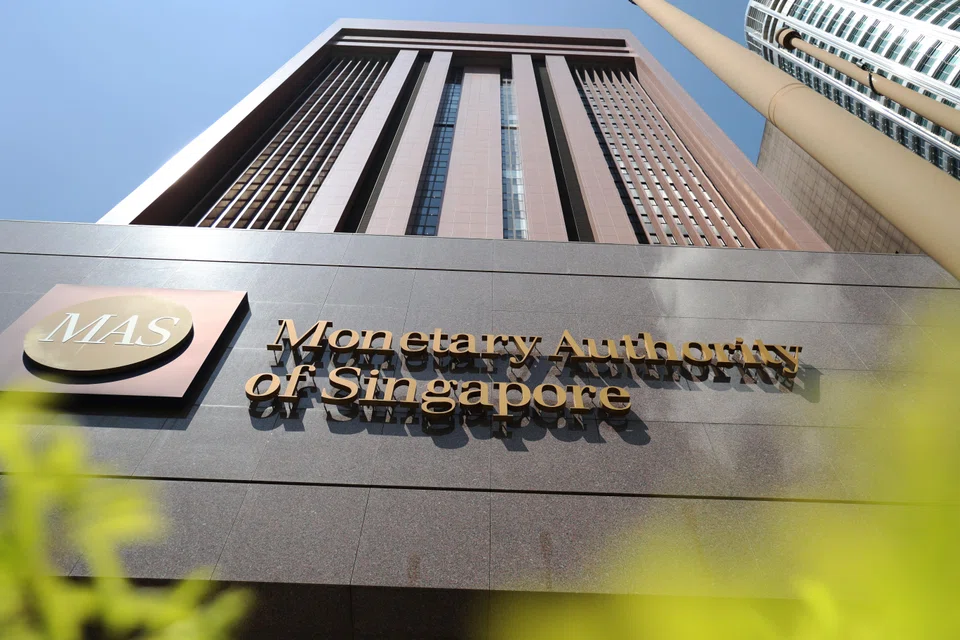
Upcoming Fed rate cuts may not have major implications for the next MAS decision
Domestic considerations will continue to dominate Singapore’s upcoming monetary policy move in October

WITH the US Federal Reserve having strongly telegraphed impending interest rate cuts at their mid-September meeting, one question is how Asian central banks will react.
The expectation is that the Fed’s move will create space for monetary easing by other central banks, though not all of them might take the opportunity. Economists have flagged India and Thailand as two possible outliers that could keep rates higher for longer, over concerns about sticky inflation and household debt respectively.
In Singapore, where monetary policy targets the exchange rate instead of interest rates, the influence of Fed rate cuts is even less direct.
In analysts’ reports analysing the likely direction of the Monetary Authority of Singapore (MAS)‘s next scheduled meeting in October, Fed decisions do not feature. Rather, the focus remains squarely on domestic growth and inflation.
At the start of 2024, most economists expected MAS to keep policy settings unchanged in its first two quarterly meetings of the year, and take action in October at the earliest if inflation has been sufficiently reined in.
MAS has indeed stayed put, in April and July. As the year wears on, however, economists’ expectations for when easing will finally happen have trended later.
In the most recent MAS survey of professional forecasters, released in June, just one respondent expected policy to be eased in October by a reduction in the slope of the policy band – down from 30 per cent of respondents in the previous quarter’s survey.
Granted, with core inflation surprising on the downside in August, economists’ expectations for an October easing have risen. The next survey of professional forecasters, due no later than Sep 11, will thus be one to watch.
Analysts, however, are not just watching the hard data. They are also reading the broader policy environment – that is, beyond monetary policy alone.
Central banks are independent so that they can make decisions free of political considerations. The MAS aims to ensure price stability, which requires low and stable inflation.
It is thus trivially true that MAS decisions are linked to the cost of living, even though the latter is determined not merely by inflation. Accurately or otherwise, the degree of inflation that policymakers are willing to stomach may also be perceived to fluctuate with ground-level concerns.
A Citi report this week argued that one hurdle to policy easing is the current focus on “redoubling efforts to address cost of living concerns”.
It added: “Cost of living concerns are likely to remain at the forefront of policymakers’ priorities especially with impending general elections.”
In Citi’s view, the probability of an October easing has risen, but the hurdle has yet to be cleared. Even if it does happen, it is more likely to be a “one-off mid-cycle recalibration” rather than the start of a series of easing moves, said the report.
Beyond these immediate factors, there is of course a longer-term consideration: that MAS policy may remain not just higher for longer, but higher for the conceivable future.
In MAS’s annual report press conference in July, central bank chief Chia Der Jiun noted that global monetary policy is unlikely to return to the pre-pandemic era’s highly accommodative stance, if structural supply-side shifts continue. An economically-necessitated harder line on inflation may also be mirrored by political reassurance about the cost of living.
TRENDING NOW
Grab CEO’s wife Chloe Tong on life with Anthony Tan and finding her purpose
What role can Japan play in Asean’s future?
He built the Vingroup empire. Now South-east Asia’s richest man is handing some key roles to his sons
Asean’s challenge is to become resilient against global geopolitics: former Indonesia trade minister