

US-China rivalry and the Kindleberger Trap: Why inaction – not escalation – is the biggest risk
In periods of transition, the greatest threat may not be the clash of powers but the absence of leadership
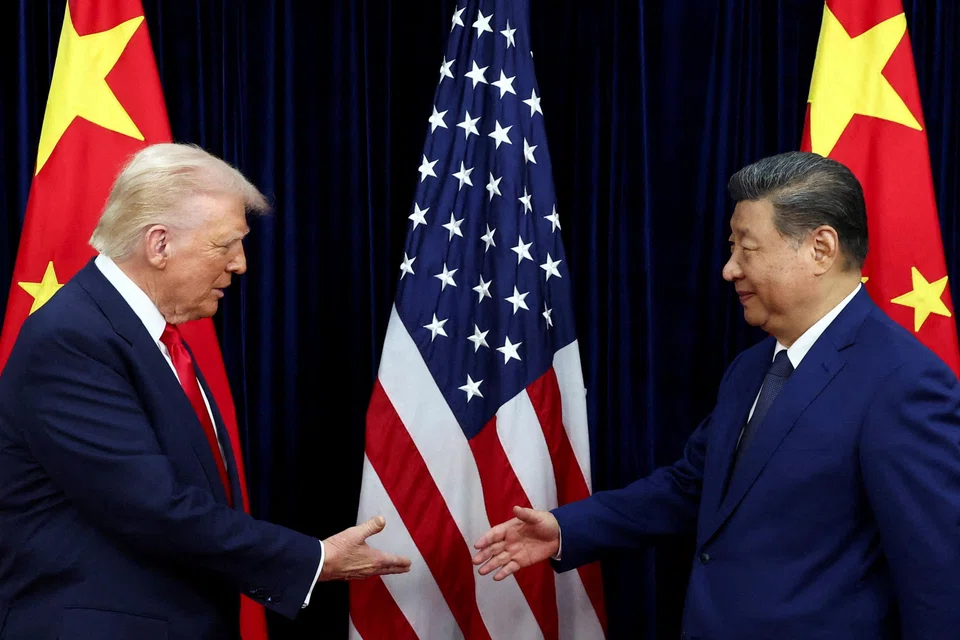
THE intensifying rivalry between the US and China is often framed through the lens of conflict – most notably the so-called Thucydides Trap, which warns of war between a rising and an established power.
Yet, an equally important and arguably more insidious danger lies not in direct confrontation, but in systemic neglect. This is captured by the concept of the Kindleberger Trap, a condition in which global instability arises because the incumbent hegemon becomes unwilling or unable to provide essential international public goods, while the rising power is either unable or unwilling to assume that role.
Originally rooted in the work of economic historian Charles Kindleberger and later popularised in geopolitical discourse by political scientist Joseph Nye, the theory draws on the experience of the 1930s.
Kindleberger argued that the catastrophe of the Great Depression was not simply the result of protectionism or financial panic, but of a failure of leadership: Britain could no longer stabilise the global system, and the US, though capable, was unwilling to do so. The absence of a stabilising force – rather than active rivalry – allowed economic collapse to spiral into geopolitical disaster.
This historical insight has renewed relevance today.
The core danger in US-China rivalry may not be war alone, but a vacuum in global governance – especially in areas such as financial stability, trade openness, crisis coordination and security provision. In a deeply interconnected world, the failure to maintain these public goods risks fragmentation, volatility and cascading crises.
The Thucydides Trap predicts escalation through rivalry; the Kindleberger Trap predicts decay through inaction. In reality, both dynamics may operate simultaneously.
Hesitant hegemon and selective stabiliser
A central question today is whether the US is retreating from its role as system stabiliser. The answer is not straightforward.
The US remains the anchor of the global financial system, with the US dollar serving as the primary reserve currency and American institutions playing a central role in crisis management. Yet, there has been a noticeable shift in posture – from consistent leadership towards more selective, transactional engagement.
This shift reflects domestic political constraints as much as strategic recalibration. The costs of maintaining global order – military commitments, financial backstops and open markets – have become increasingly contested within the US.
As Kindleberger’s historical case suggests, capacity without willingness is insufficient. A hegemon that hesitates to act, or does so inconsistently, can destabilise expectations and amplify systemic risk.
Recent trends underscore this dynamic – the politicisation of trade policy, the weaponisation of financial tools such as sanctions, and episodic disengagement from multilateral institutions.
None of these amount to a full withdrawal, but collectively, they signal a weakening of the predictable leadership that underpins global stability.
If the US is becoming less willing to lead, can China take its place? The answer, at least in the near term, is no – at least not in a comprehensive sense.
China has undoubtedly expanded its global influence. Through initiatives such as infrastructure financing, participation in multilateral institutions and increasing economic integration, it provides certain public goods. It plays a critical role in global manufacturing, trade networks and development finance.
However, the provision of global public goods at scale requires more than economic weight. A full system stabiliser must offer deep and trusted financial markets, a widely accepted reserve currency, extensive alliance networks, and a willingness to absorb asymmetric costs for the benefit of the system.
China’s model remains more selective and sovereignty-focused. Its financial system is less open, its currency less globally embedded, and its strategic approach more regional and transactional.
Moreover, Beijing may not desire the role that Washington has historically played. System leadership entails political exposure, economic risk, and the need to support an order that benefits rivals as well as partners.
Beijing appears to prefer influence without full responsibility – a rational strategy, but one that reinforces the structural gap identified by the Kindleberger Trap.
Fragmented order, multiple actors
The most plausible outcome of US-China rivalry is therefore not a clean transition from one hegemon to another, but a fragmented order.
In such a system, different actors provide different public goods in overlapping, and sometimes competing, domains.
The US continues to dominate in monetary and security spheres. China exerts influence in infrastructure, manufacturing and development finance. Europe shapes regulatory frameworks. Middle powers and sovereign wealth funds play increasing roles in capital allocation. Multilateral institutions continue to function, albeit under strain.
This distributed system may appear resilient, but it carries inherent risks. Without a central coordinating authority, responses to global shocks – financial crises, supply chain disruptions or geopolitical conflicts – become slower, less coherent and more politicised.
In this sense, the Kindleberger Trap in the 21st century is not a complete absence of leadership, but a misalignment between the scale of global interdependence and the fragmented nature of governance.
This framework is most compelling in the domain of international political economy.
The global financial system depends on mechanisms such as reserve-currency liquidity, central bank coordination and credible crisis backstops. These functions are still heavily reliant on the US.
If US commitment to these roles weaken, while China remains unable or unwilling to fill the gap, the result is increased volatility.
Financial fragmentation, precautionary reserve accumulation, and regionalisation of trade and capital flows are already visible trends. The danger is not immediate collapse, but a gradual erosion of resilience.
Applying the Kindleberger Trap to security is more complex.
Unlike financial stability, security is inherently rivalrous. A naval presence that ensures freedom of navigation for some may be perceived as coercive by others. Alliances are exclusionary by nature, and military power is not a neutral public good.
Nevertheless, certain security functions – such as maintaining open sea lanes or preventing large-scale conflict – have system-wide benefits.
The recent tension in the Strait of Hormuz is a clear illustrative case of the significance of open sea lanes for global trade. Here, too, partial retrenchment combined with incomplete substitution can generate instability.
Clash of powers not biggest threat
The Kindleberger Trap, however, has limitations. It risks oversimplifying the causes of historical crises, particularly the Great Depression, which involved complex interactions of monetary policy, financial fragility and political decisions.
It may also overstate the necessity of a single hegemon, underestimating the potential for collective or institutional provision of public goods.
The contemporary international system exhibits many features consistent with a Kindleberger Trap, but not in its most extreme form.
The US remains a central stabilising force, and China is an increasingly important contributor. Yet, the gap between them – between willingness and capability – creates vulnerabilities.
The real danger is not an immediate collapse into chaos, but a gradual drift towards fragmentation, where global challenges outpace the capacity for coordinated response. In such a world, crises become harder to manage and the risk of escalation – economic or military – rises.
The Kindleberger Trap reminds us that the greatest threat in periods of transition may not be the clash of powers, but the absence of leadership.
In the context of US-China rivalry, avoiding this trap will require not only managing competition, but sustaining the shared foundations of global order in an increasingly divided world.
The writer is emeritus professor of economics at Nanyang Technological University, and chairman (China) of APS Asset Management. He is former chief economist of the Singapore government, and former senior economist at the World Bank’s office in Beijing.
This essay is part of New Global Order, a series which explores how the changing world landscape is reshaping business, politics and beyond.
TRENDING NOW

LTA proposes combining car COE categories, adding rebate-surcharge system

StarHub to acquire MyRepublic’s mobile business amid ongoing telco consolidation

DBS, OCBC, UOB rout lops billions off STI as inflation, rate concerns spook investors

Grab CEO’s wife Chloe Tong on life with Anthony Tan and finding her purpose

