

The US-China tech ‘war’ in perspective
A WISE man once said that countries have no permanent friends and no permanent enemies, only permanent interests. This wisdom will help to explain the four historical phases of US-China relations.
From 1949 to 1972, the two countries were enemies. They had no diplomatic relations. Their armed forces clashed in Korea during the Korean War. This phase came to an abrupt end in 1972, when President Richard Nixon shocked the world by visiting China.
From 1972 to the end of the Cold War in 1989, China and the United States were de facto allies. What united them was a common enemy, the Soviet Union. This phase closed with the end of the Cold War and the disappearance of the common enemy.
The third phase began in 1989 and ended in 2016. During this phase, the two countries were no longer allies but were friends. The US policy on China was a combination of cooperation and competition. President Barack Obama did not see China as a threat although he launched the Pivot to Asia policy. He did so because he saw China as the principal competitor of the US.
The fourth and current phase began with the Trump Administration in 2017. The Americans had come to the conclusion that the policy of “cooperation and competition” had failed. Politically, China has not become more liberal. Economically, China has become a serious competitor. The Americans began to see the rise of China as a threat to its global leadership. They were uncomfortable with the prospect that the Chinese economy would soon be bigger than the US economy. The unspoken agenda of the Trump and Biden administrations is to stop China from overtaking the US – economically, technologically and militarily.
Trump’s trade war
President Donald Trump launched two “wars” against China: a trade war and a tech war. Trump imposed tariffs on a range of China’s exports to the US. The tariffs actually hurt US consumers more than the Chinese exporters. At the end of the Trump presidency, the trade war was widely considered as a failure for the US. However, President Joe Biden has kept the tariffs in place for political reasons. If he were to remove the tariffs, he would be attacked by the Republicans for being soft on China.
Made in China 2025
In 2015, China announced a new strategic plan and industrial policy, named “Made In China 2025” or MIC 2025. The initiative is to secure China’s position as a global powerhouse in ten high-tech industries. The 10 industries include aerospace, biotech, information technology, smart manufacturing, maritime engineering, advanced rail and electric vehicles, and robotics. The US saw MIC 2025 as a threat to its technological supremacy, and is determined to prevent China from challenging its lead in high technology.
The US tech war against China
The US tech war against China began during the Trump administration. In 2018, the US banned all American companies from doing business with the Chinese company ZTE. The reason was that ZTE had violated US sanctions against North Korea and Iran. ZTE would have died if President Xi Jinping had not appealed to President Trump to lift the ban. Trump agreed to do so. ZTE agreed to pay a fine of US$1.4 billion for violating the sanctions.
In 2019, the US banned another Chinese company, Huawei, from all US networks. The US also banned US companies from selling components to Huawei. Huawei had a near-death experience. In response, Huawei accelerated its policy of self-sufficiency, and increased its investment in research and development. Huawei may be boycotted by the West but it is very popular at home and in the Global South.
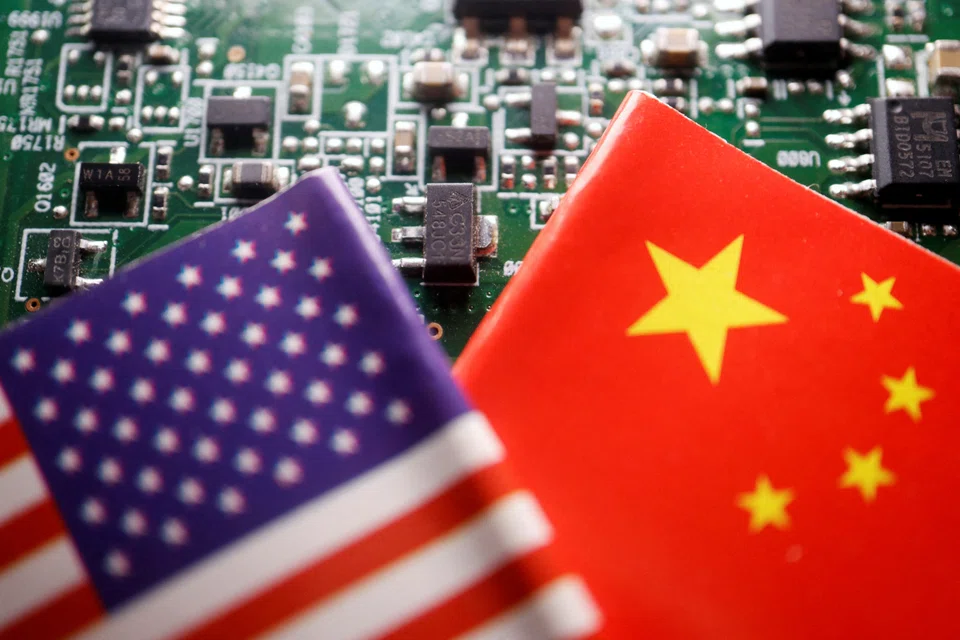
In October 2022, the US imposed export controls in three critical areas: Artificial intelligence (AI) computer chips, Electronic Design Automation tools and photolithography equipment. The US has persuaded Japan and the Netherlands to support the ban. The Americans’ objective is to prevent China from acquiring the capacity to manufacture advanced computer chips. This has been called the Chip War.
The policy and actions of the Biden administration have, of course, angered China, but they have also caused concern to many other countries. They do not want to see a decoupling of the US and China in technology. To reassure its friends and allies, the US has described its policy as “small yard, high fences”. In other words, US action against China would be narrowly scoped. The world is not reassured. It fears that, over time, the yards will get bigger and the fences higher.
China’s response
The Chinese responded in several ways. First, China has tried to occupy the moral high ground by accusing the US of acting unlawfully. China has filed a complaint against the US at the World Trade Organization (WTO). China complains that the export curbs imposed by the US on computer chips violate WTO law. The US defence is the curbs are needed for national security.
Second, China has banned the export of the technology to make rare earth magnets. The production of rare earths is dominated by China – a leverage which it enjoys over the US.
Third, China is rising to the US challenge by investing heavily in research and development. It has produced impressive results. According to a study by the Australian Strategic Policy Institute, China is the leader in 37 out of 44 areas of high technology, including hypersonic and underwater drones. The US is still ahead in AI but China is not far behind. Another area in which the US is ahead of China is in advanced computer chips. The gap between the two countries is, however, narrowing. It is significant that, in 2022, China obtained more patents than the US.
Conclusion
We are witnessing a struggle for supremacy between the incumbent superpower, the United States, and the rising challenger, China. The competition is in all areas, including trade, investment, military, ideology, soft power, diplomacy and technology. As we live in an age of technological revolutions, the competition for leadership in high technology is decisive. Whoever wins the technological race is likely to be the No 1 superpower of the 21st century.
The writer is Ambassador-at-Large at Singapore’s Ministry of Foreign Affairs






