The US Federal Reserve needs to tighten monetary policy
Inflation is still above the central bank’s 2% target
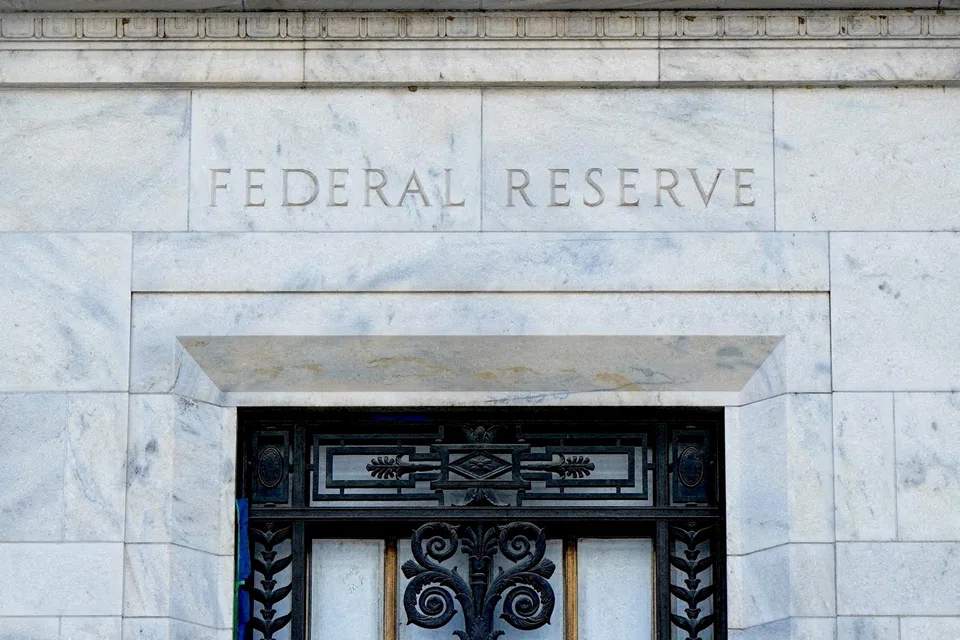
[WASHINGTON] The pressure on US Federal Reserve chair Kevin Warsh to tighten monetary policy has receded a bit.
The consumer price index report for June was benign. Not only did the overall rate of inflation fall, helped by the sharp drop in petrol prices, but the core measure, which excludes food and energy prices, was also much better behaved.
At the same time, payroll employment growth stalled last month after rising briskly earlier this year, and wage inflation is at a level consistent with 2 per cent price inflation, given the strong underlying trend of productivity growth.
Relative to June when the Fed passed on tightening monetary policy, the argument for adopting a more restrictive stance when policymakers meet on Jul 28 to 29 is less compelling.
Nevertheless, regardless of the wiggles in the high-frequency data, the case for tightening monetary policy does remain strong.
First, a restrictive monetary policy setting is appropriate, given the asymmetry between where the economy stands and the Fed’s two objectives of full employment and price stability.
On one hand, the unemployment rate has been stable and very close to the level that Federal Open Market Committee (FOMC) participants judge as consistent with full employment for the past two years.
On the other, inflation remains elevated, with a broad range of underlying measures ranging from 2.4 to 3.3 per cent. When this is the case, monetary policy should be tightened.
Second, there is little evidence to suggest that monetary policy is currently restrictive.
The federal funds rate has been at its current level or higher for almost four years, alongside the stable unemployment rate.
If policy had been restrictive, then we should have expected to see the unemployment rate rising and inflation falling.
The notion that monetary policy is not restrictive is supported by the buoyancy of financial market conditions: high stock prices, tight credit spreads and moderate bond yields.
For example, the Fed’s financial conditions index estimated that the stance of financial conditions last month would push up real gross domestic product by more than 1 percentage point over the next year.
The amount of stimulus to growth from financial conditions was the highest since early 2022, when the federal funds rate was near zero.
Third, the artificial intelligence investment boom also supports the case for tighter monetary policy.
The surge in AI spending is supporting real GDP growth and raising prices in a number of areas, such as electricity costs and semiconductor chip prices.
While it is likely that the tech will ultimately be a boon for productivity growth and that this may help bring down inflation, the dominant effect right now is the boosting of demand and prices.
Fourth, the Fed’s credibility is at risk.
Inflation has exceeded the central bank’s 2 per cent objective for more than five years. If the Fed dawdles, the risk is that market participants will judge Warsh’s tough talk as “all hat, no cattle”.
Asymmetric risks to the Fed
The Fed should not tighten just to bolster its inflation-fighting credibility.
But the fact is that the risks to the Fed are asymmetric, in that the costs of a monetary policy that is not restrictive enough to push inflation back down to 2 per cent in the next few years exceed the costs of a somewhat tighter policy, that might in the fullness of time turn out to be unnecessarily restrictive.
Warsh has talked a great game, fully committing to achieving price stability and preserving the Fed’s independence.
But actions speak much louder than words. It is great to establish task forces to generate new fresh ideas, but monetary policy cannot be outsourced to outside experts or financial market participants.
The Fed needs to step up and tighten monetary policy.
At its meeting on Jul 28 to 29, I expect the FOMC to keep monetary policy on hold.
However, by the fall, I suspect the pressure on the Fed to tighten will become overwhelming.
The case for doing so is just too strong, and the risk of allowing inflation to persist above the Fed’s target for a few more years is just too high. BLOOMBERG
TRENDING NOW
Grab CEO’s wife Chloe Tong on life with Anthony Tan and finding her purpose
Three ex-employees of Envy group join Ng Yu Zhi in bankruptcy
He built the Vingroup empire. Now South-east Asia’s richest man is handing some key roles to his sons
If AI has a one-in-five chance of destroying us, what do we do with the remaining four?