

A US refocus on the Middle East
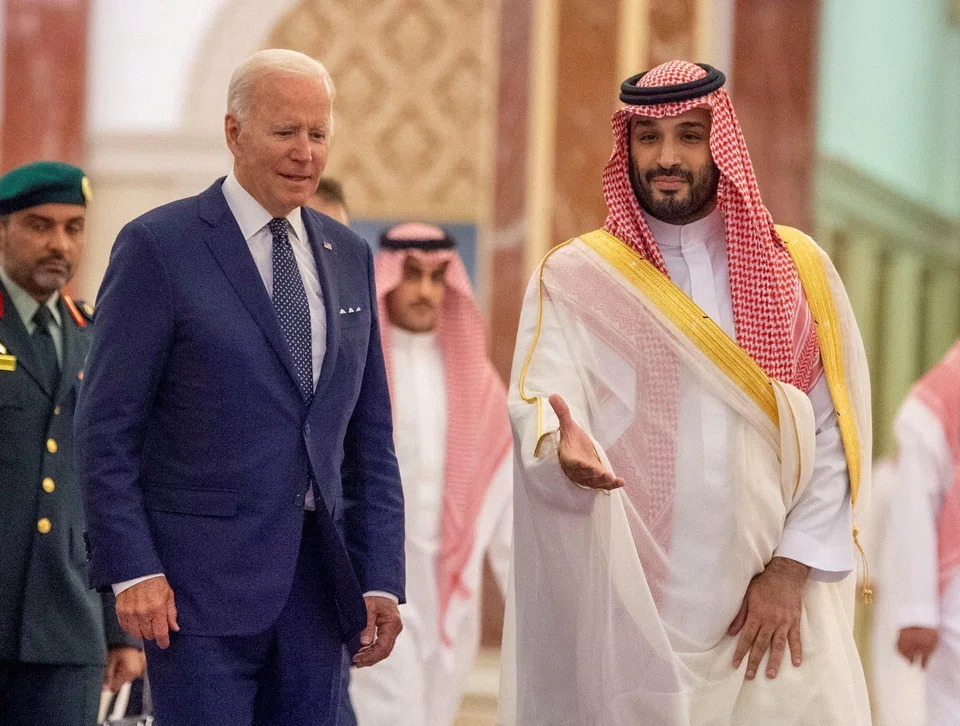
IN THE aftermath of the United States’ costly military interventions in the Middle East and its decision to withdraw American troops from Iraq and Afghanistan, the conventional wisdom has been that Washington may commence a process of gradual disengagement from the region.
Such an approach seemed to have made sense against the backdrop of the stated commitment by US officials to pivot American policy to the Indo-Pacific region as part of a response to China’s military and economic surge.
If anything, the US-led effort to mobilise its Western allies to counter Russian aggression in Ukraine only raised more questions about the cost-effectiveness of an American interventionist strategy in the Middle East and its alliances with Saudi Arabia and Israel.
But then, considering its geostrategic location and huge energy resources, the US is now recognising that ignoring the Middle East could prove to be risky, in creating a vacuum that rivals – such as Iran – and competitors – such as China and Russia – would be keen to fill, posing a threat to core American interests.
Indeed, after failing to revive the 2015 nuclear deal with Iran – also known as the Joint Comprehensive Plan of Action – that was revoked by former president Donald Trump, the Biden administration is worried that the Islamic Republic is intent on acquiring nuclear military capability while continuing to pursue policies that destabilise the Middle East.
At the same time, with the Saudis responding to the earlier diplomatic cold shoulder from the Biden administration by expanding ties with China and Russia, the Americans are now trying to reaffirm relations with the kingdom that plays a critical role in stabilising the global energy markets and is, like Israel, worried about an Iran going nuclear.
From that perspective, the new diplomatic initiative launched by the Biden administration aimed at normalising the relationship between Saudi Arabia and Israel should be seen as part of a strategy to refocus on the Middle East and reassert the US’ role in the region.
Such an agreement between the Saudis and the Israelis would be an outgrowth of the 2020 Abraham Accords under which Israel normalised relations with a few other Arab states, namely the United Arab Emirates (UAE), Bahrain, Morocco and Sudan. Israel already maintains diplomatic relations with two other Arab states, Egypt and Jordan.
A peace pact between a leading Islamic power, joined by other Arab countries, and the Jewish State, that would also involve a security agreement between Washington and Riyadh, could help contain Iran and reinforce the American pledge to strengthen the alliance with Saudi Arabia and Israel.
It could also amount to a geostrategic game changer, creating a pro-American Middle Eastern military and economic bloc powered by the energy resources of the Persian Gulf and Israel’s high-tech industries and scientific centres. That would be the most effective way to respond to the aggression of Iran and its regional satellites.
The Americans and Saudis are also hoping that this diplomatic effort might also lead eventually to a peace agreement between the Israelis and the Palestinians. That would end the Israeli military occupation of the West Bank and the Gaza Strip, and lead to the establishment of an independent Palestinian state, a move that enhances the chances of Israel integrating into the Middle East and improving its ties with the Muslim world.
TRENDING NOW

Two Singapore-listed palm oil firms named in Greenpeace report on Indonesian plantation fires

Singapore Airlines flight returns to San Francisco after ‘unruly’ passenger incident

Singapore looking into which companies responsible for haze-causing fires: PM Wong

Deluge IPO 3.86 times subscribed ahead of SGX debut

