US trade war is splintering South-east Asia
The region has always been at the heart of great power rivalry, but the stakes are rising as the US and China compete more fiercely for influence
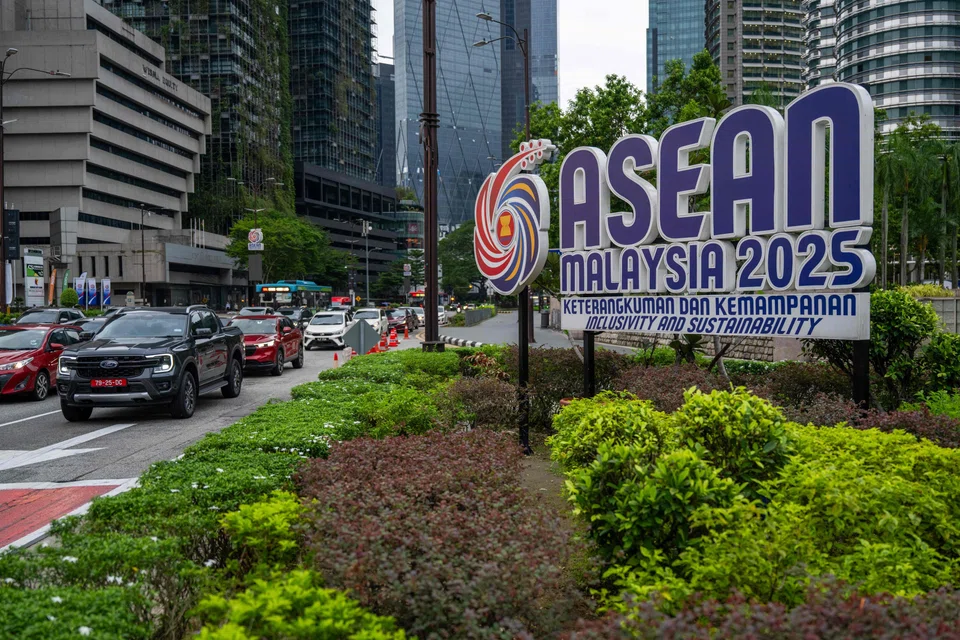
DESPITE its geopolitical heft, South-east Asia has rarely been more divided. In separately seeking tariff relief from the US, nations from Malaysia to Indonesia have undermined their collective leverage. They have a chance to present a united front at a regional forum this weekend – a move that would ensure they remain credible as a bloc capable of charting its own future.
US President Donald Trump is expected to attend the 10-member Asean meeting in Malaysia, which begins on Sunday (Oct 26). Sitting at the heart of the Indo-Pacific – a zone central to both US and Chinese strategic ambitions – the region is vital to global trade and security, with a combined gross domestic product of around US$4 trillion.
But Asean is not living up to its unity in diversity motto. Trump’s art-of-the-deal thrives on bilateral bargaining, and many leaders seem eager to play along in the hopes of securing short-term gains.
In the run-up to the summit, Malaysia’s Prime Minister Anwar Ibrahim personally extended an invitation to Trump in an attempt to secure preferential trade terms, despite domestic opposition. Indonesian President Prabowo Subianto was caught on a hot mic asking the US leader if he could meet his son, discussing what reportedly appeared to be a business venture. Thailand and Cambodia, locked in a volatile border dispute, credited Trump for mediating an uneasy truce. Cambodian Prime Minister Hun Manet even said he is nominating the US president for a Nobel Peace Prize.
Bilateral deal-making has helped some South-east Asian states avoid the worst-case scenario from Trump’s “Liberation Day” tariffs. But this approach is not sustainable.
Each concession chips away at the bloc’s shared influence, notes Joanne Lin, a senior fellow and coordinator of the Asean Studies Centre at the Singapore-based Iseas – Yusof Ishak Institute.
“The absence of a free-trade agreement between the two sides doesn’t mean there aren’t other ways for the region to act collectively,” she said. “Members can still coordinate positions and signal shared principles on trade. That would carry weight.”
Territorial disputes
Asean’s divisions extend beyond trade. The group has failed to meaningfully respond to the Thai-Cambodia dispute and the Myanmar crisis, despite various high-level meetings. Singapore’s Foreign Minister Vivian Balakrishnan called these setbacks “not just for peace and stability, but for the credibility of Asean”. The bloc remains similarly split over how to address Beijing’s growing assertiveness on the South China Sea.
The consequences are showing up in public sentiment. About 35 per cent of respondents across the region view Asean as too slow to handle fast-moving crises, and fear it risks sliding into irrelevance, according to Iseas – Yusof Ishak Institute’s State of Southeast Asia 2025 Survey.
South-east Asia has always been at the heart of great power rivalry, but the stakes are rising as the US and China compete more fiercely for influence.
Trump’s presence in Malaysia could open the door to a broader US-Asean trade agreement, helping to ease the bloc’s economic anxieties. China, the group’s largest trading partner, is sending Vice-Premier He Lifeng, as it pushes for an upgraded free trade deal before the end of the year.
Washington and Beijing are due to hold talks at the summit. Japan’s newly elected Prime Minister Sanae Takaichi is expected to make her diplomatic debut at the summit. India’s Prime Minister Narendra Modi is reportedly skipping the gathering.
The forum comes days before Trump and Chinese President Xi Jinping are scheduled to meet at the Asia-Pacific Economic Cooperation summit in South Korea. That encounter, if it does indeed happen, could define the future trajectory of US-China relations. Any thaw or escalation will have a direct impact on South-east Asia.
To avoid being reduced to a pawn in the superpower competition, Asean needs to act on both tariffs and territorial disputes.
The bloc could present Washington with a joint tariff framework and outline shared principles. Granted, this would require coordination among states used to bilateral deal-making, but the stakes are high enough to persevere.
Malaysia, as this year’s chair, has taken a step in that direction through its new Geo-Economics Council, which is exploring ways to deepen regional cooperation.
Asean also has the tools to rebuild a credible way to manage border or maritime disputes. Past efforts were largely symbolic, but they proved cooperation is possible.
Trump may leave Malaysia with another headline about deals and diplomacy. Asean risks leaving without agency. That is far worse for its future than a tough tariff regime. BLOOMBERG