

#vanlife in Malaysia: A lifestyle choice for some, an act of desperation for others
Some Malaysians are taking the road less travelled by living in their vehicles, but reality may not be as Instagram-worthy as it seems

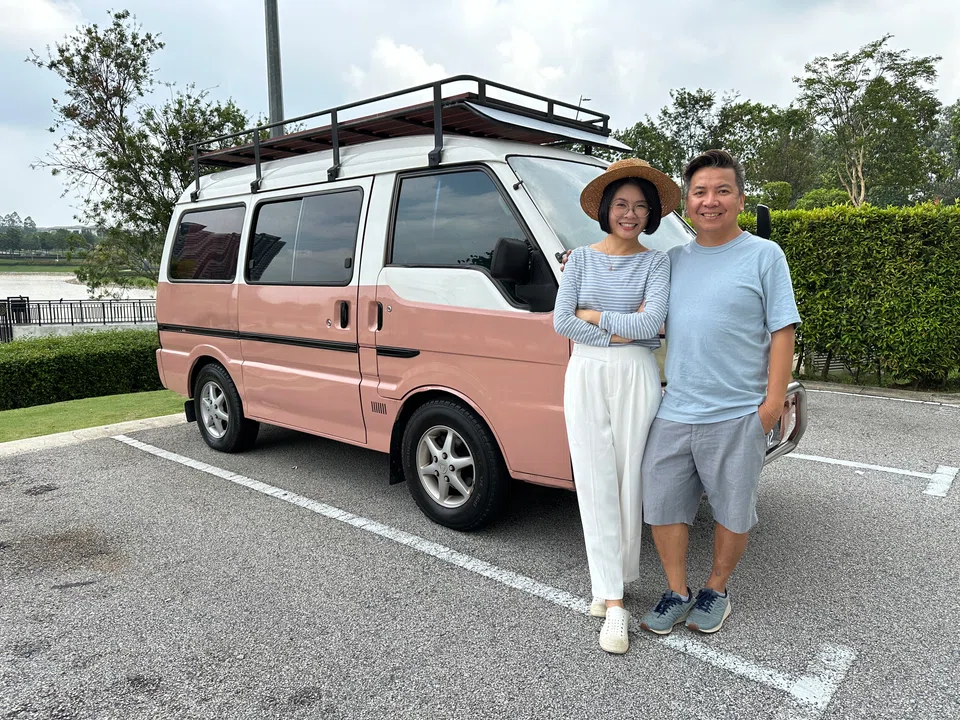
LIVING in a car, whether for the long haul or short term, is not a widespread practice in Malaysia, but there is a growing number of individuals who are embracing this lifestyle for various reasons.
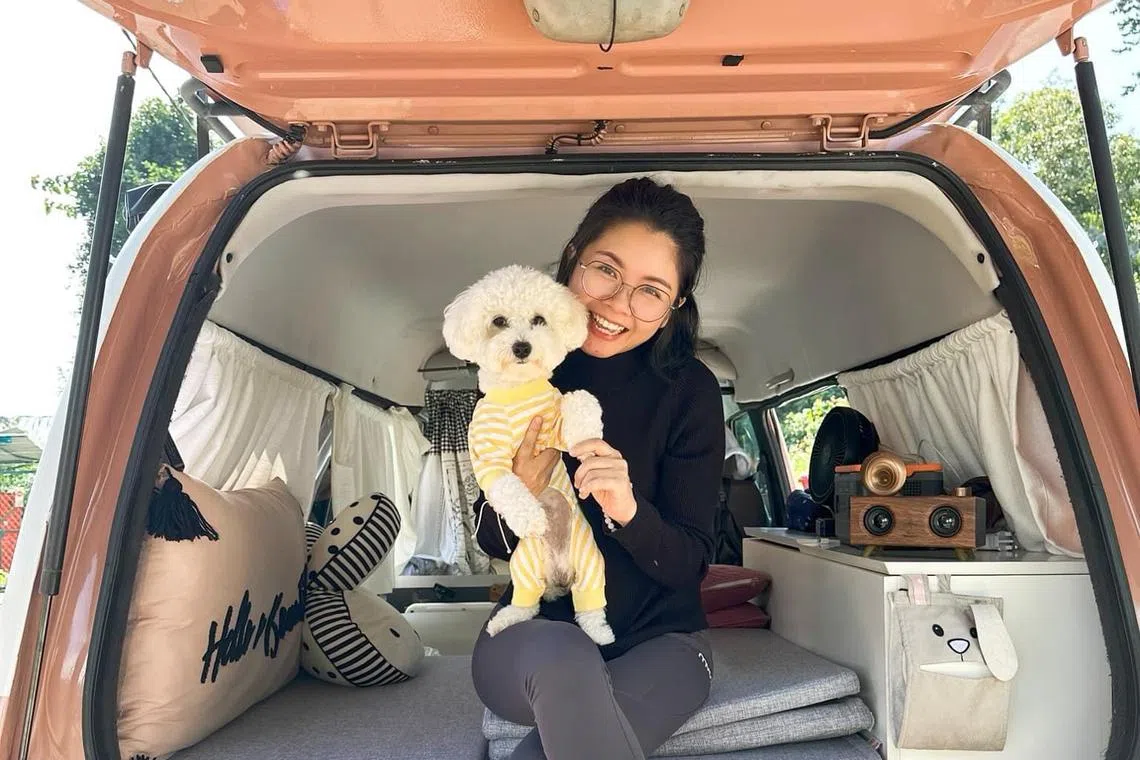
For freelance content creator and social media influencer Yap Yoong Ching, known online as Kakak Ching, her motivation for owning a campervan and staying there for vacations is simple: she wants to travel with her beloved pet poodle, Wa Zai.
She had this idea back in 2019 when pet-friendly accommodations were scarce, and she couldn’t bear the thought of leaving her dog at a pet hotel.
“It’s challenging to find pet-friendly hotels or Airbnbs, especially in small villages. If I have a car spacious enough for both of us, it can double as accommodation,” she tells The Business Times.
After exploring various caravan options and finding them beyond her budget, she decided to modify a van into a campervan that suited her needs.
However, this was not an easy project. It took her around six months to find the ideal vehicle – a 20-year-old second-hand van in good condition with an automatic transmission, as she does not drive a manual car.
The pandemic lockdowns caused more hiccups, as workshops had to halt operations whenever the government announced a new movement control order that restricted travel and business operations.
It took her almost a year to convert the van into a multifunctional vehicle with a living and working area, mini kitchen, and sleeping space. This set her back around RM40,000 (S$11,864) in total, including the cost of buying the van.
In Yap’s case, this was a lifestyle decision, in line with the #vanlife trend that started in the United States where people choose to live a mobile and active lifestyle on the road. But beyond the Instagram-worthy facade, there are still challenges that she and other Malaysians have to contend with in their quest to live out of their vehicles.
Regulations are a grey area and safety is another concern, which could deter more people from living in such a nomadic manner.
To experience a nomadic van life
In 2020, Yap embarked on her first trip in her pink campervan. Together with her husband and Wa Zai, she travelled to Ipoh Old Town.
“Our first destination was visiting a friend who runs a mobile coffee stall using his Pajero (sport utility vehicle), which had been modified into a mobile kiosk. After he closed his stall at night, we enjoyed a cup of coffee under the starry sky at Ipoh Old Town. It was a memorable moment,” she says.
Since then, Yap has been on numerous adventures with Wa Zai, and sometimes with her husband too, when he is free to join them. Their trips can be as near as a one-hour drive to Fraser Hill, or farther to northern states such as Penang.
Despite some hiccups on the road, such as air-conditioner breakdowns or rear mirror issues, she says there have not been any major problems.
“Safety and security have been my main concerns, hence I don’t mind spending on a proper campsite or homestay that has ample parking for me to park the van and spend a night there. By doing so, I can have a proper place to shower and refill the water tank, as well as have a good rest before departing for the next destination,” she says.
There are about 1,300 campsites in Malaysia, with nightly rentals at RM100 to RM120.
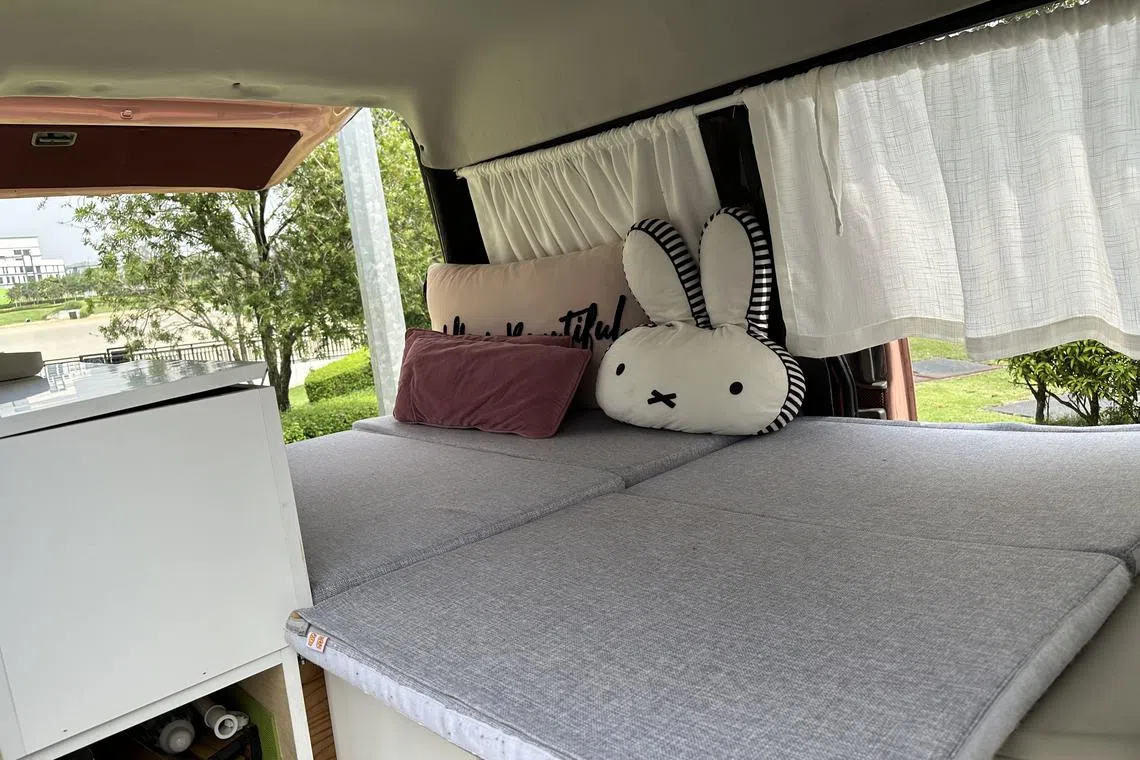
The campervan exceeded her expectations, allowing her to explore more rural areas and providing flexibility for spontaneous trips with friends who also own such vehicles. It also serves as a personal retreat where she could relax and recharge.
“The campervan offers more than just accommodation; it allows me to explore more places,” she says. “I can pack up and go for a weekend getaway, like to Fraser Hill, without the hassle of planning and booking hotels.”
Additionally, the van has become her sanctuary during tough times, where she can unwind with a book, music or a movie, together with her dog.
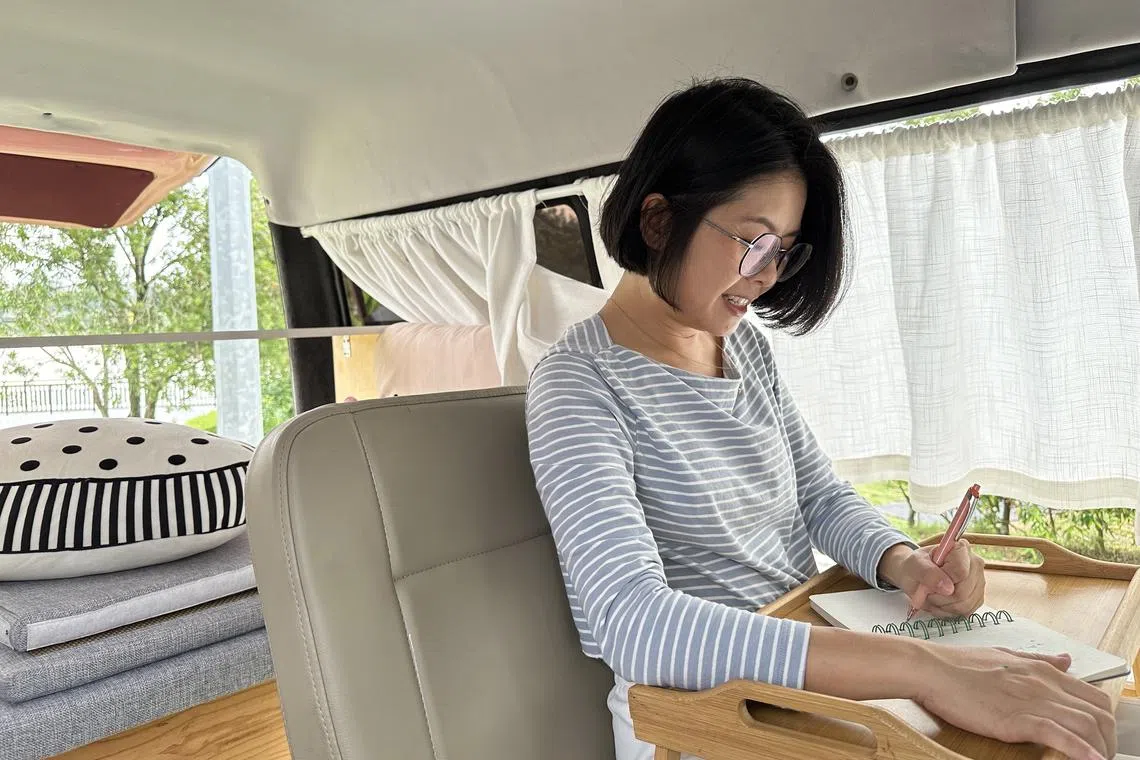
After she documented the process of modifying the campervan and her travels in it, her unique pink vehicle caught the attention of many followers. Some even requested to rent her campervan for various events.
However, Yap is selective when it comes to renting out her campervan as she does not intend to turn it into a rental vehicle. “I only lend it out if it could really create good memories for others,” she says.
Growing interest in RVs
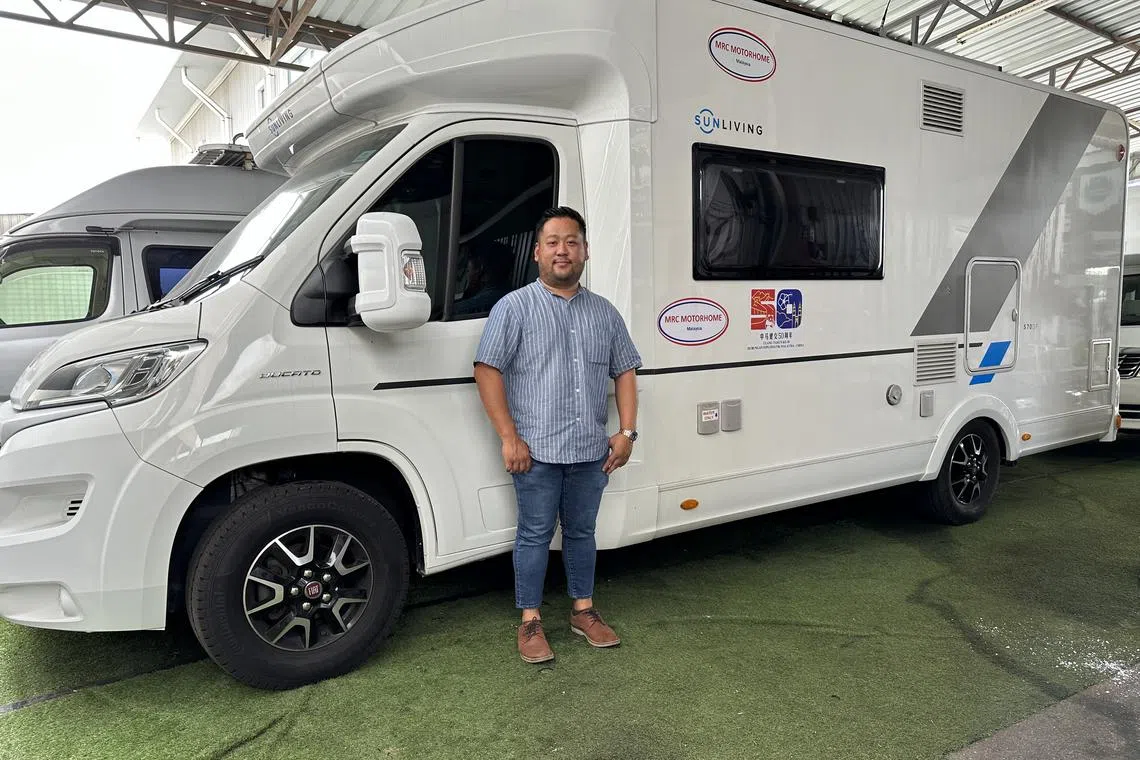
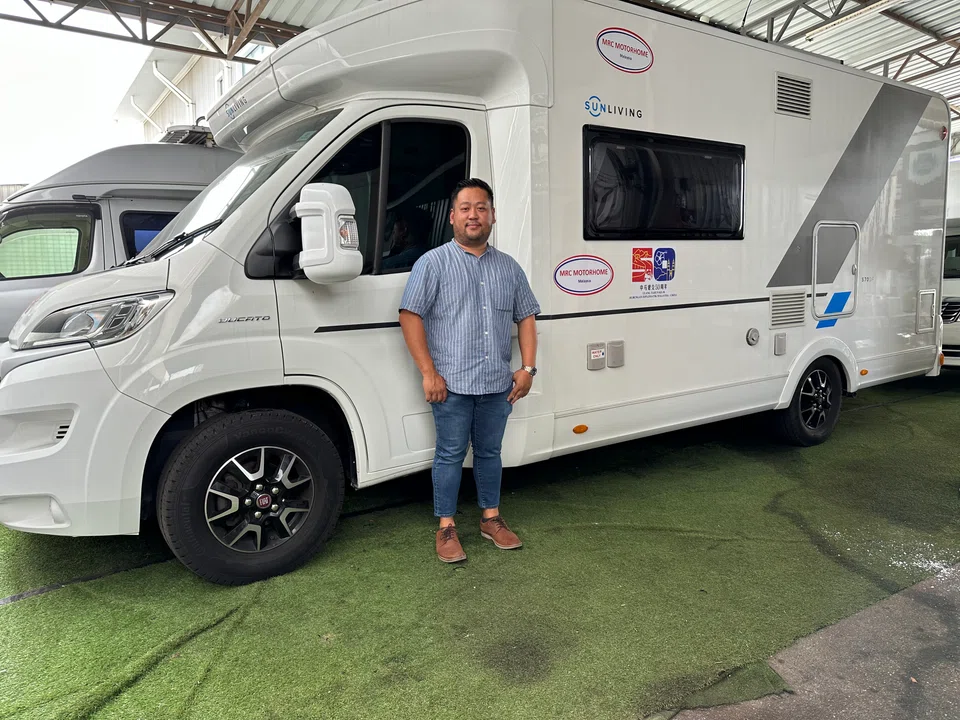
Lau Hwee Teck, an avid caravan and motorhome enthusiast, has dreamed of owning a vehicle that resembles a mini home since childhood.
“I think it’s really cool to be able to drive your home and explore different places,” he says, noting that his passion has not only fulfilled his own dream but also inspired him to help others achieve theirs.
He is now the founder of MRC Motorhome, which specialises in the sale, rental and maintenance of recreational vehicles (RVs). Additionally, he serves as the president of the Motorhome and Caravan Malaysia Association – a newly established organisation aimed at uniting RV enthusiasts.
The term “recreational vehicle”, originating from the United States, refers to large vehicles designed for travel and camping, often equipped with amenities such as kitchens, sleeping areas and bathrooms.
There are several types of RVs, including caravans (or travel trailers that need towing), motorhomes (self-propelled vehicles combining transport and living facilities), and campervans (smaller vehicles converted from vans).
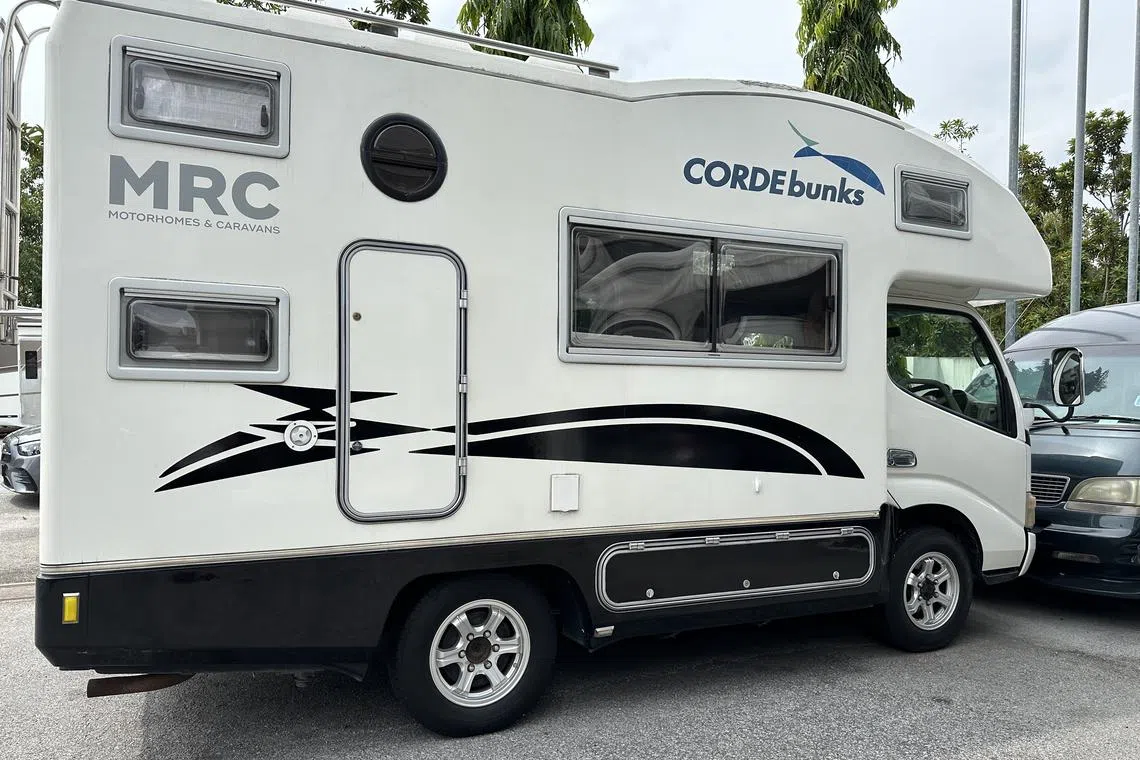
Lau says that motorhomes are more popular in Malaysia as people are not used to the idea of towing a travel trailer, which requires larger parking spaces.
He recalls that Malaysia’s first RV sales centre, which opened in 1998, struggled to succeed due to high prices and limited interest in “travelling and sleeping in the car”.
In 2016, he founded MRC Motorhome to import new caravans and motorhomes from the United Kingdom and Japan, but initial interest was low.
High prices (with new vehicles costing RM500,000 and above), difficulties in obtaining loans, and maintenance concerns were significant barriers, he says.
“Banks viewed RVs as luxury items rather than necessities, making it hard for buyers to secure loans. Additionally, there were few workshops capable of maintaining these vehicles, and parts were hard to find,” he adds.
However, he has observed rising interest in RVs in Malaysia over the past few years, influenced by the growing camping culture there, compared with a decade ago.
This prompted him to revamp his business model into a comprehensive service centre, offering sales, rental, repairs, maintenance and road trips for RV lovers.
He began to import used but well-maintained RVs from the United Kingdom and Japan, which are priced 70 per cent lower than new ones, making them more accessible.
“Currently, you can get a well-equipped, new motorhome for around RM500,000, or (spend) around RM50,000 for a second-hand motorhome in good condition,” he says.
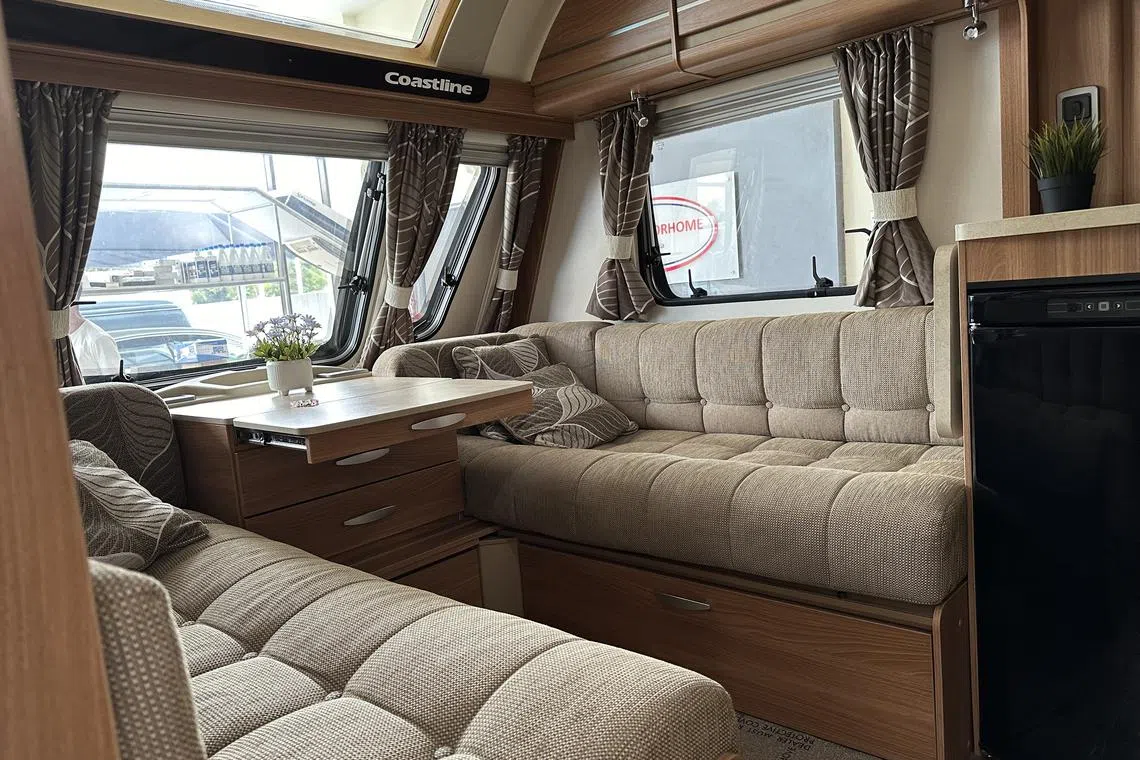
Some interested buyers or travellers would rent a caravan or motorhome to experience the van life, with rental prices ranging from RM600 to RM1,200 a day.
The Covid-19 pandemic further fuelled interest in RVs. After revamping his business model, Lau averaged sales of 10 vehicles per month, peaking at 30. Before this, monthly sales were less than five vehicles.
Besides individual buyers, used car dealers also purchase from him to resell to RV enthusiasts.
Although sales have slowed since the beginning of this year, Lau is confident that interest will continue to grow. “Those who can afford it have already bought one. Those interested but unable to afford it are our future customers,” he says.
According to market research and consulting firm 6Wresearch, Malaysia’s RV market is projected to reach US$36.9 million by 2026, expanding at a compound annual growth rate of 3.9 per cent between 2020 and 2026.
The report says demand for RVs in Malaysia has been increasing due to the growing number of leisure activities among Malaysians as well as an increase in disposable income levels.
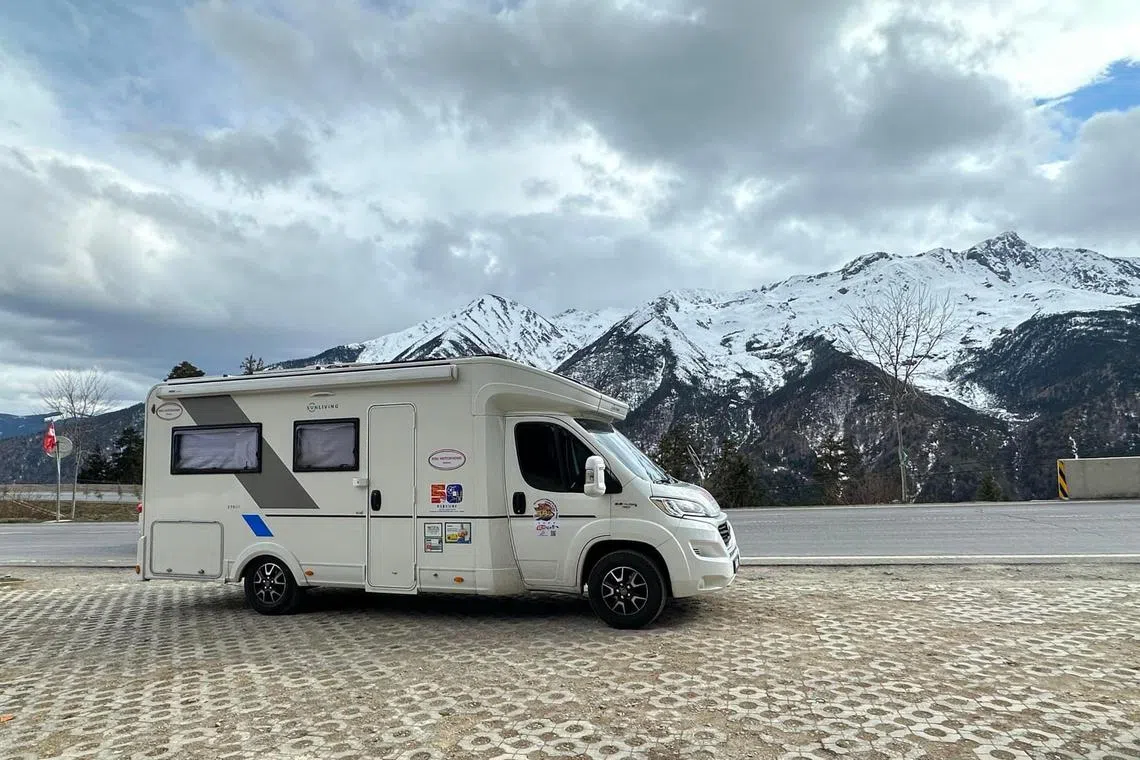
One of Lau’s notable after-sales services is organising road trips for RV enthusiasts. He leads a Caravan and Motorhome group to share information and plan trips.
In May, Lau and 12 members in seven motorhomes completed an 8,000-km journey from Malaysia to Shanghai over 29 days, traversing Malaysia, Thailand, Laos, and China’s Dali, Xinjiang and Chengdu.
“This was an unforgettable experience. I’ll never forget the sunrises I witnessed while waking up in my motorhome in different cities,” Lau says, adding that the adventure kept them captivated throughout, despite the tiring journey.
A few months after the trip, Lau set up the Motorhome and Caravan Malaysia Association. It has attracted more than 100 members, and he hopes to gather more.
A desperate option
While living in a car sounds idyllic, some are driven to do so by financial constraints and the need to manage debts.
This lifestyle, though challenging, allows certain individuals to navigate their circumstances in a way that suits their needs.
Grab driver Adam, who requested to remain anonymous, started living out of his car two months ago after losing his job in February.
The 32-year-old turned to gig work to support himself and his family in Negeri Sembilan, about 66 km from Kuala Lumpur.
To save money on accommodation, Adam chooses to sleep in his vehicle at night and starts his day at 5.30 am with morning prayers before transporting passengers around Klang Valley. He visits his family every weekend, repeating this routine from Monday to Friday.
“I tried driving Grab in my hometown, but the demand is not as high as in Kuala Lumpur. I would earn less than half of what I make here. Staying near Kuala Lumpur also ensures that I don’t miss any interview opportunities,” says Adam.
Although sleeping in the car is uncomfortable, he finds it manageable. To ensure safety, Adam chooses to sleep at rest areas near airports or petrol stations.
“I don’t foresee this lasting long, as I’m confident I’ll secure a job soon,” he says, adding that he plans to rent a house and bring his family to Kuala Lumpur once he finds stable employment.
Adam is not the only one. Local news outlets have reported that a number of Malaysians are living out of their cars due to financial constraints.
A man from Sarawak, burdened with a RM1 million debt after losing all his investments in a digital currency scheme in 2019, was forced to live out of his car for a year as he could not afford to rent a house.
According to a Sinar Daily report, he had to sell all his assets and take on various part-time jobs, such as cleaning services, to increase his income to repay his debts. He uses 90 per cent of his salary of RM6,000 to pay off debt.
Another young wage earner, Mushamir Mustafa, shared on social media his experience of living out of a car. He said he manages to save RM2,000 a month by doing so, and also time commuting between his parents’ home in Ampang and his office in Petaling Jaya, which takes up to two hours by car during peak hours.
Living in a car? Viable but we are not there yet
In Malaysia, there are no specific penalties or laws that directly prohibit people from living in a car, but authorities are advising individuals to be cautious regarding their safety and ensure they do not violate any local parking regulations or trespass on private property.
For instance, the Pasir Gudang city council has proposed stricter enforcement against roadside parking in residential areas due to issues such as obstructing roads and inconveniencing residents.
Although not illegal, living in a car comes with significant challenges, particularly in Malaysia’s tropical climate, say Lau and Yap, who have experienced short-term stays in their vehicles.
Lau notes that the heat and humidity can make it uncomfortable, and finding safe and legal places to park overnight can be difficult. “Additionally, the lack of facilities can complicate basic hygiene and daily routines,” he adds.
While campervans or RVs offer necessary amenities for short-term stays, Yap says these vehicles are not suitable for long-term living. “No matter how comfortable, it’s not as good as your own bed at home,” she says.
Lau adds that Malaysia’s property prices and rentals are still affordable, meaning that traditional housing remains viable. Additionally, the country’s infrastructure is not developed for long-term car living, and the humid climate is unsuitable for extended stays in a vehicle.
“Even if you choose to park and stay at a campsite, the cost may be higher than renting a proper house,” says Lau.
Whether the #vanlife becomes more common in Malaysia is still up in the air, but in the meantime, proponents of such a lifestyle continue to be undeterred. After all, it is the path less travelled that will give them a different view of the world.
TRENDING NOW

Grab CEO’s wife Chloe Tong on life with Anthony Tan and finding her purpose

HDB reviewing ‘jumbo’ flat scheme after Telok Blangah unit listed for sale at S$2.18m

He built the Vingroup empire. Now South-east Asia’s richest man is handing some key roles to his sons

Singapore judge raises doubts iron ore trader Radiant World is owed US$1 billion

