Vietnam-Singapore carbon credit pact: A defining test for Asean green finance
More than a bilateral deal, this collaboration is a test for both countries to anchor themselves in the global carbon economy
ON SEP 16, Vietnam and Singapore signed a landmark Implementation Agreement on carbon credit trading under Article 6 of the Paris Agreement.
The agreement is a breakthrough for both countries. Singapore is able to secure access to high-quality credits to meet its carbon neutrality targets. For Vietnam, it unlocks a new financing channel for its green transition.
The deal signals the two countries’ ambition to shape Asean’s emerging carbon credit architecture.
The pressing question is whether Vietnam can turn this diplomatic breakthrough into lasting credibility, by building a transparent, high-quality carbon market capable of mobilising green finance at scale.
Vietnam’s green finance foundations
Since pledging to achieve net zero by 2050, Vietnam has laid important policy groundwork.
The National Strategy on Green Growth 2021-2030 outlines the tasks to achieve an environmentally sustainable economy; the Law on Environmental Protection (2020 revision) regulates domestic carbon markets; and the voluntary green bond guidelines (2023) expands financing channels.
The State Bank of Vietnam, in cooperation with the International Finance Corporation, has aligned Vietnam’s green taxonomy with international standards.
Capital mobilisation is gathering momentum. As at March 2025, outstanding green credits reached 704.2 trillion dong (S$34.4 billion), a 3.5 per cent increase from end-2024.
Local banks, including VPBank, HDBank and Bank for Investment and Development of Vietnam, have issued green bonds and sustainability-linked loans to finance solar, wind and energy-efficiency projects.
Carbon markets are emerging as the next frontier.
The government launched a pilot emissions trading scheme in August – covering cement, steel and thermal power sectors.
Plans are underway to establish a national carbon registry, and measurement, reporting and verification (MRV) systems by 2028, paving the way for a fully operational carbon trading market.
Vietnam’s untapped “carbon gold mine”
Carbon credits let companies and governments offset greenhouse gas emissions while pursuing net-zero targets, typically generated through reforestation, renewable energy initiatives and carbon capture technologies.
Vietnam holds a “carbon gold mine” in its natural and renewable assets.
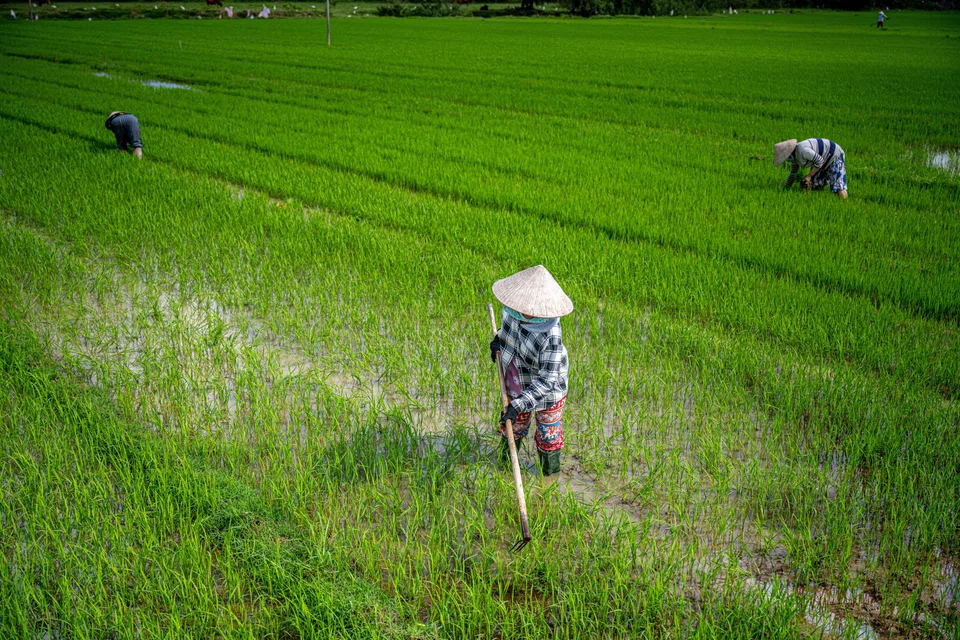
Its 14.7 million hectares of forest absorbs around 70 million tonnes of carbon dioxide annually. Agriculture, particularly rice cultivation, could yield up to 57 million credits per year. Large-scale solar and wind energy projects can contribute millions more.
The global voluntary carbon market – valued at US$1.4 billion in 2024 – is projected to grow to between US$7 billion and US$35 billion by 2030, and potentially US$250 billion by 2050.
Emerging players such as Vietnam should seize the moment to secure a competitive position in the global carbon economy.
Vietnam has already begun tapping this opportunity. In 2023, the forestry sector sold 10.3 million forest carbon credits for US$51.1 million through the World Bank’s Forest Carbon Partnership Facility – marking the largest single payment for verified carbon credits to date.
Additional sales through the Biogas Programme generated US$8.1 million. Overall, Vietnam has earned around US$60 million from carbon trading in recent years.
The Ministry of Agriculture and Environment projects that as the market matures, carbon trading could deliver at least US$300 million annually – a meaningful revenue stream for green growth.
Where the gaps remain
Despite strong potential, Vietnam’s carbon market remains nascent. Critical gaps threaten progress.
Small and medium-sized enterprises and investors have limited awareness of green finance and carbon markets. Many regulatory decrees and guidelines are under development, leaving businesses uncertain on how to generate, trade and use carbon credits.
Weak incentives and compliance signals also hold back participation of the private sector.
Core market infrastructures – the MRV systems and the national carbon registry – are not yet in place. Without strong safeguards, Vietnam risks producing low-quality credits that erode investor confidence, undermine environmental integrity and damage its reputation, as competitors such as Indonesia and Thailand ramp up their own carbon markets.
Singapore pact as a catalyst
The agreement with Singapore provides both pressure and opportunity, requiring Vietnam to establish robust MRV systems and uphold environmental integrity.
The deal also opens the door for foreign investment, technology transfer and new revenue streams.
It positions Vietnam as a credible supplier of high-quality credits at a time when global compliance regimes, such as the European Union’s Carbon Border Adjustment Mechanisms, are put in place.
Vietnam needs to shape the national carbon market strategy quickly, in the following ways.
- It must accelerate regulatory development of MRV protocols and the national registry system by 2026
- The government could introduce tax incentives, concessional finance and risk-sharing to mobilise capital to high-quality projects
- Integrating carbon revenues with green bonds and just-energy transition initiatives will help support broader climate goals
- It should learn from more developed markets such as Singapore on regulatory design, market structures for carbon trading and green finance
- Public engagement and transparency are vital in raising awareness and building trust in carbon markets, while ensuring their benefits reach local communities
Singapore’s stakes in the pact
This deal is more than a carbon transaction for Singapore. It underpins the island state’s ambition to meet its climate goals while serving as Asia’s carbon trading hub.
If Vietnam’s carbon market develops and delivers high-quality credits, Singapore businesses stand to gain early access to cost-effective offsets, new project pipelines and cross-border green finance instruments.
Yet if the credit’s quality falters, Singapore risks reputational damage as a trusted intermediary, undermining both its climate strategy and aspiration to drive Asean’s carbon finance architecture.
A signal to the world
Vietnam is standing at a pivotal moment in its low-carbon transition. The legal scaffolding is in place; now the task is to build a market with urgency and integrity.
The credit collaboration is more than a bilateral deal; it is a test for both Vietnam and Singapore to anchor themselves in the global carbon economy. Success would create a win-win for both countries, advancing their climate ambitions while directing finance towards unlocked potentials.
Should Vietnam seize this moment, it could channel billions into green growth, harness technological upgrading, and emerge as a leader in Asia’s carbon economy. Delay, however, risks lost credibility and a missed opportunity as competitors move ahead.
The world is watching – and so are the investors.
The writers are researchers from the Asia Competitiveness Institute at Lee Kuan Yew School of Public Policy, National University of Singapore