Vietnam’s tightrope walk in Trump’s new tariff order

In a world where tariffs shift with politics, the South-east Asian nation must move faster than the storm
Summarise
    • With the US as Vietnam’s largest export market, the ripple effects could reach thousands of SMEs and slow the country’s momentum.
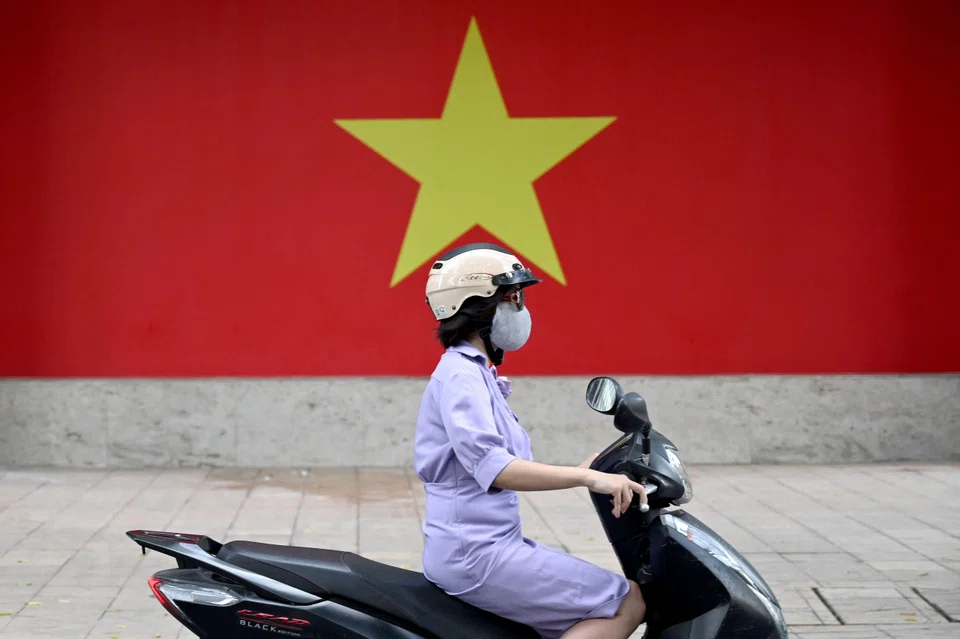
    • With the US as Vietnam’s largest export market, the ripple effects could reach thousands of SMEs and slow the country’s momentum. PHOTO: AFP
    Published Wed, Aug 27, 2025 · 07:00 AM

    WHEN US President Trump declared “Liberation Day” tariffs earlier this year and signalled a reset in global trade, Hanoi moved fast – offering tariff cuts, pledging to buy more US goods, and hinting at deeper cooperation.

    The goal? Avoid being caught in Trump’s tariff dragnet. 

    Yet, in early July, Washington slapped a 20 per cent tariff on Vietnamese exports. That was less than the threatened 40 per cent, but still a punishing blow for a small economy deeply reliant on US access.

    The pain may not stop there. Vietnam has placed its semiconductor ambitions at the centre of its strategy to escape the middle-income trap. Looming US sectoral tariffs on electronics and chips could disrupt this path, undoing years of careful positioning in global supply chains.

    With the US as Vietnam’s largest export market, the ripple effects could reach thousands of small and medium-sized enterprises (SMEs) and slow the country’s momentum.

    Uncertainty deepened on Aug 11, when Trump extended the US-China tariff truce for 90 more days. For Vietnam, the question is whether it can still benefit from US-China rivalry – or whether it risks being squeezed between the giants.

    The new tariff order

    Trump’s tariff regime is not completely random – it is a new framework of global trade, dividing countries into four tiers.

    Allies with trade deficits such as the UK, Australia, and Singapore face mild penalties with 10 per cent tariff. Modest surplus partners, including the European Union, Japan and South Korea, encounter 15 per cent tariffs – pressured, but not too provoked, to preserve strategic ties.

    US President Donald Trump’s tariff regime is not completely random – it is a new framework of global trade. PHOTO: REUTERS

    Meanwhile, heavy-surplus exporters such as Taiwan, Bangladesh and Vietnam bear the sharpest brunt, with rates ranging from 19 per cent to 30 per cent. A final “exceptions” group – including US’ key partners India and Switzerland – faces the threat of tariffs as high as 50 per cent unless they concede to US terms.

    Vietnam landed in the third tier: punished but not crushed. Its 20 per cent levy reflects both its swelling trade surplus with the US and its rising strategic value in South-east Asia. For Hanoi, the message is clear – this is about more than trade. It’s about geopolitics.

    A tactical pause, not a treaty

    The US-Vietnam tariff arrangement is no free-trade pact.

    Like other recent US “framework” deals, it is provisional, ambiguous and open to revision. The definition of “transshipment” remains murky, sectoral carve-outs are in flux, and enforcement rules are unsettled.

    In effect, it is a diplomatic pause, not a binding treaty. Vietnam has secured short-term relief, but the deal’s ambiguity ensures that renewed US pressure is only a matter of time.

    A fragile balancing act in the US-China-Vietnam triangle

    Since 2017, Vietnam has capitalised on US-China trade tensions, emerging as a key beneficiary of shifting global supply chains. By 2024, Vietnamese exports to the US soared to US$142 billion – nearly 30 per cent of the country’s GDP. Vietnam’s exports of textiles alone accounted for US$44 billion, with 40 per cent destined for the US market.

    Yet, Vietnam’s industrial model leans heavily on Chinese inputs: In 2024, it imported US$162 billion from China, much of its raw materials and components for processing and re-export. The new 40 per cent transshipment tariff directly strikes at this practice.

    To adapt, factories might shift assembly to regional neighbours such as Thailand, Cambodia, Malaysia, Indonesia or the Philippines, where Trump’s tariff rate stands at 19 per cent – slightly lower than Vietnam’s. Others may stick with Chinese parts under a “Made in Vietnam” label.

    But without clear US rules on what constitutes transshipment, exporters face mounting compliance risks and enduring uncertainty.

    What Vietnam won – and didn’t

    Hanoi’s negotiators did score some headline victories: a 20 per cent cap on tariff ceilings, duty-free access for US goods, and breathing room to reconfigure supply chains. US liquefied natural gas (LNG), crude oil and automobiles are now positioned to enter Vietnam more freely – opening opportunities for consumers and for energy diversification.

    Still, victories are relative. The issue of transshipment remains unresolved, leaving Vietnamese factories vulnerable if they rely on Chinese inputs.

    The elimination of the de minimis threshold will weigh heavily on e-commerce exporters. High tariffs under the sectoral list affects both inputs and processed goods – though these apply across all US trade deals.

    The bigger picture is uneven. Vietnam’s removal of tariffs on US goods may spur imports of LNG, oil and cars, but US exports to Vietnam reached only US$13 billion in 2024 – minuscule compared to Vietnam’s much larger trade surplus.

    This imbalance persists, even as Vietnam’s market opening places pressure on domestic agriculture and automotive sectors that struggle to compete.

    There are also hidden opportunities: Washington’s drive to decouple from Chinese technology may catalyse fresh investment in Vietnam’s semiconductor, electronics and advanced manufacturing sectors – potentially propelling the country beyond low-cost assembly toward higher-value industries.

    Reform or retreat: Vietnam’s next moves

    Vietnamese policymakers face a balancing act. The country’s growth model – anchored in low-cost labour, foreign-funded factories, and assembly and re-exports – still lacks technological depth. The risk is clear: If foreign capital retreats, the economy shakes. 

    Growth is at stake. The World Bank projects a slowdown to 5.8 per cent in 2025 as tariffs take effect. International Monetary Fund forecasts are starker, warning that US trade measures could drag growth to 5.2 per cent this year and as low as 4 per cent by 2026.

    But the reform engine is real. Vietnam’s GDP reached US$476.3 billion in 2024 – marking year-on-year growth of 7.1 per cent, and foreign direct investment hit a record US$25.35 billion.

    Vietnam is pursuing a multipronged strategy to navigate rising trade pressures. At the core is stricter enforcement of rules of origin: The country’s Ministry of Industry and Trade has drafted tighter rules of origin checks and penalties for fraudulent certificates.

    Policymakers are also leveraging Vietnam’s extensive web of free trade agreements – with the EU, Japan and Asean, and expanding into Asia, Eastern Europe, Africa and Latin America – both as bargaining chips and fallback options amid shifting US-China dynamics.

    Domestically, the government is stepping up support for SMEs and logistics firms to help them comply with stricter trade requirements. 

    Tariffs are not the end of the world – if Vietnam plays smart

    The recent US tariff deals show how trade is no longer a technocratic exercise but a deeply political battleground – responsive, uncertain, and fraught.

    For Vietnam, securing a 20 per cent ceiling instead of a crushing 40 per cent is less a victory than a strategic endurance. The months ahead will bring more carve-outs, enforcement disputes and possible reversals.

    Hanoi’s task is clear: build resilience, strengthen domestic trade governance, and leverage diplomatic ties to turn this fragile framework into a pathway for sustainable growth. In a world where tariffs shift with politics, Vietnam must move faster than the storm. For now, the deal is manageable but far from safe.

    The writers are researchers from the Asia Competitiveness Institute at Lee Kuan Yew School of Public Policy, National University of Singapore