Waiting for Temasek’s largesse to pay off
Keppel, Sembcorp and SIA have delivered big returns this year; Seatrium and Sats, not so much

INFLATION and interest rates, geopolitics, and the emergence of artificial intelligence have been among the biggest themes in markets around the world this year. Here in Singapore, however, the support of Temasek Holdings has proven to be a potent performance driver for some companies.
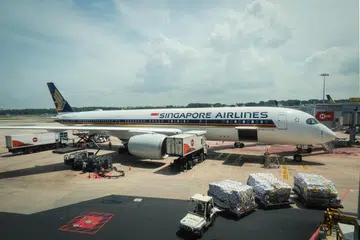
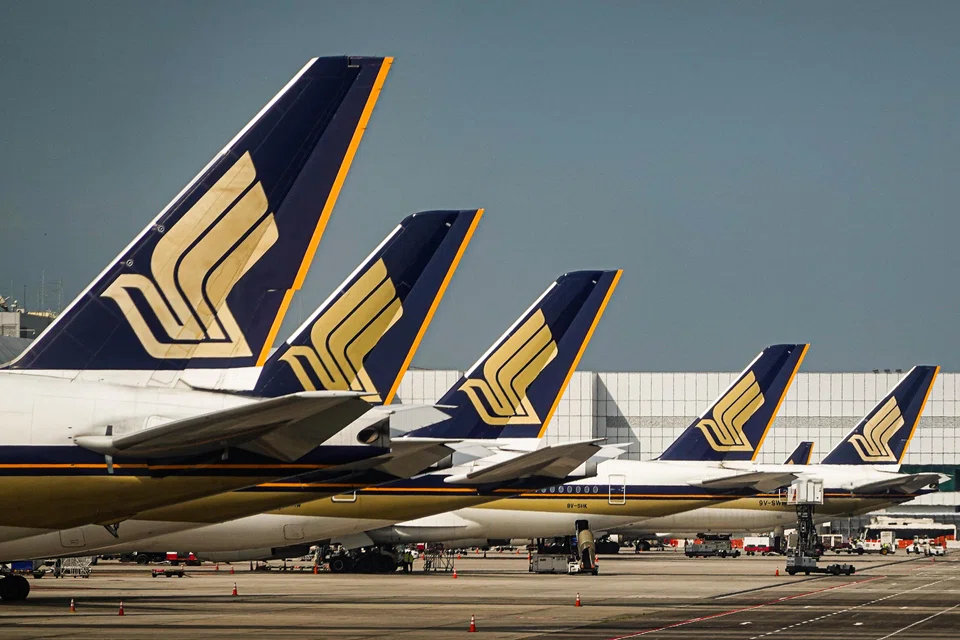
For instance, Singapore Airlines (SIA) is flying higher than ever now – thanks in part to the financial backing Temasek provided during the darkest hours of the Covid-19 pandemic.
Since the beginning of this year, shares in SIA have surged nearly 19.4 per cent – outpacing by a long way the 2.6 per cent rise charted by the Straits Times Index (STI). In fact, SIA is the third-best-performing component of the STI this year.
The stock closed Thursday (Jun 1) at S$6.60.
For the 12 months to Mar 31, SIA reported a 133.4 per cent increase in revenue to nearly S$17.8 billion. Revenue per available seat-kilometre was S$0.10, an all-time high for the group. Earnings came in at almost S$2.2 billion, versus a loss of S$962 million during the previous financial year.
SIA said that it was able to quickly ramp up its operations when Singapore fully reopened its borders in April 2022 and capture the pent-up demand for air travel. Its group capacity had recovered to 79 per cent of its pre-pandemic levels in March 2023, while international scheduled services for other Asia-Pacific airlines had returned to only 58 per cent of their pre-Covid levels.
It’s unlikely that SIA would have been able to move so quickly had it not raised S$15 billion from its shareholders during the pandemic. This included S$9.7 billion from two tranches of mandatory convertible bonds (MCBs) – which had been widely shunned by investors and had to be mopped up by Temasek.
With its revenue and earnings rebounding strongly, SIA redeemed the first S$3.5 billion tranche of MCBs in December. It will redeem half of the second S$6.2 billion tranche later this month.
Temasek owns a 55.5 per cent stake in SIA, and is obviously a key beneficiary of the recent rebound in the airline group’s share price. But the return from the MCBs has not been all that exciting.
These 10-year, zero-coupon instruments are redeemable semi-annually at the option of SIA, at prices calculated to deliver an annual yield-to-call of only 4 per cent during the first four years.
Will Seatrium succeed?
The only two STI stocks that have risen more than SIA this year – Sembcorp Industries (up 53.6 per cent) and Keppel Corp (up 32.3 per cent) – also have Temasek to thank for supporting their respective exits from the offshore and marine (O&M) sector.
Shares in Sembcorp Industries have been on a tear since its publicly listed subsidiary Sembcorp Marine was demerged through a distribution in-specie in 2020 – a deal that resulted in Temasek becoming Sembcorp Marine’s direct controlling shareholder.
Without its struggling O&M arm weighing it down, Sembcorp Industries has performed strongly on the back of higher power prices and a significant expansion in the renewable energy space. For 2022, Sembcorp Industries reported an 87 per cent increase in earnings (before exceptional items) to S$883 million on a 21 per cent rise in revenue to nearly S$9.4 billion.
Meanwhile, Keppel’s asset monetisation and restructuring efforts since 2020 have been drawing the attention of investors. Notably, the group said last month that it would reorganise itself to accelerate its transformation into a global real asset manager with deep operating capabilities in the fields of infrastructure, real estate and connectivity.
Keppel said the reorganisation will enable it to grow faster, and garner a higher market valuation.
As part of its ongoing transformation effort, Keppel completed the controversial sale of its own O&M arm to Sembcorp Marine earlier this year, as well as the distribution in-specie of the new Sembcorp Marine shares it received from the transaction – a portion of which went to Temasek.
Sembcorp Marine has since renamed itself Seatrium , and announced multiple project wins and project deliveries. In its Q1 2023 interim business update released on May 12, Seatrium said its net order book stood at S$20 billion.
With its increased heft, Seatrium will be added to the STI on Jun 19.
Temasek and other shareholders of Seatrium have not seen much benefit from these reported positive developments though. Since the beginning of the year, shares in Seatrium have slipped 12.3 per cent.
Worryingly, the Corrupt Practices Investigation Bureau said on May 31 that it had commenced investigations against Seatrium for alleged corruption offences that occurred in Brazil. Seatrium said on Jun 1 that it believes the investigation relates to events that took place before 2015.
Is Sats sunk?
Another Temasek-controlled STI component that has yet to deliver for its shareholders is Sats . The in-flight caterer and ground handler suffered a major sell-off last year after announcing plans last year to acquire air cargo handler Worldwide Flight Services (WFS) for some S$1.8 billion.
Earlier this year, Sats said it would raise S$798.8 million through a 323-for-1,000 rights issue of 363.1 million new shares at a discounted price of S$2.20 each. Valid acceptances were received for only 90.4 per cent of the rights shares – despite Temasek taking up its full entitlement to 39.7 per cent of the rights shares.
Fortunately, excess applications for 299.9 million rights shares more than covered the shortfall. All in, there were valid acceptances and excess applications for a total of 628 million rights shares – equivalent to 173 per cent of the rights shares available.
But things remain uncertain. On May 3, only a month after Sats completed the deal, the group said the chief executive of WFS was leaving.
Some analysts have also said that WFS is unlikely to have an immediately positive impact on Sats when its books are consolidated from Q1 FY2024 onwards (Sats has a March year-end).
Sats itself has not performed all that well recently. For FY2023, the group reported a 49.4 per cent rise in revenue to nearly S$1.8 billion. But it fell into the red with a net loss of S$26.5 million, versus earnings of S$20.4 million in FY2022. This was partly due to a slightly higher operating loss as well as one-off merger and acquisition costs.
Shares in Sats have retreated by nearly 9.5 per cent since its results were released on May 29, and 7.3 per cent since the beginning of this year. The stock closed Thursday at S$2.49.
The evident ability and inclination of Temasek to support the growth ambitions of companies in its fold could well continue to be an important theme in the local market, even as the economy slows in the months ahead.
But a lot ultimately hinges on the boards and management of the companies themselves – and investors probably shouldn’t expect uniformly positive outcomes.