Watch the gold price as trade wars become the new statecraft

US PRESIDENT Donald Trump’s tariff war – now partially paused – is ostensibly to stop illegal immigration from Mexico and Canada and the smuggling of fentanyl via the two neighbours but ulimately from China. Given the circumstances – a sudden national emergency proclaimed over a decades-long problem – no one should discount the possibility that Trump’s real agenda may be far more ambitious. Canadians are talking about annexation.
America’s neighbours have duly fired back and negotiations seem under way. Tariff wars – current and those to come – will be rough and protracted.
In the meantime, watch the price of gold – it may turn out to be the real proxy for the global geopolitical outlook and the only accurate measure of general anxiety about the future. More on that below.
Meanwhile, Beijing has shown restraint perhaps because it is in a better position, even if the rhetoric of Washington’s trade warriors would suggest otherwise. Total trade between the US and China amounted to US$649 billion in 2023. While that might seem large, data indicates that Beijing has been cutting back on its trade with the West and reorienting its trade links in recent years. In fact, exports to the US made up just 15 per cent of China’s total shipments in 2023. That is a good 5 per cent reduction from 2018. This is happening even though China’s total exports are growing.
So where are Beijing’s goods going? Mostly to developing countries, or as the nomenclature goes these days, the Global South. And this is especially true for countries where China is building infrastructure, such as Indonesia. Other examples: China’s trade with Brazil and Vietnam rose by 18 per cent last year from 2023. Kazakhstan increased its imports from China by 20 per cent in the same period. By contrast, Chinese exports to Japan and Australia actually fell last year compared with shipments in 2023. This is not to say that China is invulnerable, given the burden of the previous tariffs and sanctions imposed on the country during the first Trump administration and left in place by the Biden team, plus its own additions. But it does mean that Bejing has elbow room to carefully consider its responses.
That said, it is also clear that the global mood is darkening. Tariff coercion has become a form of statecraft and a geopolitical tool to extract concessions on non-trade related matters, such as drug and human trafficking – and perhaps for political subjugation.
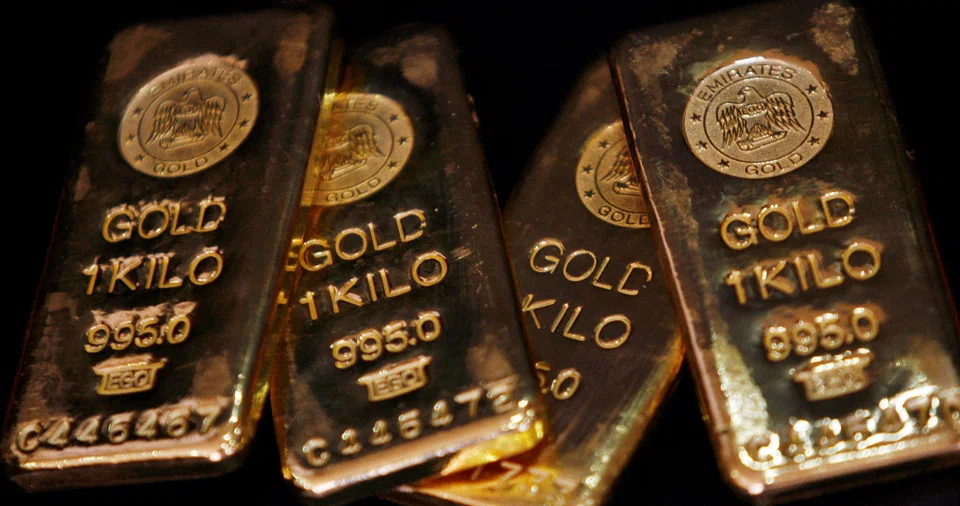
And gold, the supreme hedge in times of uncertainty, reveals the depth of worry. Both the yen and the euro used to be the preferred hedge against the US dollar. But it is now clear that gold alone offers a shield if things end in a catastrophe. Experts note that gold stopped tracking other metals, including silver, copper and other industrial metals, since 2023. Even inflation-protected US Treasuries have decoupled from gold.
Historically, gold has always been deemed a natural store of value. It is uniquely seen as having intrinsic value and its limited supply makes it an attractive option for anyone who wants protection against all kinds of risk. For instance, during the 2008 global financial crisis, gold prices surged by more than 25 per cent, underscoring its hedge role.
No surprise then that the gold price is soaring again – the precious metal traded at all-time highs above US$2,800 an ounce on Monday (Feb 3) in London. It is a sobering reminder of the perception of how much is at stake.