

The weak yen and the weakening US dollar are signs of financial fragility
But neither Japan nor America should meddle with exchange rates
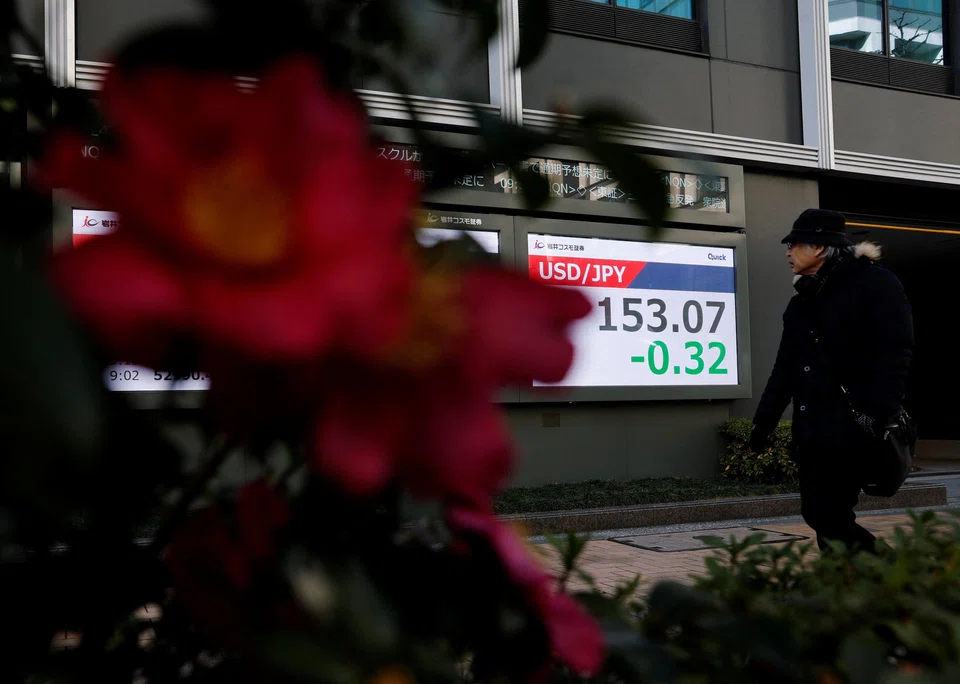
FOR decades Japanese investors sought higher-yielding assets abroad, while interest rates at home stayed low. As a result, the country has amassed foreign investments worth over US$10 trillion, more than twice its annual gross domestic product.
Yet today, rates are rising and the effects are rippling through markets. America’s treasury secretary has blamed bond ructions in Japan for movements in long-term Treasury yields. After the yen fell this month to near its weakest against the US dollar since 1990, the Japanese and American governments are reportedly considering propping it up.
Yet currency intervention is a distraction. It will not cut the risk of financial turmoil emanating from Japan.
The possibility of official purchases has caused the yen to rally since Jan 23, contributing to a sharp across-the-board fall in the value of the dollar. On Jan 27, US President Donald Trump appeared to welcome the greenback’s slide, which should help reduce the trade deficit.
The fall was a continuation of a trend. Since Trump came to office, his tariffs, attacks on the Federal Reserve and appetite for debt have made investors keener to hedge their exposure to America. In 2025, the dollar fell by 7 per cent on a trade-weighted basis.
The fact that the yen has been so weak against a falling greenback is remarkable. It is doubly striking, because the gap between Japan’s low interest rates and America’s higher ones has shrunk by nearly a third over the same period. Converging rates would usually bring currencies closer into line.
Part of the explanation is that Japanese inflation has risen to an annual average of 2 per cent in the 2020s, compared with 0.6 per cent in the 2010s. Unusually, Japan’s inflation has lately outpaced that of its trading partners.
Higher inflation often weakens a currency, as the exchange rate adjusts to reflect its lower purchasing power. But do not miss the wood for the trees. The yen would be far stronger if its value reflected Japanese prices. According to The Economist’s Big Mac index, which compares the price of burgers across countries, the currency is undervalued by roughly 50 per cent.
That makes it plausible that the yen is cheap because investors are worried about the danger that Japan will lose its fiscal and monetary credibility. Inflation, by boosting nominal GDP and tax revenues, has recently helped shrink Japan’s debt and deficit as a share of the economy. Yet, at 130 per cent of GDP, net debt remains higher than in any other rich country, and 30-year yields hit their highest level on record this month.
Japanese Prime Minister Takaichi Sanae has called an election on Feb 8 and is promising an ill-timed fiscal loosening. As well as rightly spending more on defence, she pledges to suspend consumption taxes on food for two years. Although she has room to raise Japan’s taxes, Takaichi has no plan to pay for all this.
Japan at least has plenty of foreign-exchange assets which it can sell to prop up its currency. But buying yen will do nothing to reduce the danger of a crisis, and the effect on the exchange rate is anyway unlikely to last. Countries that set interest rates and allow capital to flow freely across borders cannot also control their exchange rates. Japan should view the yen as an indicator of the economy’s health and the government’s credibility, as well as the likely path of interest rates. It should not – and cannot – make it a target of policy.
As for the US, if the government dabbles in the currency markets to try to manage its exchange rate, Trump’s economic management will rightly be seen as even more erratic and ill-judged.
When demand for dollars falls, America’s government, businesses and individuals face a higher cost of capital. That is why the government has traditionally favoured a strong greenback. Giving that up because of an ill-founded fear of the trade deficit would be a mistake. ©2026 The Economist Newspaper Limited. All rights reserved
TRENDING NOW

Once staunchly pro-China, Malaysian Chinese businesses are now distancing themselves from Beijing

Looking beyond looming CEO succession, should UOB potentially pursue a transformative merger?

Could stablecoins be the future of money?

Grab CEO’s wife Chloe Tong on life with Anthony Tan and finding her purpose

