

What Asia must do better in 2025
THIS year is going to be disruptive – a roller coaster of challenges and opportunities. As the global landscape grows increasingly complex, Asia finds itself navigating higher tariffs, weaker global demand and growing policy uncertainty. These pressures are testing the region’s resilience, but also creating space for bold solutions and collaboration.
Singapore’s vibrant energy has become an integral part of my daily life. The bustling streets, where diverse cultures converge over shared meals, and the lively music spilling from street corners and cafes, reflect the richness that this region has to offer. Yet, beneath this vibrancy lies a more urgent rhythm – the race to address an energy crisis that mirrors the planet’s own struggles.
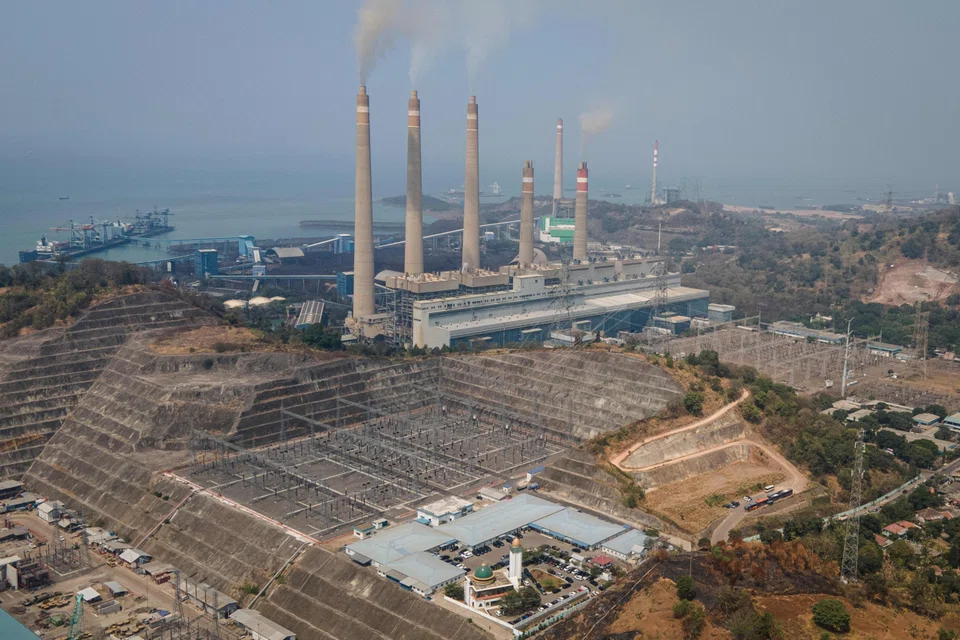
Asia’s rising energy demand underscores its rapid economic growth, but also brings the pressures of climate change into sharp focus. While Singapore relies heavily on natural gas for its energy needs, many other countries in Asia remain dependent on coal. The region’s trajectory will depend on how we respond to macroeconomic trends, regulatory changes and geopolitical developments.
I still recall an afternoon in Chinatown, where the humid heat did little to deter the spirit of community as people gathered for lunch – a reminder that tackling these challenges requires the same collective effort. Just as we come together to share a meal, we must work collaboratively to shape a sustainable future for Asia.
Urgency of energy transition
We need to decarbonise fast and, for many Asian countries, moving away from coal to gas is a crucial step. Gas is critical to the region’s energy strategy as it offers a dependable and efficient source of power that bolsters energy security, amid growing demand and evolving challenges.
Compared to coal, gas produces significantly lower carbon emissions and plays an important role in decarbonising energy-intensive industries, such as power generation and mining. Its cleaner combustion profile, combined with advancements in technology, makes gas an effective alternative for reducing the environmental footprint of industries that have traditionally relied on coal.
In places like Singapore, where more than 90 per cent of electricity is generated by gas, this resource continues to provide stability while enabling the parallel adoption of low-carbon technologies. Furthermore, innovations such as ammonia or carbon capture and storage (CCS) can significantly reduce emissions from gas-powered plants, making it a vital part of Asia’s decarbonisation efforts.
By integrating gas into a broader framework of renewable technologies and sustainable practices, Asia can address immediate energy challenges while accelerating its transition.
Diverse challenges across the region
Asia’s energy landscape is as diverse as its people, with challenges in land-scarce Singapore differing greatly from rural Laos or digitally advancing South Korea. This diversity means the region cannot rely on off-the-shelf solutions. Innovation must be tailored to each country’s unique circumstances, supported by financing models that reflect local realities, whether small-scale solar for rural areas or large-scale infrastructure upgrades for rapidly growing cities.
South-east Asia’s dynamic markets and developing economies add further complexity. With the region expected to account for 25 per cent of global energy demand growth by 2035, according to the International Energy Agency, meeting this demand will require cutting-edge technologies, flexible financing and partnerships attuned to each nation’s development goals.
The key to progress lies in creating financing models that align with the realities on the ground, empowering each country to pursue the solutions it needs to achieve sustainable growth.
Minimising investor scepticism with blended financing
Despite the urgency, many decarbonisation efforts are stalled, not due to a lack of ideas or technological innovation, but because of investor scepticism. Scaling up decarbonisation solutions requires significant, long-term investments. Disruptive technologies require disruptive business models to scale and commercialise the technology.
However, the ever-changing macroeconomic trends, regulatory changes and geopolitical developments have made investors question the profitability of energy projects. For many of these initiatives, success hinges on robust public-private partnerships to share risks and unlock the necessary capital.
Blended financing, whether through direct investments, public-private partnerships or international grants, must be flexible and adaptable to the diverse needs of the region.
For instance, collaborations with energy leaders in Japan on a green hydrogen project supported by the Green Innovation Fund are helping accelerate Japan’s decarbonisation efforts and move towards carbon neutrality by 2050. By leveraging strategic funding, innovation and partnerships can go hand in hand to address local energy challenges while advancing sustainability goals.
We need to capitalise on this opportunity, and prioritise the strengthening of regional supply chains and manufacturing capabilities. When the demand for regional innovation increases, stakeholders will unlock critical investments in low-carbon energy infrastructure.
This approach ensures that financial resources are not just available, but deployed efficiently, allowing communities to take control of their energy futures. When financing is contextualised and the economic realities in each country of the region are considered, it can foster long-term sustainability and resilience, enabling communities to thrive without compromising the environment.
Asia’s energy transition is at a defining moment in 2025. To meet growing energy demands and accelerate decarbonisation, we need financing models that align with local realities, empowering countries to implement the solutions they need.
Success hinges on robust public-private partnerships that share risks and unlock the necessary capital for low-carbon technologies. Now is the time for leaders to confront the region’s challenges and act resolutely, and secure an energy future that benefits their people, economies and the environment.
The writer is group senior vice-president of Siemens Energy and managing director for Asia-Pacific
TRENDING NOW

ComfortDelGro appoints two new independent directors

Once staunchly pro-China, Malaysian Chinese businesses are now distancing themselves from Beijing

NoonTalk needs continued financial support from CEO Dasmond Koh, auditors warn

DP Architects sets the benchmark for sustainability disclosure and design

