
What can India do to stop capital flight?
As the rupee falls to a low against the greenback, the country must take steps to protect its currency
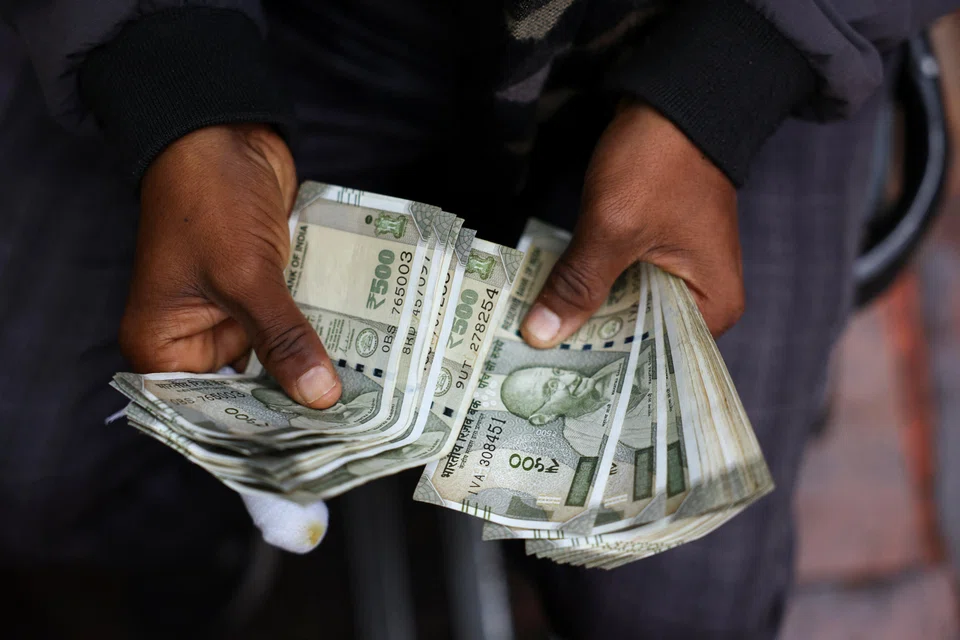
MONEY is leaving India at an alarming pace. Investment flows from overseas have dried up just as the Iran war has exploded the trade deficit. The rupee has taken a thrashing; official reserves are getting drained.
A policy package to ward off a full-fledged currency crisis is on its way. Or at least that is the market’s expectation, though there is considerable disagreement over exactly what should be in it.
Taking cues from history, some have advocated overseas fundraising.
State-run lenders have borrowed on New Delhi’s behalf during past external crises. For instance, they scooped up US$34 billion during the Federal Reserve’s 2013 taper tantrum, including US$26 billion from Indian diaspora abroad.
Since the hole in this fiscal year’s balance of payments may be bigger than that entire package, why not run the programme again?
I argued in December – before the energy shock from the Middle East – that the rupee’s drop contained echoes of the 2013 meltdown, which roiled the currencies of the so-called “Fragile Five” emerging markets, including India.
Interest rates have changed
Where that history stops rhyming is in the cost of the cure. In the summer of 2013, five-year US interest rates had just climbed above 1 per cent.
So the 4 to 5 per cent that the Reserve Bank of India (RBI) allowed local banks to offer to non-resident Indians (NRIs) was attractive. (Wealthy NRIs further juiced up those returns by leveraging their bets – banks in Singapore, Hong Kong, London and New York lent them funds to bail out their home country.)
Those benign conditions no longer exist. If New Delhi permits banks to pay even a 200 to 250 basis point spread over US yields to incentivise the diaspora, the coupon rates would touch 6 to 6.5 per cent, double the State Bank of India’s current standard rate of five-year dollar deposits.
As for the really rich NRIs, sure they would still love some leverage – but to subscribe to the upcoming US$75 billion public offering from SpaceX.
It is just a very different world from 2013. Even if state-run lenders are somehow persuaded to raise expensive hard currency, what comes next may be too bitter a pill for them to swallow.
Adding an annual 4.5 per cent hedging cost to protect against a weaker rupee over three to five years would be a show-stopper. They can raise money far cheaper at home.
This problem was even bigger in 2013. Raghuram Rajan, who took over as RBI governor in September that year, engineered a controversial solution.
The central bank absorbed the risk of rupee depreciation so that commercial lenders’ future dollar repayments did not become too onerous. That was what made the lenders go out and raise money hand over fist.
If Sanjay Malhotra, the current central bank chief, tries to replicate the strategy – which Rajan himself later said he neither invented nor believed in – the RBI’s balance sheet would be exposed to a multibillion-dollar loss upon maturity.
A different political landscape
Shifting political realities may have dulled the appetite to take on such risks today.
In 2013, then prime minister Manmohan Singh’s government was resigned to losing power in less than a year. It could afford to leave future problems to the next administration.
In contrast, Prime Minister Narendra Modi’s Bharatiya Janata Party, fresh off a string of important victories in state polls, is looking to rule for many more years. It has to be wary of costs that may come back to bite.
The administration is already smarting from an earlier decision to leave its exposure unhedged, when it tried to wean local households off their gold-buying habit by launching sovereign bonds that mirrored the metal’s returns.
Gold prices went parabolic last year, and the last of those expensive bonds will not roll off until 2032. A government bruised by its own unhedged liabilities may balk at shouldering the banking sector’s repayment commitments.
Biting the bullet
That leaves conventional solutions such as raising interest rates. Low Indian rates are at the heart of the weak-rupee problem.
Because state-run refiners have still not been allowed to fully pass on the cost of fuel to consumers, domestic inflation is benign at 3.5 per cent – nowhere near the double-digit levels of 2013.
But why wait? A defensive rate hike or two could allay investors’ concerns that higher-for-longer borrowing costs later will bleed corporate profit margins.
To delay rate hikes in anticipation of a US-Iran peace deal may be a mistake.
Yes, domestic retail money might bite into any end-of-war relief rally. But that may only make it more rewarding for foreign investors to dump assets in a rising market and chase superior, artificial intelligence-led earnings growth in places such as Taiwan and South Korea.
Global investors have long lobbied New Delhi to align its policies with other major economies and pursue residence-based taxation.
But India’s capital gains levies apply to all investors, local and foreign.
Overseas bond funds pay roughly 20 per cent on coupon payments. Right now, a reduced tax burden is the lowest-hanging fruit. The proof of its sweetness, however, will lie in the eating.
Malhotra and Modi need to get creative. It is simply not politically palatable to let the exchange rate drop past the crucial psychological level of 100 to the US dollar.
To save the rupee, authorities may have no choice but to bite the bullet on domestic interest rates, and offer just enough tax sweeteners to keep global capital from slamming the door on its way out. BLOOMBERG
TRENDING NOW
Fed hike throws Singapore banks a margin lifeline; UOB most likely to feel impact
He built the Vingroup empire. Now South-east Asia’s richest man is handing some key roles to his sons
Real-estate veteran Desmond Sim quits from CEO roles at Realion, ETC
Chagee, Mixue and Luckin won the market. Sustaining their edge is the harder part



