What China’s economic troubles mean for the world
Pain for Elon Musk; relief for Jerome Powell
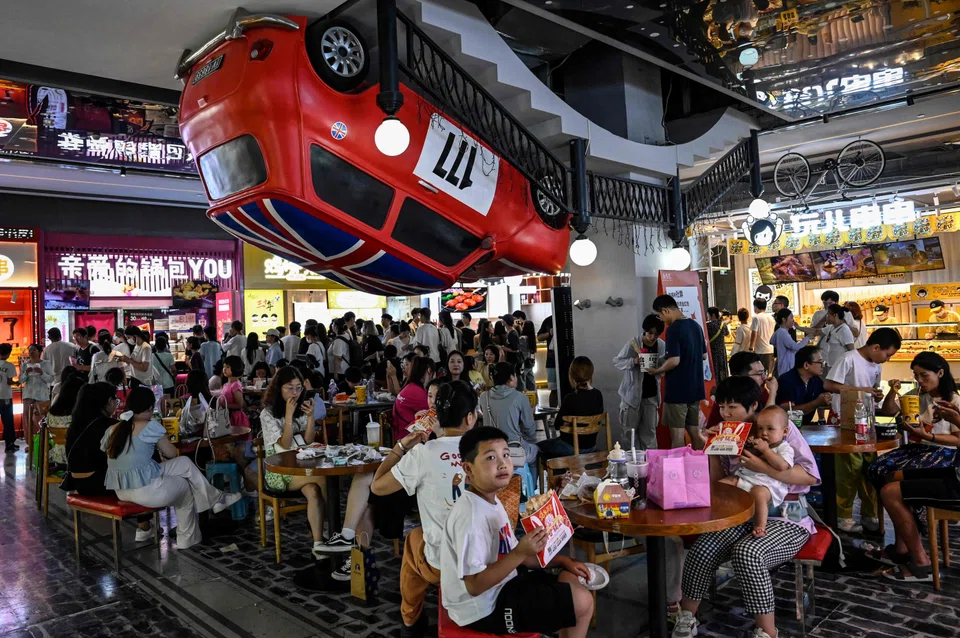
ONLY eight months ago, China’s economy was expected to roar back to life. The zero-Covid policy had been abandoned; the country’s shoppers and tourists were allowed to roam free. Yet the hoped-for rebound has fizzled out. Gross domestic product (GDP) growth, which some economists had expected to hit an annualised rate of 10 per cent in the second quarter of the year, instead struggled to just over 3 per cent. The economy has tumbled into deflation. A strangely slow official response, and a property crisis that is going from bad to worse, have provoked fears of a prolonged downturn.
What happens in the world’s second-largest economy matters everywhere else. Because China is so big, its changing economic fortunes can drive overall global growth figures. But a slowing China also directly affects other countries’ prospects. Its households and companies will buy fewer goods and services than they would have otherwise, with consequences both for the producers of these goods and the other consumers of them. In some places, China’s difficulties will be a source of pain. In others, though, they will bring relief.
Commodity exporters are especially exposed to China’s slowdown. The country guzzles almost a fifth of the world’s oil, half of its refined copper, nickel and zinc, and more than three-fifths of its iron ore. China’s property woes will mean that it requires less of such supplies. That will be a knock for countries such as Zambia, where exports of copper and other metals to China amount to 20 per cent of GDP, and Australia, a big supplier of coal and iron. On Aug 22, BHP, an Australian company and the world’s biggest miner, reported its lowest annual profit in three years, and warned that China’s stimulus efforts were not producing changes on the ground.
Weak spots in the West include Germany. Faltering demand from China is one reason why the country’s economy has stagnated of late. And some Western firms are exposed through their reliance on the country for revenues. In 2021, the 200 biggest multinationals in America, Europe and Japan made 13 per cent of their sales in China, earning US$700 billion. Tesla is more exposed still, making around a fifth of its sales in China; Qualcomm, a chipmaker, makes a staggering two-thirds.
Provided the slowdown does not escalate into full-blown crisis, the pain will remain concentrated. Sales to China account for only 4 per cent to 8 per cent of business for all listed companies in America, Europe and Japan. Exports from America, Britain, France and Spain come to 1 per cent to 2 per cent of their respective outputs. Even in Germany, with an export share of 4 per cent, it would take China collapsing to generate a sizeable hit to its economy.
Moreover, China’s struggles come at a time when the rest of the world is doing better than expected. In July, the International Monetary Fund revised up its forecast for global growth, compared with its projections in April. Most notable has been the rude health of the world’s biggest importer, America, which some surveys suggest is growing at the red-hot pace of nearly 6 per cent.
When set against this backdrop, China’s slowing growth should even provide some relief for the world’s consumers, since it will mean less demand for commodities, bringing down prices and import costs. That in turn will ease the task faced by the Federal Reserve and other central banks. Many have already raised rates to their highest level in decades, and would not relish having to go further still.
But what if things go badly wrong in China? Under a worst-case scenario, a property meltdown could reverberate through the world’s financial markets. A study by the Bank of England in 2018 found that a “hard landing” in China, where economic growth fell from 7 per cent to minus 1 per cent, would cause global asset prices to fall and rich-world currencies to rise as investors rushed in the direction of safer assets. Overall, British GDP would drop by 1.2 per cent. Although most Western financial institutions have relatively little exposure to China, there are exceptions, such as HSBC and Standard Chartered, two British banks.
A longer slowdown could lead China to turn inwards, reducing investments and loans. Having become the world’s biggest bilateral creditor in 2017, it has already cut back as projects turn sour. Officials may become fussier still if they are fire-fighting at home. Observers will watch celebrations of a decade of the “Belt and Road Initiative”, the label under which China has splurged on bridges in Mozambique and ports in Pakistan, for signals of intent.
Real difficulties at home would also change how the world sees China. Rapid growth, along with generous lending, boosted the country’s reputation. According to a recent survey of 24 countries by Pew, a pollster, people in rich places had a generally unfavourable view of China. The picture was different in much of the emerging world: Mexicans, Kenyans, Nigerians and South Africans all saw China in a more favourable light, and welcomed Chinese investment. The question is whether that will still be true in a year’s time.
©2023 The Economist Newspaper Limited. All rights reserved