What climate negotiations changed
BUSINESSES seem divided about climate change negotiations at the recent COP28 (the 28th Conference of Parties). Some followed the conference closely and even made considerable effort to turn up for Dubai’s throng of events. Others – concerned about year-end results and 2024 outlook – skimmed the extensive news coverage and rolled their eyes at the squabbling over words in the final statement.
Many will leave the large and long-term issues of climate to governments – like the creation of a loss and damage fund to compensate countries hard hit by climate. Yet, on other points, COP28 matters to business and quite immediately. This is especially for the energy sector, and the carbon-intensive fuels: coal, oil and gas.
Transition away and mainstreaming
To avoid climate catastrophe, the global economy must change how it produces and uses energy. As expected, there was strong resistance against moves to limit and phase out carbon-intensive fuels. Yet COP28 did finally agree on a “transition away” from fossil fuels.
Oil-and-gas giants are not necessarily doomed and energy transition is likely to allow wiggle room for liquefied natural gas – a fossil fuel with a lower carbon footprint. Gaps and bumps can also be anticipated, from which they can profit. Consider how energy prices surged, following Russia’s invasion of Ukraine, to favour many oil producers even as inflation surged for other businesses and households.
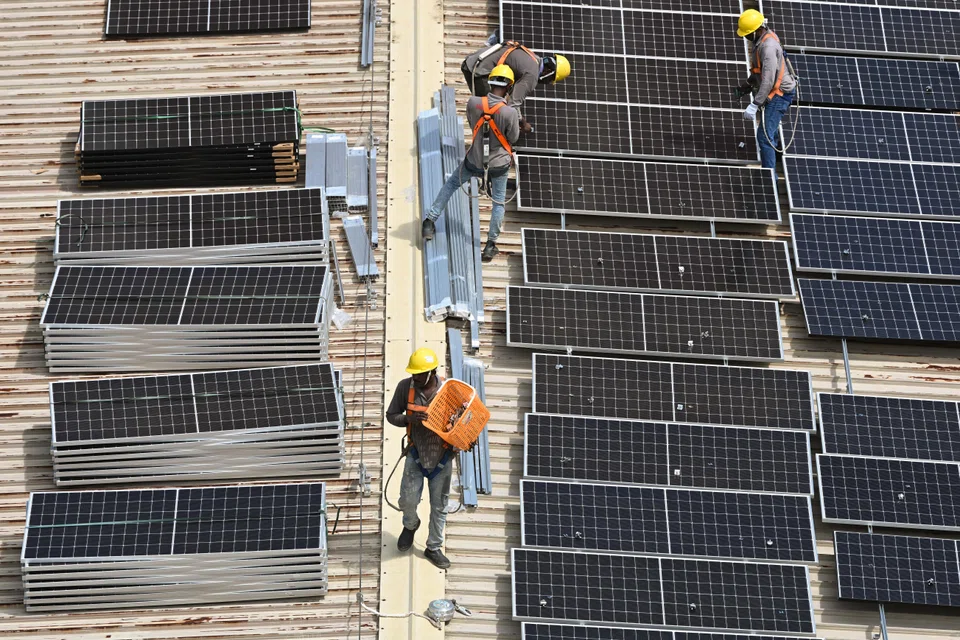
Yet change is coming and COP28 adds to the momentum to ramp up renewables and energy efficiency. The aim is to shift priorities and reshape market assumptions, so that renewables are no longer optionals, but instead mainstream essentials.
Implications for our region
There are implications for Asean, which is growing and needs more energy for industry and transport as well as for consumers and expanding cities. There is already an ongoing race to increase generation capacity.
Coal, oil and gas dominate, accounting for more than 80 per cent of current power generation. Asean targets to produce some 23 per cent of energy from renewables by 2025 but isn’t moving fast enough. This underperforms the region’s strong potential for renewable energy – solar, hydropower and wind, as well as geothermal power and hydrogen.
Why? Technology is no longer the key obstacle – especially for the first three.
One reason stems from legacy issues arising from the incumbent position of fossil fuels. Many existing power supply contracts guarantee long-term supply and, in Vietnam and elsewhere in the region, there are also many coal-fired plants that are relatively new. If such plants are decommissioned earlier than originally agreed, legal issues will be raised, as will costs.
Moreover, power generation and transmission grids in Asean are often owned by state-owned enterprises. If these firms lack commitment and efficiency to do new things, this slows down the transition to renewables.
Further compounding the challenge, many countries are addicted to energy subsidies. These artificially make fossil fuels cheaper and renewables comparatively less attractive. Current subsidies are costly – estimates are that 4.4 per cent of gross domestic product is spent on petroleum subsidies and 2.2 per cent on coal subsidies. Yet even if ending subsidies is rational, there are concerns that this could also trigger inflation and consumer anger.
These factors suggest that the transition away from fossil fuels that COP28 calls for will be complex and slower in our region. Yet the developed economies of the United States and the European Union are spending billions to move faster and further, and may not extend time and patience.
Already, companies that are part of global value chains face increasing questions about their carbon footprint. The EU is also implementing an additional border tax on imports that do not factor in carbon price on energy use. Complex or not, pressure is increasing for companies and countries across our region to move.
What is needed
A recent report by the Singapore Institute of International Affairs on Incentivising Green Transition in Asean suggests three key changes can pave the way for a faster and smoother shift – all of which hold out opportunities for business.
Funding is much-needed, especially to help move away from coal. Government and multilateral monies will need to combine with private-sector loans to move this significantly. An especially critical role can be played by private philanthropic funding. Given their status, such funds are more willing to accept low-to-near-zero financial returns and can especially help projects that are marginal in terms of commercial bankability.
At COP28, Singapore launched Financing Asia’s Transition Partnership (Fast-P) – a new initiative to catalyse blended finance – starting with US$5 billion. Ample opportunities will arise in Indonesia and Vietnam, which already joined the ambitious global Just Energy Transition Partnership.
A second need is to enable the seamless transfer of electricity across borders. Connecting to Singapore can be especially profitable, since the country does not subsidise energy and Singapore-based businesses want and can pay for green electricity. Energy suppliers would gain from higher prices paid by assured offtakers and this can make renewable energy projects more bankable. Companies that can provide long-distance transmission through cables and manage cross-border grids securely and optimally stand to prosper.
A third opportunity arises for carbon markets. Trials have already been launched in Indonesia, Malaysia, Singapore and Thailand. Next, policies to set carbon prices and taxes are expected, as are efforts to facilitate emissions trading and carbon credits.
Ideally, an Asean-wide approach with harmonised rules can provide deeper carbon markets and a broader range of solutions. This will benefit companies that are prepared to deal with their carbon footprint and remain competitive, as well as carbon service providers.
Giant oil companies and others in this sector, such as those in trading and bunkering, will need to adapt. Most had a good year but going forward, will face more pressures. Some will diversify and pare down holdings, while others will double down on fossil fuels. Changes are rippling through markets and influencing financial decisions, with both risks and opportunities. Singapore and businesses here must prepare for the green transition – and even benefit from it.
The writer is chairman of the Singapore Institute of International Affairs. This is an occasional column for The Business Times.