

What is ‘strategic autonomy’ – and why is everyone suddenly reaching for it?
Countries are staying within US-led security and economic orders, but want wiggle room in their participation
STRATEGIC autonomy is having a moment.
European leaders are invoking it to justify a historic defence build-up; India’s foreign ministry has made it the organising principle of a policy that buys Russian oil while courting American investment; Canada is treating it as a “core objective”.
The phrase is everywhere in international relations circles, but the explanation is almost nowhere. So what does strategic autonomy actually mean? And why are analysts reaching for it now?
Leverage more than self-sufficiency
The first thing to note is that autonomy does not imply withdrawal from the international order, or a severing or reduction of ties with Washington.
Take the EU, for instance. As one of the few organisations that has made explicit its aspirations for strategic autonomy, it is boosting its collective defence spending to hedge against an America whose long-term commitments can no longer be relied upon.
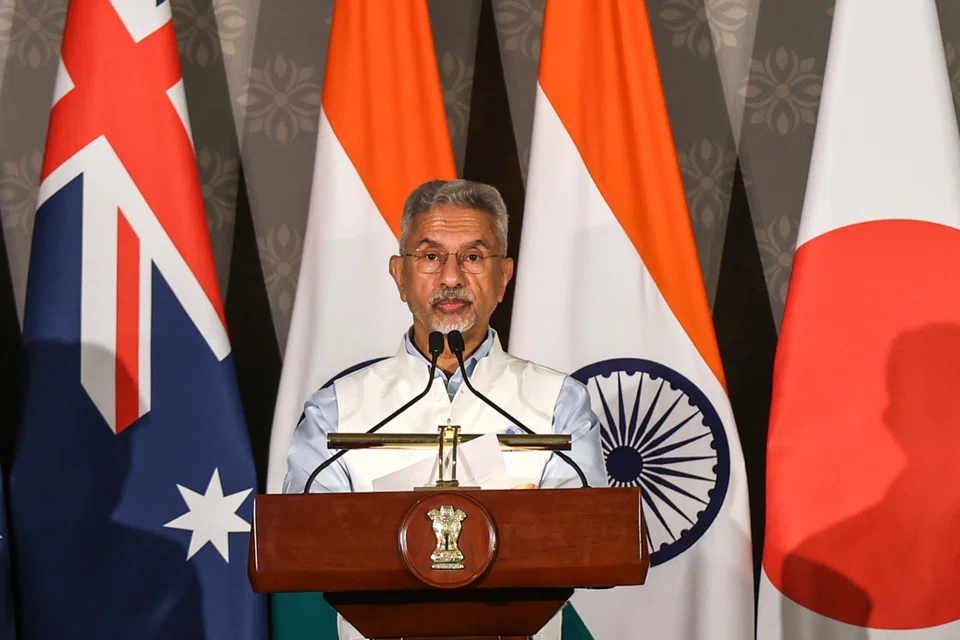
India still participates in the Quad strategic alliance alongside the US, Australia and Japan, but it conducts an independent foreign policy when its interests do not align with Washington’s.
Canada is diversifying its partnerships, but not decoupling.
You can argue with the particulars of each case. But from Germany to India to Canada, the basic instinct driving these countries’ foreign policies is the same – seeking to increase their manoeuvring room while remaining broadly aligned with the US.
All remain embedded in the existing US-led global security and economic orders. Only now, they are renegotiating the terms of their participation in those orders.

Taken as such, strategic autonomy is best seen as leverage and flexibility rather than self-sufficiency. More specifically, it is the credible ability to say “no” to great-power patrons such as the US.
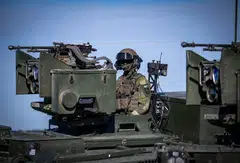
A strategically autonomous nation can take diplomatic positions that the superpowers of the day dislike. It can field military force without depending entirely on another country’s hardware or authorisation.
And it can maintain enough control over critical supply chains to blunt coercion from rivals.
Charles de Gaulle’s ghost
The phrase itself is newer than many people realise, even if the underlying logic is not.
France’s post-war leader, Charles de Gaulle, spent much of the 1960s institutionalising what later became known as strategic autonomy.
In 1966, he withdrew France from Nato’s integrated military command, while keeping the country within the alliance itself. What he objected to was de facto American authorisation on matters of French security.
His reasoning was straightforward: a state dependent on another power for its security is not fully sovereign.
While de Gaulle never used the phrase “strategic autonomy”, it became embedded in official French doctrine in the nation’s 1994 White Paper on Defence.
By 1998, the concept had migrated to wider European politics through the Saint-Malo Declaration between then UK and French leaders Tony Blair and Jacques Chirac. They argued that Europe required “the capacity for autonomous action, backed up by credible military forces”.
The EU formalised the policy in its 2016 Global Strategy.
While de Gaulle was pursuing his policies, a parallel tradition through the Non-Aligned Movement saw India, Indonesia, Yugoslavia and many others chart a Cold War course between the US and the Soviet Union.
Same logic, different crises
The resurgence of interest in strategic autonomy has a common source: a US-led order that, for an increasing number of nations, has started to feel less like a public good and more like a burden.
While some leaders have been ahead of the curve – France’s Emmanuel Macron argued for European strategic autonomy years before his European peers. It is US President Donald Trump’s second term that has changed the political arithmetic.
Governments that once assumed that American security guarantees were unconditional have discovered otherwise.
European leaders are no longer asking whether independent military capacity is necessary; they are asking how quickly they can build it.
India’s version of strategic autonomy is, perhaps, the most developed and instructive.
The government of Narendra Modi buys Russian oil despite Western sanctions. It abstains on United Nations votes over Ukraine while deepening defence cooperation with Washington. And it engages multilateral forums that include Beijing while strengthening ties with the Quad.
Viewed through the lens of traditional alliance politics, the behaviour appears incoherent. But seen through the lens of strategic autonomy, it becomes more intelligible.
India is maximising leverage across competing relationships while refusing permanent dependence on any of them.
Canada is seemingly arriving at a similar place, although through a different route.
Trump’s rhetoric over Canada becoming the US’ 51st state exposes how much dependence Ottawa has accumulated with regard to Washington.
In response, Canadian policymakers are now pursing trade diversification, renewed defence investment and broader partnerships.
Turkey and Saudi Arabia illustrate a harder version of the same logic. Ankara remains inside Nato while operating Russian air defence systems. Riyadh is building a domestic defence capacity while cultivating alternative weapons suppliers to Washington.
These are hedging strategies adapted to today’s more fragmented international order, while the older divide separated aligned states from non-aligned states.
A different divide is now emerging. Some governments accept deep patron dependence; others are determined to preserve flexibility, even inside formal alliances and partnerships.
And that distinction – between those striving for strategic autonomy and those who are not – is increasingly shaping world politics. THE CONVERSATION
The writer is professor of political science at Macalester College
Decoding Asia newsletter: your guide to navigating Asia in a new global order. Sign up here to get Decoding Asia newsletter. Delivered to your inbox. Free.
Share with us your feedback on BT's products and services
TRENDING NOW

DBS, OCBC, UOB rout lops billions off STI as inflation, rate concerns spook investors

Grab CEO’s wife Chloe Tong on life with Anthony Tan and finding her purpose

OCBC sheds S$8 billion in value as shares close nearly 6% down; analysts cautious on banks

Deal between tycoon friends sparks scrutiny of Philippine power sector

